Tokyo designer Tomoya Matsuda has spent around 60 hours hand-stitching a single denim jacket out of trial fabrics and offcuts he bought from mills in Fukuyama, Hiroshima Prefecture. If you own a drawer of leftover fabric, or a wardrobe of fast-fashion buys you barely reach for, his Sashiko Denim Jacket for his label TMMY is a good look at what those offcuts could have become.
Matsuda started working in earnest as TMMY in July 2025, and he’s been based in Tokyo since. Sashiko is the Japanese running-stitch craft that, in Matsuda’s words, “grew from the need to reinforce and repair limited cloth, retain warmth and make it last in circumstances of poverty.” He doesn’t treat it as decoration, and he says he wants to work “with respect and consideration for that background.”
Scraps From Fukuyama’s Mills
The jacket traces back to a trip in September 2025. Matsuda visited weaving mills, sewing workshops, dyehouses and manufacturers producing for other brands in Fukuyama. He writes that seeing the work up close deepened his respect for the craftspeople. He then learnt that these workshops produce trial fabrics and offcuts that get discarded without ever being used.
“Having met the people who make the cloth, I felt strongly that their work should not go to waste,” he writes. So he bought the trial fabrics and production remnants that had piled up in Fukuyama, and those became the jacket. That’s a pretty direct line from a mill floor to a wearable piece. Plenty of brands talk about honouring artisans, and fewer go and buy the bits those artisans couldn’t sell.
60 Hours, One of One
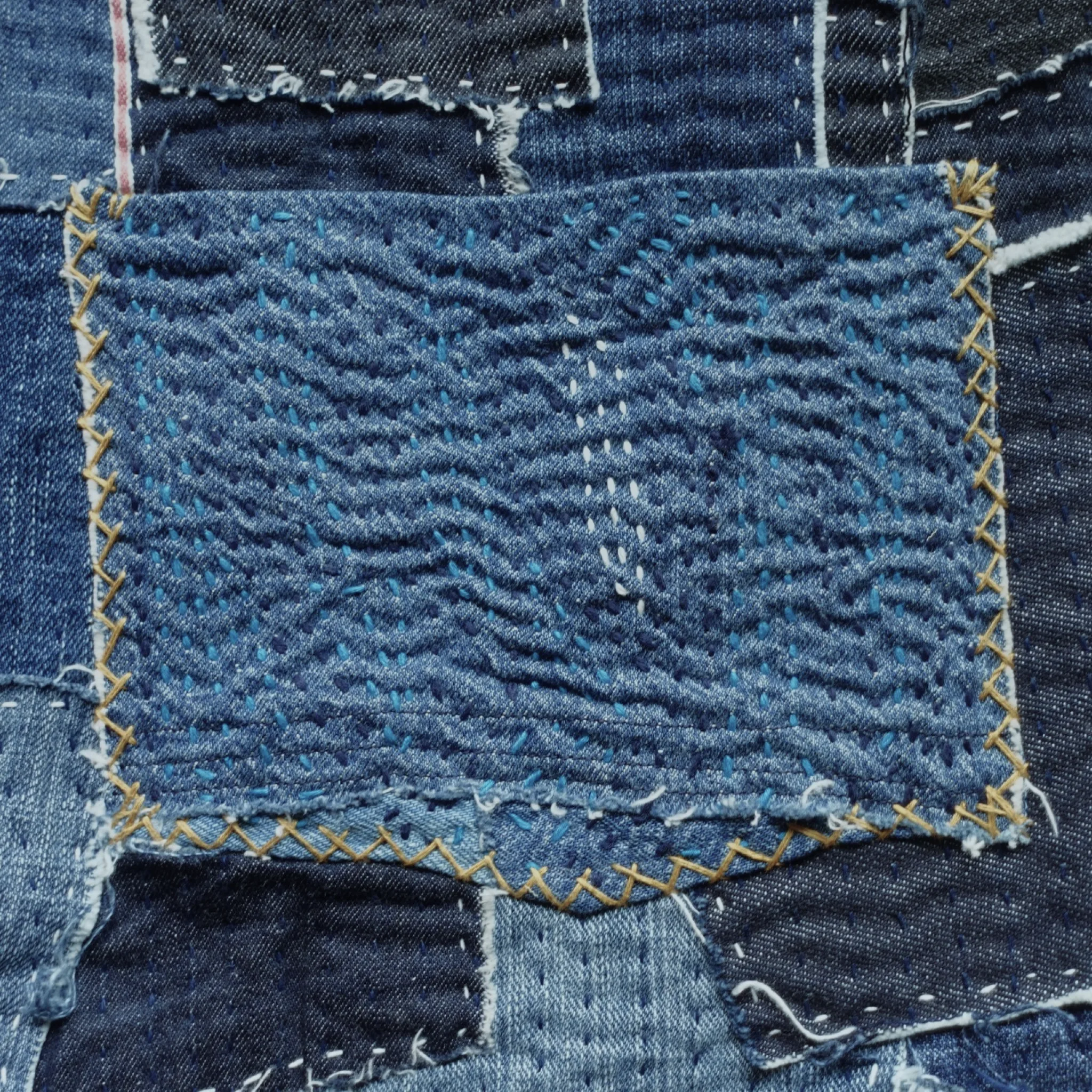
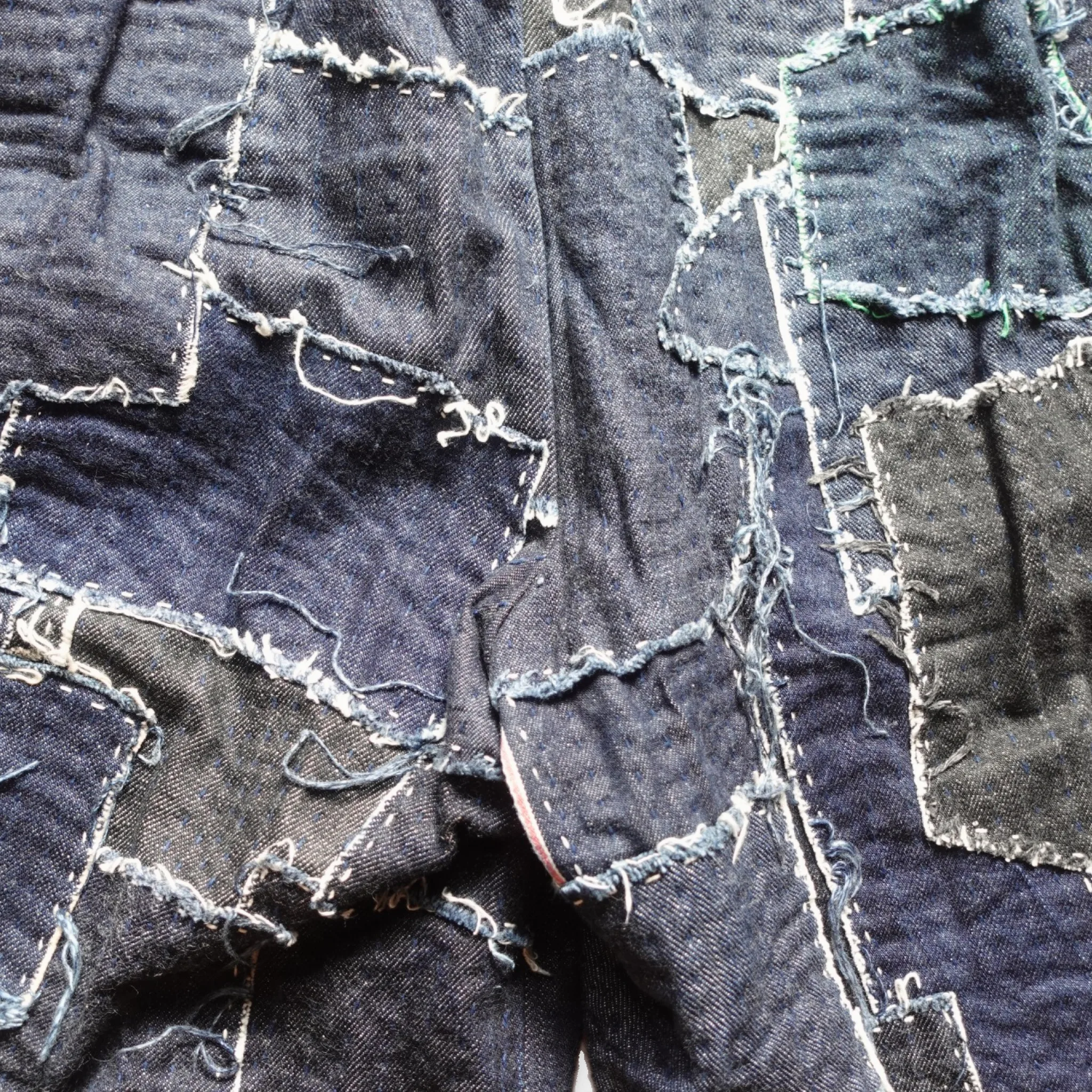
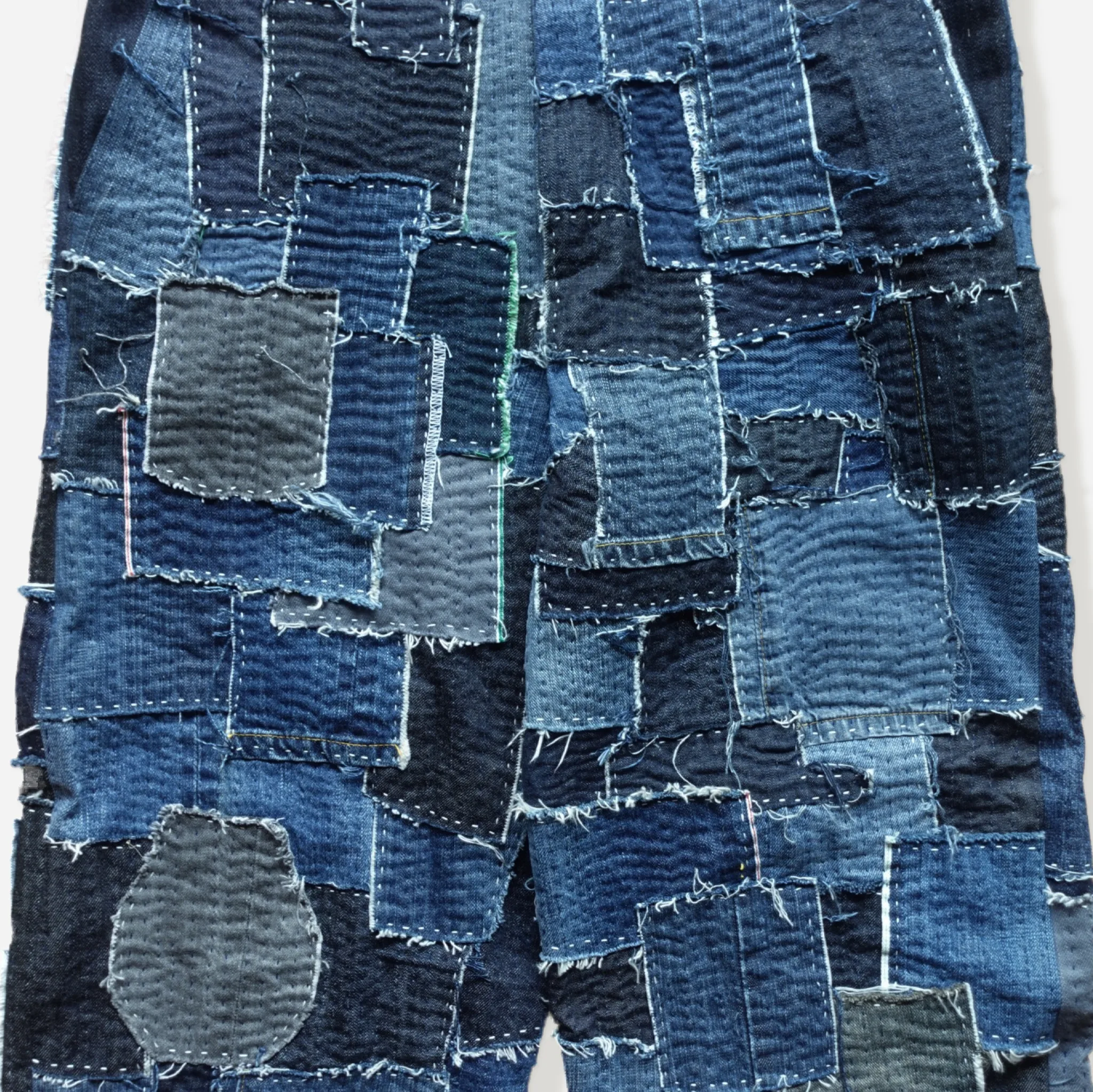
TMMY says every piece of denim in the jacket was woven in Fukuyama. The offcuts vary in colour, texture and width from batch to batch, so Matsuda worked on each one individually before arranging it to fit the pattern. “Even within denim, each piece differs in colour and feel,” he writes. “I treated those differences as possibilities.” That mismatch is the whole look, and honestly, it’s the most appealing thing about the piece.
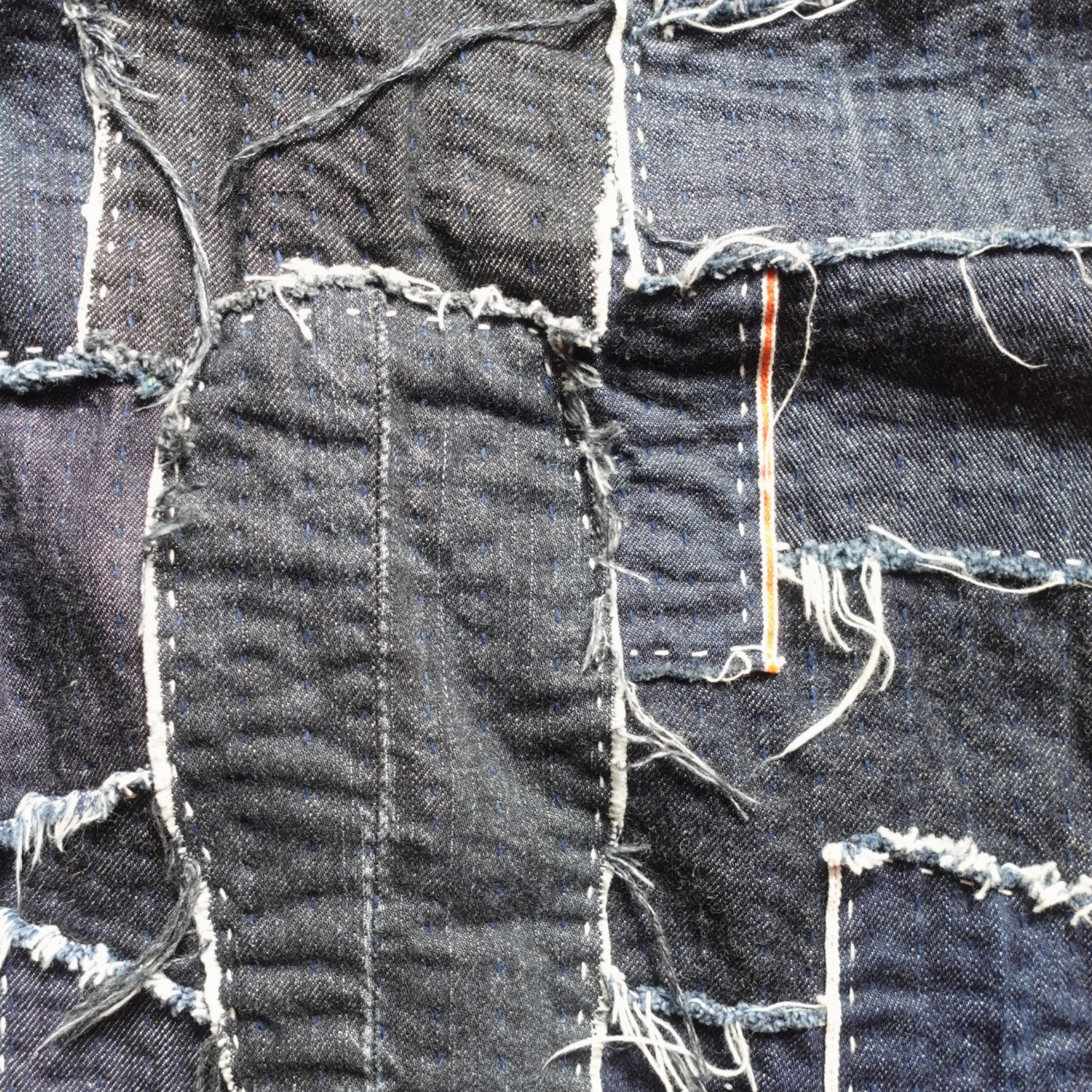
The construction is where the hours go. Fine vertical stitches in natural indigo-dyed sashiko thread join the offcuts into fabric for each pattern piece. Unbleached sashiko thread then traces the joins, which adds reinforcement and decoration at the same time. The collar uses a different Fukuyama denim, a 7/1 twill with fewer interlacings, which TMMY describes as giving it a soft, full hand.
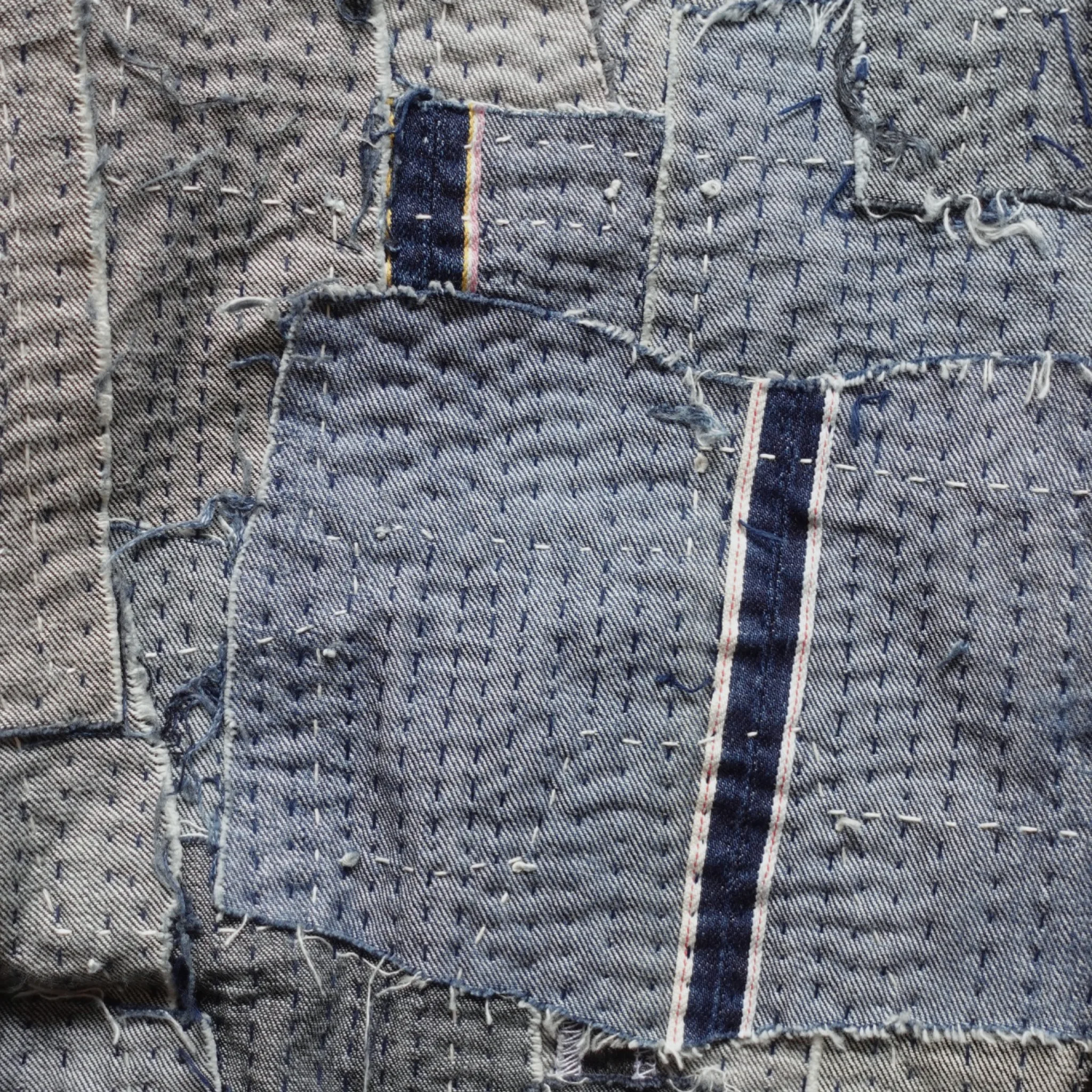
All the sashiko is stitched by hand, and TMMY says the jacket uses around 250 metres of thread. The stitches and overlapping layers stay visible on both the outside and the inside. The label describes the result as a one-of-a-kind jacket.
Matsuda says he uses the same method for denim trousers, combining Fukuyama test samples and offcuts in different colours and textures. So the jacket is one result of a wider process.
From Keio Commerce to Bunka Nights
Matsuda didn’t come up through fashion school the usual way. He was studying commerce at Keio University when, towards the end of his second year, he started questioning the job-hunting path everyone around him was taking. His narrative says he learnt that Rei Kawakubo and Yohji Yamamoto had attended the same university, which nudged him towards design.
He enrolled in the evening course at Bunka Fashion College in 2021 while finishing his degree, and graduated from both in 2024. His first go on a sewing machine came even earlier, when he cut two of his own shirts in half and combined them into one. “Perhaps some form of remaking was present somewhere in my work from the beginning,” he writes, and the jacket suggests he was onto something.
He then spent around three and a half years in PR at the Tokyo creative agency LYDIA, including a student internship. There, he worked closely with brands focused on Japan’s textile regions and craftspeople. He says that’s how he discovered those regions, and why he wanted to use fabrics that overseas luxury houses valued enough to visit repeatedly. Early costume commissions gave him the financial footing to go independent.
Why He Won’t Say “Zero Waste”
This is where TMMY wins some trust. Matsuda first tried patterns that produced no offcuts, but he says they restricted the shapes he wanted to make. He turned instead to the question of how to use irregular pieces of cloth, and realised sashiko fit the problem well.
He’s careful with the claims, too. His sashiko bamboo-linen long-sleeved shirt uses linen and bamboo-derived rayon woven on traditional shuttle looms in Enshu, southwestern Shizuoka. The idea was to use all of the roughly two metres of fabric bought for one shirt in that same shirt, offcuts included. He frames it as a possibility tested on one garment, not proof that his whole practice wastes nothing.
“I choose to describe my approach as reducing waste as much as possible,” he writes. In a market full of vague green labels, a designer saying less is refreshingly honest, and it makes the rest of his story easier to believe.
The Clothes You Keep
TMMY began, Matsuda says, with “a concern about how easily clothing can be discarded.” He’s frank that he wasn’t outside that cycle himself, and that he understands why affordable clothing appeals to younger people. His answer is to make the maker’s hand visible, so the wearer forms an attachment to the garment and keeps it longer.
Japanese textile craft has a way of rewarding a closer look, as the gift covers in the Peranakan Museum’s Fukusa exhibition showed in 2024. Matsuda’s jacket works on a similar principle, except you can wear this one.
That drawer of scraps at home suddenly looks less like clutter and more like raw material. If 250 metres of hand-stitched thread and a stack of Fukuyama offcuts sound like your kind of wardrobe piece, browse the Sashiko Denim Jacket and the rest of Matsuda’s work on TMMY’s official website, and follow the process from fabric to finished garment on Instagram at @tmmy.jp!
Photos and Visuals courtesy of TMMY.
Read us first on Google: add DANAMIC as a preferred source and our stories show up more in your Top Stories and AI results.