Ten broken ceramics from two shipwrecks found in Singapore’s waters have been rebuilt as whole objects, and they now sit inside Marina Bay MRT Station, free to view until end-2027. If your commute already runs through the North-South Line, this is a museum stop that costs you a few minutes between trains.
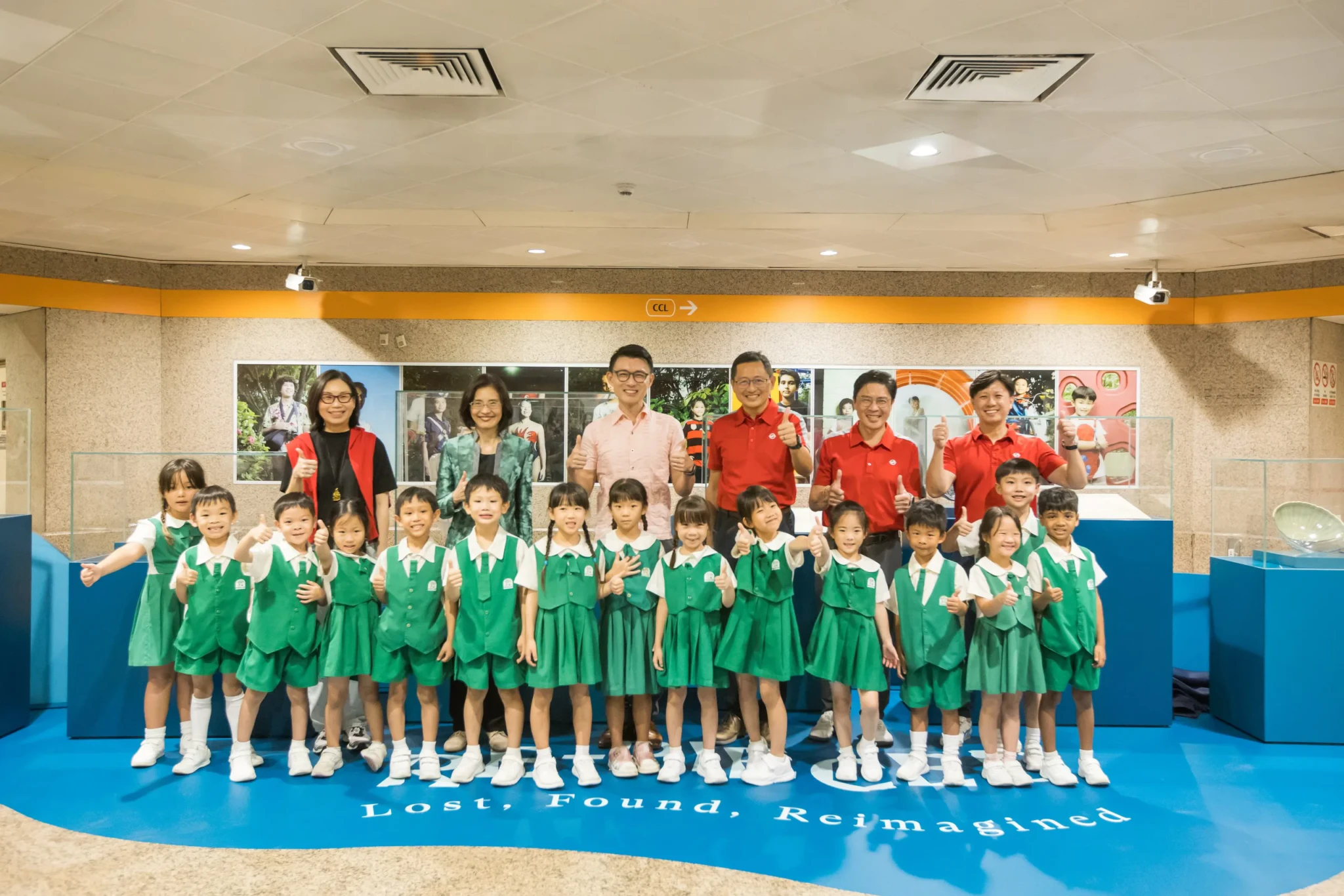
The National Heritage Board (NHB) and SMRT Trains launched Re-Pieced: Lost, Found, Reimagined on Friday, 13 November 2026. The display is in the station’s paid concourse, which is the area past the fare gates, so it’s built for people already on the move through Marina Bay rather than for a special trip.
According to NHB, all 10 recreations are on display for the first time. Many of the objects recovered from the two wrecks are fragments, so the team used 3D scanning, digital sculpting and 3D printing to turn broken sherds (the archaeologist’s word for pieces of pottery) into complete forms that show how each original may have looked.
Two Wrecks, Four Centuries Apart
The pieces come from the Temasek and the Shah Muncher, and the gap between them is what makes the pairing work. NHB dates the Temasek wreck to the mid-14th century, carrying about three-and-a-half tonnes of ceramics. NHB goes further in its object notes, calling it the largest collection of blue-and-white Yuan dynasty ceramics ever found on a shipwreck.
The Shah Muncher is an 18th-century merchant vessel that was sailing from Canton to Bombay. Its cargo held ceramics, zinc ingots, glass bottles, glass beads and agate medallions, which NHB says is evidence of private trade in the Singapore Strait before the British port was set up in 1819.
If your history lessons started the Singapore story in 1819, these two ships push that date back by centuries. NHB’s position is that together they prove Singapore was an internationally connected trading hub from at least the 14th century, and the display puts that argument within arm’s reach of your morning train.
Start With the Phoenix Dish
Five of the 10 pieces come from the Temasek. At the launch, NHB’s highlighted pieces were a celadon bowl with a rare double-phoenix decoration and a large Chinese stoneware jar. The Longquan celadon dish has a pair of stylised phoenixes pressed into its well. Greenware like this was mostly one colour, so the motif carries the whole design, and phoenixes often stood for peace and moral character.
The blue-and-white flask is the sleeper pick. NHB says it was likely modelled on a West Asian metal flask, with a flat side made to rest against a traveller’s body or saddle and side lugs for a carrying rope. It’s a 14th-century travel bottle, which feels fitting for a display that commuters pass with a bag on one shoulder!
The rest of the Temasek set covers a large Longquan celadon bowl with a fluted cavetto (the curved inner wall) and a foliated rim, a blue-and-white bowl painted with lotus bouquets, and a shallow blue-and-white plate with a phoenix spreading its wings across a background of peonies.
Plum Pits and a Porcelain Parrot
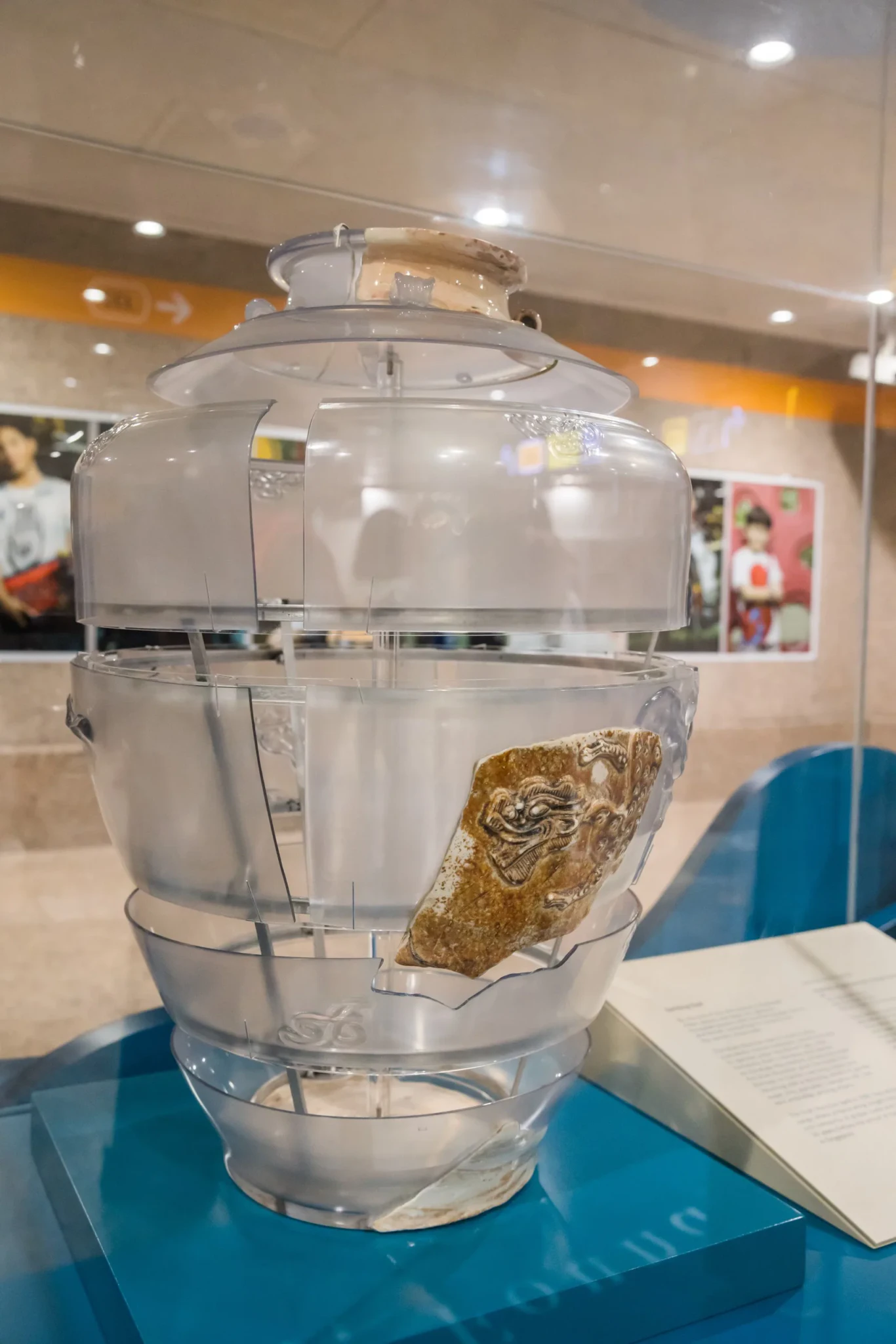
The Shah Muncher half is where the stories get personal. The large stoneware jar is rebuilt from four fragments, and NHB says jars like this probably held liquids and other organic cargo rather than being trade goods themselves. Plum pits turned up in one of them.
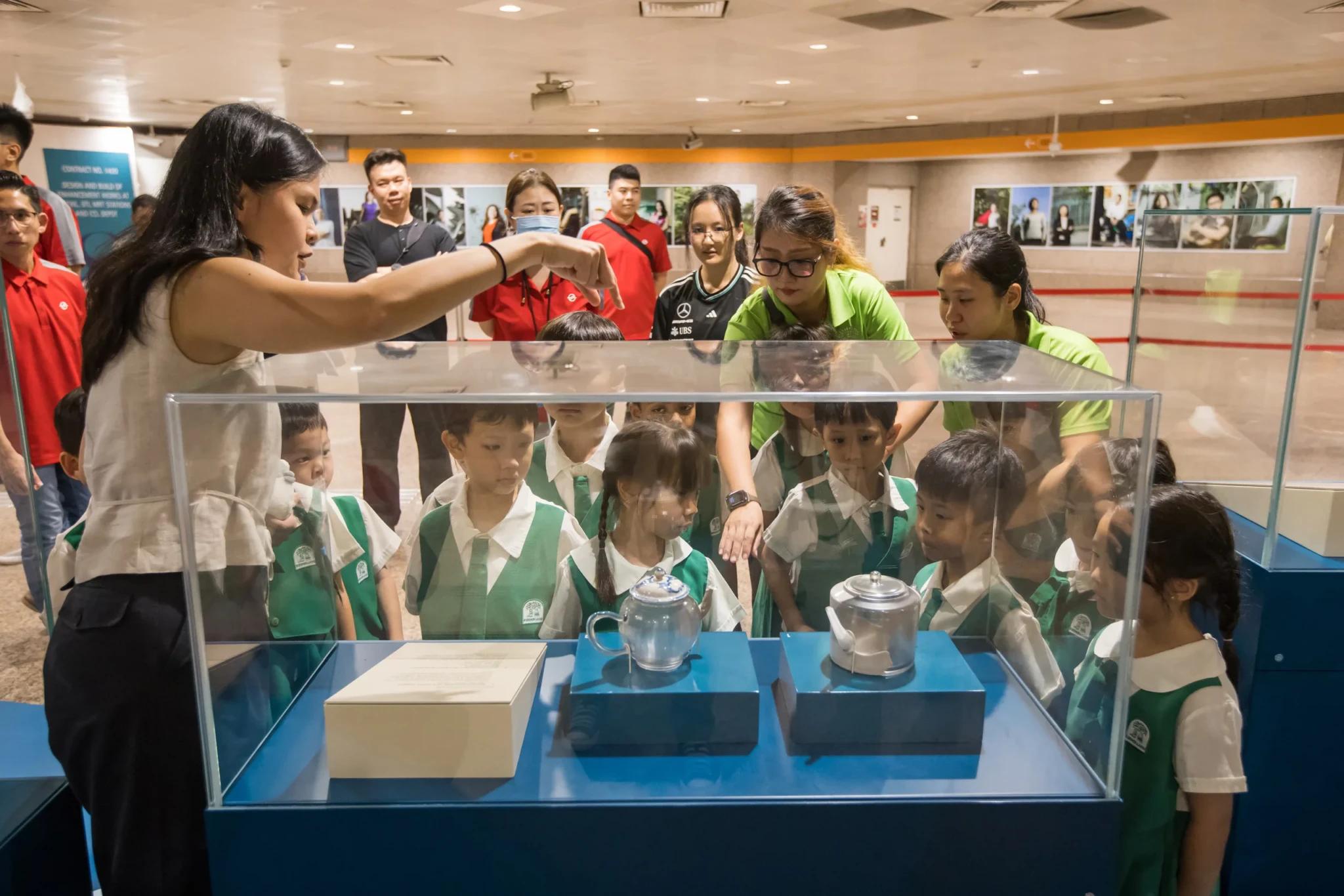
Based on other wrecks from the same era, NHB suggests these jars might have held sugared fruits, ginger, rhubarb, and spices such as star anise and cinnamon. That makes this the piece to stop for if you care more about what was in the hold than what was on display in a rich family’s dining room.
Two teapots tell the trade story from different angles. The white teapot has an intertwined handle and a straight spout, made in China and possibly for a European buyer, at a time when kiln centres such as Jingdezhen took custom porcelain orders from wealthy Europeans. The blue-and-white glazed teapot links back to the Temasek, since NHB reads blue-and-white wares turning up in both wrecks as a sign that they stayed a regular part of overseas trade across centuries.
The porcelain parrot is the most charming object of the lot. It was made in two halves and sealed with clay, and a seam down the middle still shows how it was put together. Parrots were popular as pets and as subjects in art, which explains why someone would ship a ceramic one across an ocean.
The last piece is an octagonal vase with moulded floral motifs on each of its eight panels. Its ribbed body, bands near the foot and carinated (sharply angled) shoulder are, according to NHB, designs less commonly seen on Chinese stoneware.
With limited time, go for the phoenix dish, the jar and the parrot. Each one answers a different question: what people prized, what they carried, and how the things were made.
How a Sherd Becomes a Teapot
NHB breaks the process into four steps. First came scanning, which combined 3D techniques including photogrammetry, a method that analyses many photographs to find common points and convert 2D images into accurate 3D measurements. Those scans captured the shape and surface texture of each recovered fragment.
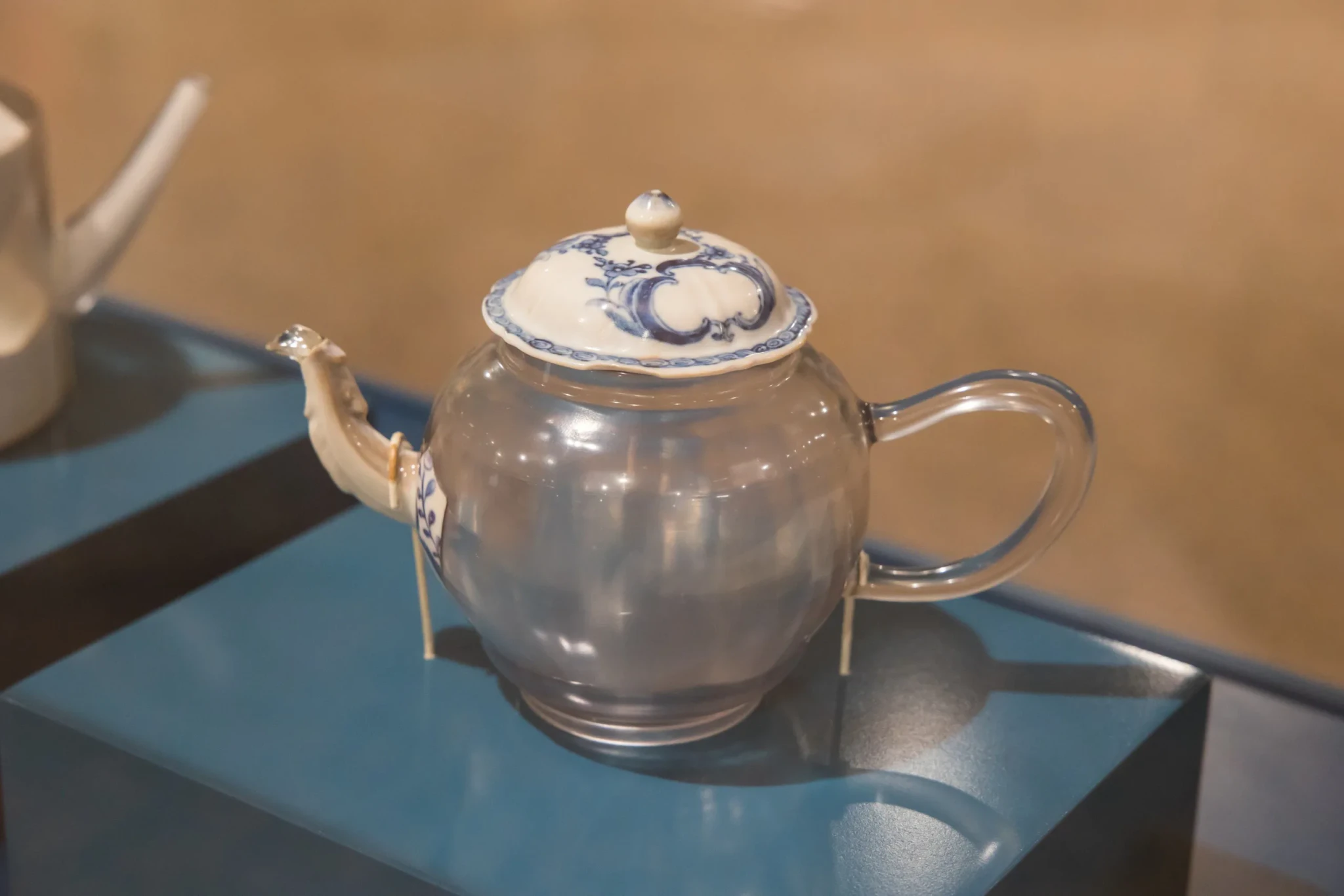
Next was reconstruction. Guided by research, consultation and images of related artefacts, the team digitally sculpted the missing sections, producing what NHB calls an informed reconstruction of how each object may have appeared. The models were then optimised for strength and texture and printed in full-colour resin, with the scanned textures used to reproduce the colours of the original sherds.
It’s worth reading these as educated reconstructions rather than exact copies, and NHB frames them that way. Georgina Koh, NHB’s Director of Heritage Policy & Research, said the hope is that visitors “will be intrigued by how much history a seemingly ordinary archaeological sherd can hold, and the stories, some never known before, that can be unearthed from deeper research and understanding.”
Opened by a Minister, Built for Commuters
Baey Yam Keng, Minister of State for Culture, Community and Youth & Transport, officially opened the exhibition as Guest of Honour and unveiled it with representatives from NHB and SMRT Trains. The display is the next chapter of the NHB and SMRT Trains collaboration, following last year’s Unearthing Stories of Us: Archaeological Display at Bras Basah MRT Station, which NHB says was the first time it brought archaeological artefacts directly to the public at an MRT (Mass Rapid Transit) station.

SMRT’s Group Chief Commuter Engagement & Service Excellence Officer, Alvin Kek, put the idea simply. “Most commuters step into a station with a destination in mind,” he said, adding that the hope is to get them “to pause and journey much further, across centuries and beneath the waters around Singapore, all within our SMRT network.”
Where to See the Real Thing
Everything at Marina Bay is a replica, and NHB is upfront that the goal is to send you on to the originals at the National Museum of Singapore’s newly refreshed Singapore History Gallery, along with ArCH Square, which NHB says offers free admission to Singaporeans and Permanent Residents.
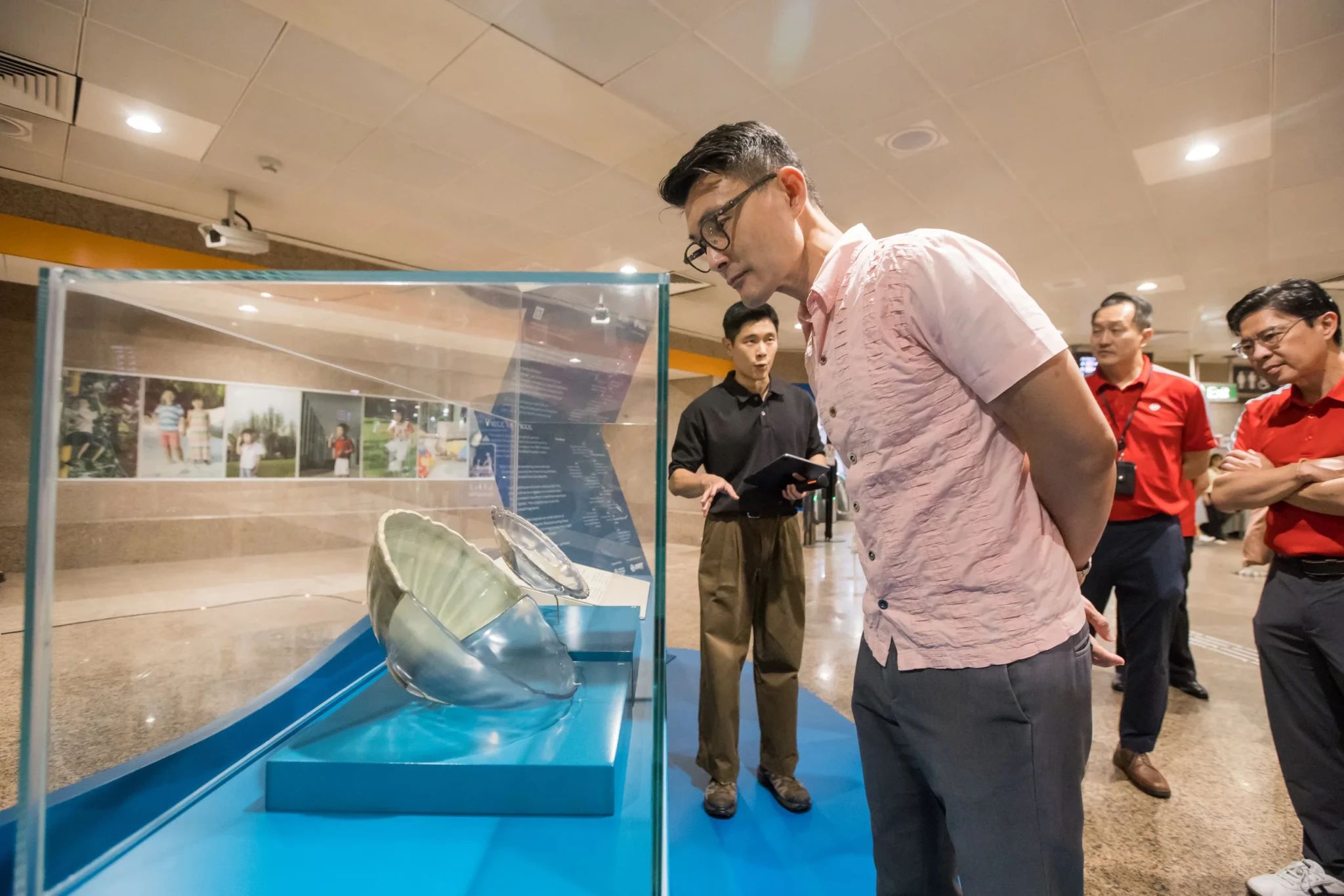
🗓️ Date: 13 November 2026 to end-2027
📍 Location: Paid concourse, Marina Bay MRT Station (North-South Line)
💰 Entry: Free to view
🏺 On display: 10 recreated artefacts from the Temasek and Shah Muncher shipwrecks
🏛️ See the originals: Hinrich Foundation Trade Gallery at the Asian Civilisations Museum, Singapore History Gallery at the National Museum of Singapore, and ArCH Square
Most of what archaeologists pull from Singapore’s seabed comes up in pieces, and Re-Pieced is the rare chance to see what those pieces once added up to without detouring from your usual route. With the cases staying put until the end of 2027, there’s plenty of time to catch the phoenix dish, the plum-pit jar and that seamed little parrot, and the National Heritage Board’s museums hold the originals once the replicas have done their job of making you curious!
Photos and Visuals courtesy of the National Heritage Board.
Read us first on Google: add DANAMIC as a preferred source and our stories show up more in your Top Stories and AI results.