Indian bus maker JBM Electric Vehicles (JBM EV) launched its all-electric ECOLIFE e12 city bus at Singapore Urban Mobility Week (SUMW) 2026 on 4 November 2026, and JBM said the bus would stay at Booth D27, Suntec Singapore, until the end of the event. If you ride a bus to work or school here, this is a close look at one of the companies now pitching to build the quieter, cleaner fleet that pulls up outside your HDB block.
A Diplomat on Ribbon Duty
The launch had serious star power for a bus. Dr Shilpak Ambule, High Commissioner of India to the Republic of Singapore, cut the ribbon with Nishant Arya, Chairman of JBM Electric Vehicles, which is the flagship company of JBM Group.
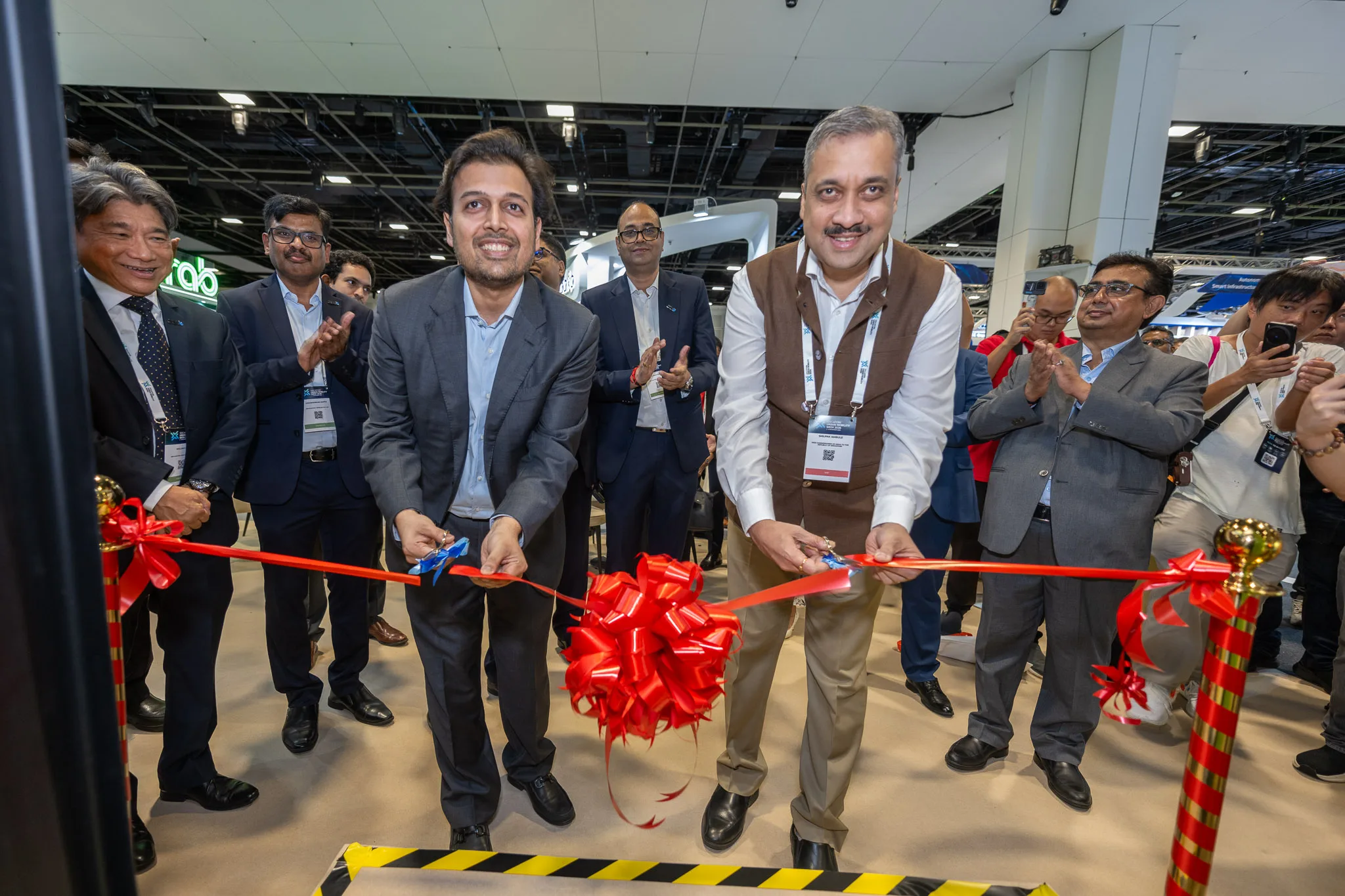
Having India’s top diplomat in Singapore at the launch makes this a made-in-India moment as much as a product reveal. That fits JBM’s own line about buses “designed in India for the world”. The company bills itself as the first Indian company to launch an electric bus in Singapore. That is JBM’s claim, and it covers a launch here rather than a bus running on a public route.
JBM EV has set up its Asia-Pacific (APAC) headquarters in Singapore as well. The company says this base will handle marketing and sales, aftersales, operations, and partnerships across the region. In practice, that means much of the business of selling and servicing these buses across Asia will now run out of our little red dot.
What’s Under the Aluminium
JBM says the ECOLIFE e12 has a lightweight monocoque body built entirely from aluminium. In a monocoque, the outer shell carries the structural load instead of sitting on a separate frame. The company adds that its telematics give operators round-the-clock access to the vehicle’s state of health.
Safety takes up the longest part of the spec sheet. The bus uses an Advanced Driver-Assistance System (ADAS), which JBM says helps the driver spot obstacles and flags driver errors.
Three features matter most to the rest of us: the pedestrian and cyclist collision warning, the driver drowsiness and distraction warnings, and the fire detection and suppression system. They protect the people least able to protect themselves, whether that’s someone crossing in front of the bus, cycling beside it, or dozing in the back on a late-night ride home. A tired driver on a long shift is a risk every commuter shares, so a system that watches for that is exactly the sort of feature passengers should care about.
The Numbers Behind the Pitch
JBM is pitching scale, and the figures are big. The company says it has more than 4,000 electric buses on the road across various countries, which have covered over 500 million electric kilometres and carried more than 1.5 billion passengers. It reports an orderbook of 10,000 electric buses that it plans to deliver over the next two years, though like any delivery timeline, that’s a company plan rather than a done deal.
For independent context, Singapore’s Land Transport Authority says it is committed to a 100% cleaner energy bus fleet by 2040, with electric buses expected to make up half of the public bus fleet by 2030. In December 2025 it awarded six contracts for 660 new electric buses, to be deployed progressively from the end of 2026.
All of this comes out of what JBM calls one of the world’s largest dedicated electric bus factories, located in India, with capacity for 20,000 electric buses a year. Wrapped around the buses is the JBM E-Verse, the company’s name for its in-house fast charging, lithium-ion batteries, energy storage, and power infrastructure. JBM says the setup comes with a network that ensures zero downtime, which is a bold promise to make to any bus operator!
Arya framed the mission in big terms at the launch. “Our mission is to decarbonize public transport by creating new and sustainable global benchmarks,” he said, adding that the company aims to support customers by “thinking global and acting local”.
So, Can You Ride One?
Not yet, as far as the announcement goes, because JBM hasn’t named an order, operator, or route in Singapore. For now, the ECOLIFE e12 is a bus people could walk around at a trade show, not one you can tap your card on.
It’s still worth paying attention to. If the shift to electric has felt like a car owner’s story so far (we took that angle on a drive in the Polestar 2), this launch shows the buses you take every morning are changing too. With JBM’s APAC sales, aftersales, and operations teams now based here, clean-transport work is heading this way, from selling to servicing and partnering on electric fleets for a whole region.
🗓️ Date: Launched 4 November 2026, during Singapore Urban Mobility Week 2026
📍 Location: Booth D27, JBM Group booth, Suntec Singapore
🚌 Shown: JBM ECOLIFE e12 all-electric city bus
🏢 New in town: JBM EV’s Asia-Pacific headquarters, set up in Singapore
SUMW 2026 has wrapped, but the story of who builds the buses that could one day run past your void deck is only starting. To see the full line-up, from city buses to school buses and airport tarmac buses, and to keep up with what this made-in-India bus maker plans next from its new Singapore base, follow JBM Electric Vehicles!
Photos and Visuals courtesy of JBM Electric Vehicles.
Read us first on Google: add DANAMIC as a preferred source and our stories show up more in your Top Stories and AI results.