Sony announced the RIALTO 65 Camera Extension System in Singapore on 30 October 2026, and the company plans to bring it here in the first half of 2027. It’s an add-on for the VENICE 2 cinema camera that puts a 65mm-class sensor inside a detachable head Sony puts at roughly 1.5kg.
That matters to anyone who has wondered how big-budget films get their wide, deep, slightly dreamy look. The format usually means a big camera, and Sony’s pitch is that the head can now go where a big camera won’t fit. Sony hasn’t published a Singapore price and points buyers to official local Sony retailers instead. Since the system needs a VENICE 2 body to work, this is professional production kit rather than something for a student’s savings account, so treat it as a preview of the gear behind the films you’ll be watching.
What “65mm” Actually Means
The name comes from 65mm motion-picture film, and Sony says the term describes the class of imaging area rather than the sensor’s literal size. The real figures, according to Sony, are 53.75mm wide by 35.83mm high, with a diagonal of about 64.60mm. That works out to roughly 2.2 times the imaging area of a 35mm full-frame sensor. Full-frame is the format you’ll find in high-end mirrorless cameras like the one in our Canon EOS R5 review.
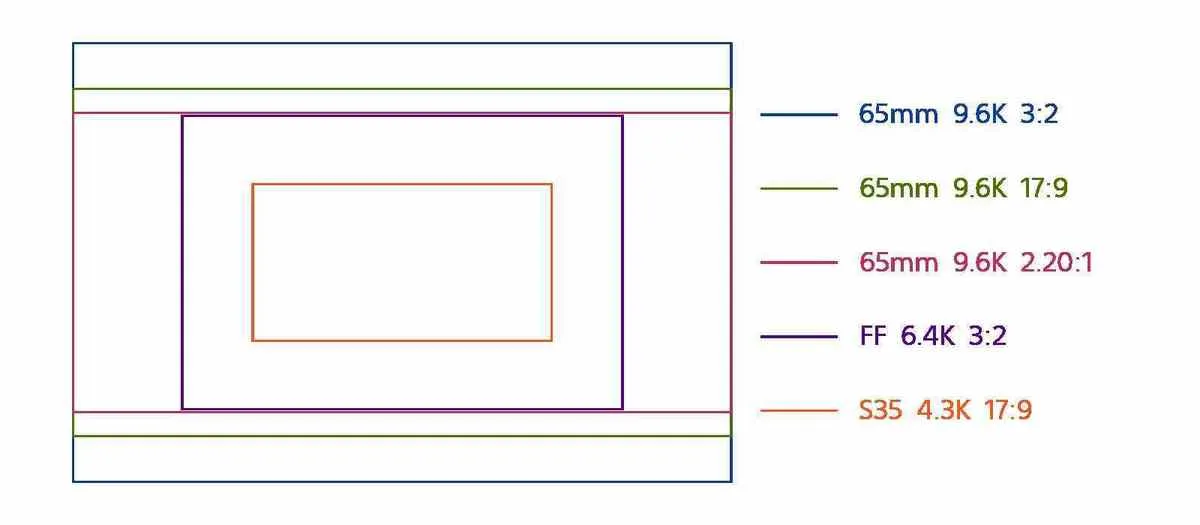
Sony says it’s among the largest image sensors in commercially available cinema cameras, based on its own research as of the October 2026 announcement. The company claims the extra area renders people with more presence and gives a stronger sense of distance between a subject and the background. In plain terms, an actor can stand out sharply against a landscape that still feels enormous. Sony says that look is meant to draw audiences into the scene.
At launch, Sony lists two readout modes. 9.6K 1.5:1 Open Gate uses the sensor’s full width and height, which gives filmmakers room to reframe later. 9.6K 2.20:1 has a diagonal of about 59.04mm, and Sony says it works with a wider range of lenses. More modes are promised through future software updates to the VENICE 2 body, though Sony adds that functions and specifications may change without notice.
Two Base ISOs for Day and Night
ISO is a camera’s sensitivity to light, and the RIALTO 65 lets shooters choose a base ISO of 2500 or 10000 depending on the scene. At base ISO 2500, Sony quotes 15+ stops of latitude. That’s how far the exposure can be pushed while the image still holds detail from bright highlights to deep shadows, which is handy in high-contrast scenes like a sunlit window inside a dark room.
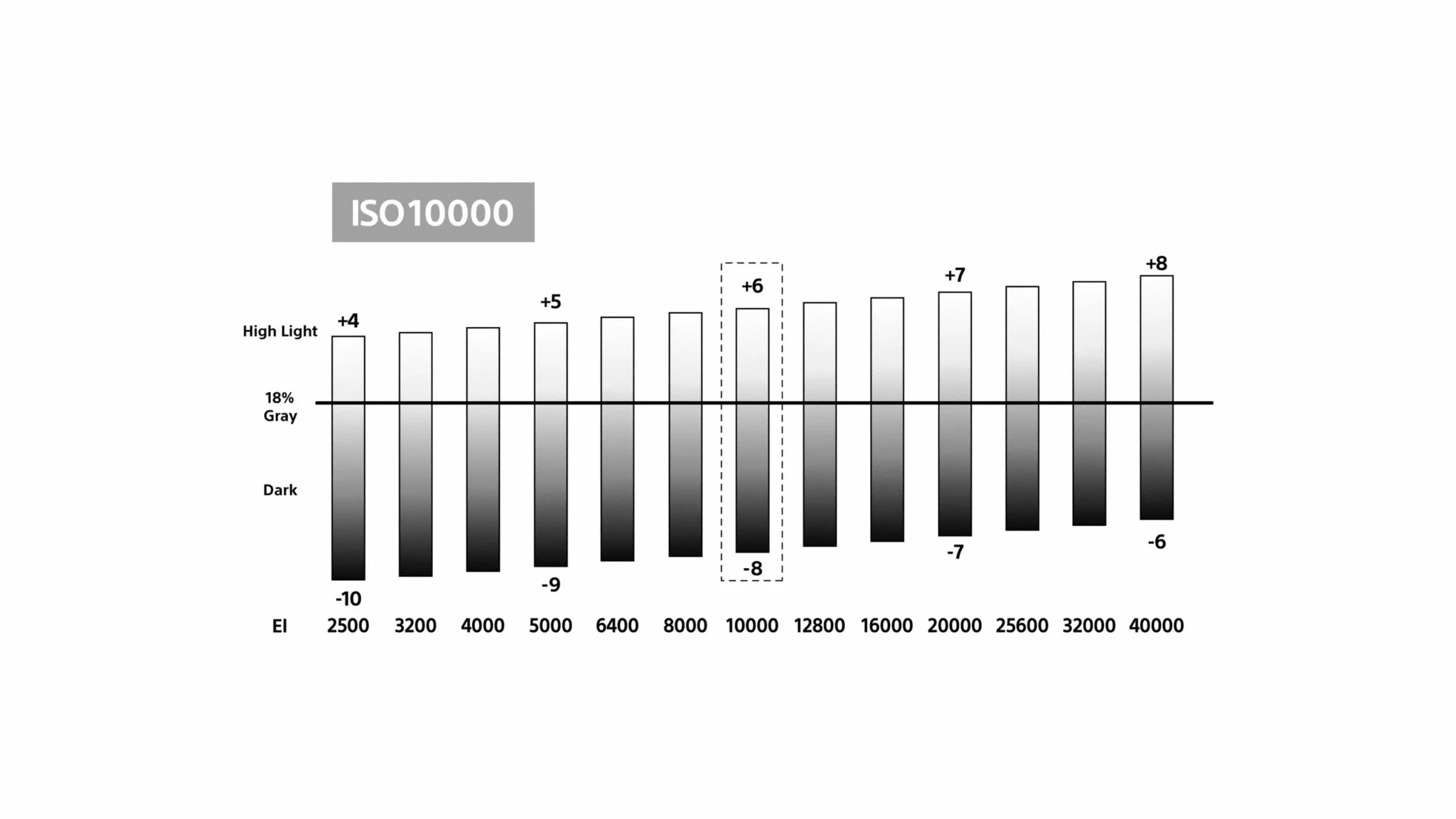
The higher base ISO is aimed at low-light work. Sony’s chart for that setting maps exposure index values from EI 2500 up to EI 40000.
The Head That Leaves the Body
This is the part that changes how crews will work. In Extension Mode, the camera head separates from the VENICE 2 body and connects by cable. In Studio Mode, it attaches directly to the body like a conventional camera. Sony lists the head at about 115mm × 154mm × 63mm, small enough, the company says, to sit close to a subject or fit into confined spaces and elevated positions. Handheld shooting is on the list too.
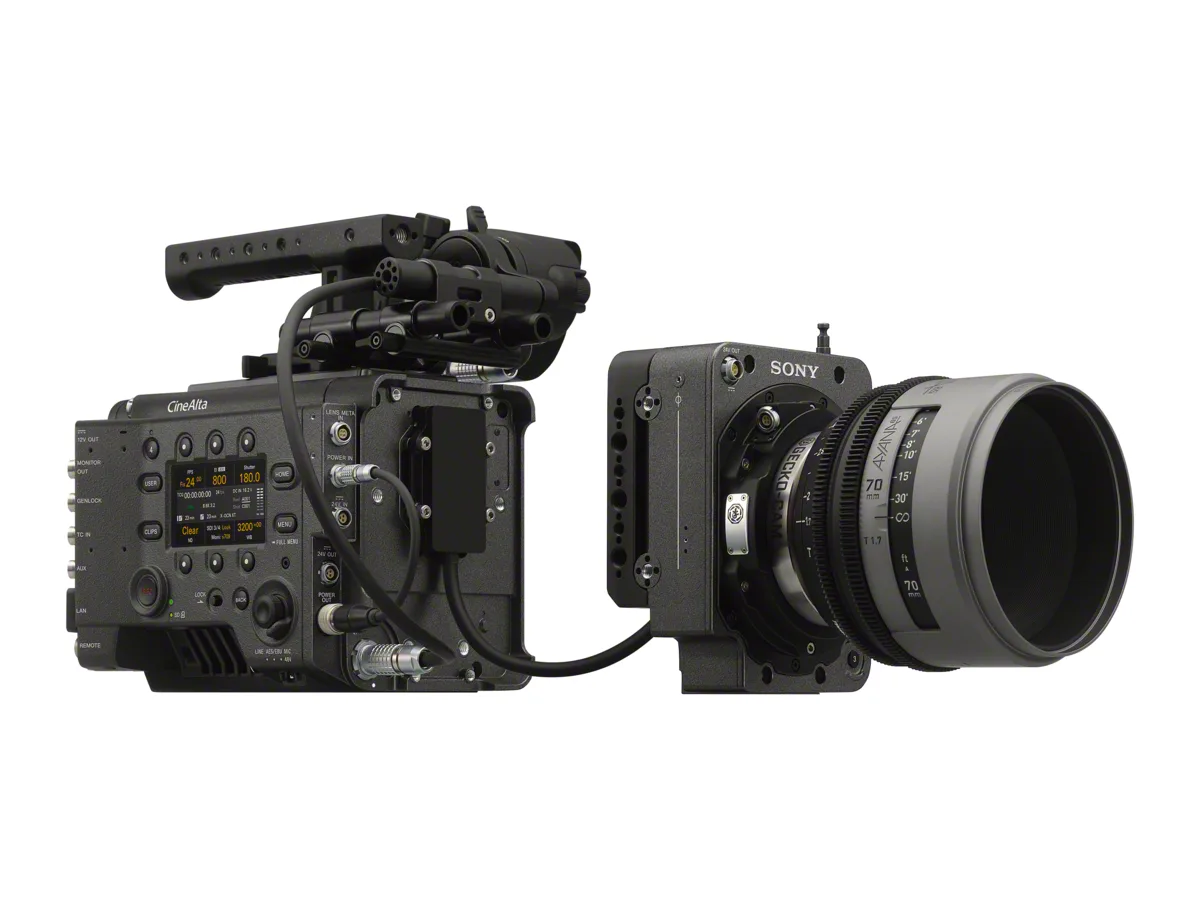
A 4.5m cable comes in the box, while the CBK-12C6510 12m Cable is sold separately for when the head needs to sit farther from the body. The cable detaches at both ends, which Sony says makes it easier to rig. The system can also record camera tilt and roll as metadata for use in post-production.
For a format that has usually meant hauling a large camera around, a head this size is the real headline.
Same Camera, Bigger Picture
Since the VENICE 2 body still handles recording, existing owners keep their AXS memory cards, Sony’s colour science (including S-Log3 and the S-Gamut3 colour space) and internal 16-bit X-OCN recording. Sony’s argument is that crews can step up to 65mm without throwing out their workflow, and for productions already running VENICE 2 that’s a sensible sell.
One catch worth knowing: the RIALTO 65 doesn’t include a lens mount. Users fit a third-party lens-mount adapter that suits their production and lenses, including lenses made for the 65mm format. With a lens and adapter that talk to the camera, focal length, focus position and aperture can be saved as metadata for editing, VFX (visual effects) and virtual production. Anamorphic shooters get de-squeeze display at multiple ratios plus a Zoom to Fit function for checking composition.
The box includes 11 drop-in ND filters with electronic contacts. ND, or neutral density, filters work like sunglasses for the lens, cutting light without changing colour. VENICE 2 reads each filter’s density automatically, a small but welcome touch. A spare set comes as the CBK-NDK6510 ND Filter Kit, and Sony notes that individual densities can’t be bought separately.
Watch the Footage First
Sony has released two sample films. The Camera Field Test puts the system through its paces:
The second, LOCAL PEOPLE, comes from cinematographer Łukasz Żal, PSC.
Availability and Price
📅 Availability: First half of 2027 in Singapore, according to Sony’s plans
💰 Price: Check with official local Sony retailers
📦 In the box: RIALTO 65 camera head, 4.5m cable and 11 drop-in ND filters
➕ Sold separately: CBK-12C6510 12m Cable, CBK-NDK6510 ND Filter Kit (both planned for the first half of 2027) and third-party lens-mount adapters
🎥 Required: A Sony VENICE 2 camera body
Most of us won’t be buying a RIALTO 65, but the shots it makes possible will reach a screen near you soon enough. Get a head start with the two films above, then dig into the full specs on Sony’s RIALTO 65 product page and the CBK-NDK6510 ND Filter Kit page. If you’re an aspiring filmmaker, that 9.6K footage is a fine way to train your eye for big-screen framing!
Visuals courtesy of Sony Electronics Singapore.
Read us first on Google: add DANAMIC as a preferred source and our stories show up more in your Top Stories and AI results.