The haze has pushed Stepping Out for Stroke 2026 (SOFS 2026) off the waterfront. The Singapore National Stroke Association (SNSA) will now hold its annual event entirely inside Flower Field Hall, Gardens by the Bay, on Saturday, 31 October 2026.
If someone in your family has had a stroke, or you’ve become the person who texts reminders about medication and follow-up appointments, this year’s theme is aimed at you. SOFS 2026 is about life after the hospital, and specifically about preventing a second stroke, which is a topic most of us never get briefed on.
Stroke tends to get filed under things that happen to grandparents, and public campaigns sensibly focus on spotting the warning signs and getting to an emergency department fast. What gets far less airtime is the long stretch afterwards. The discharge papers are signed and the scans look stable, yet survivors and the people around them are left with a fresh list of worries that nobody hands them in writing.
The Walk Is Off, the Event Isn’t
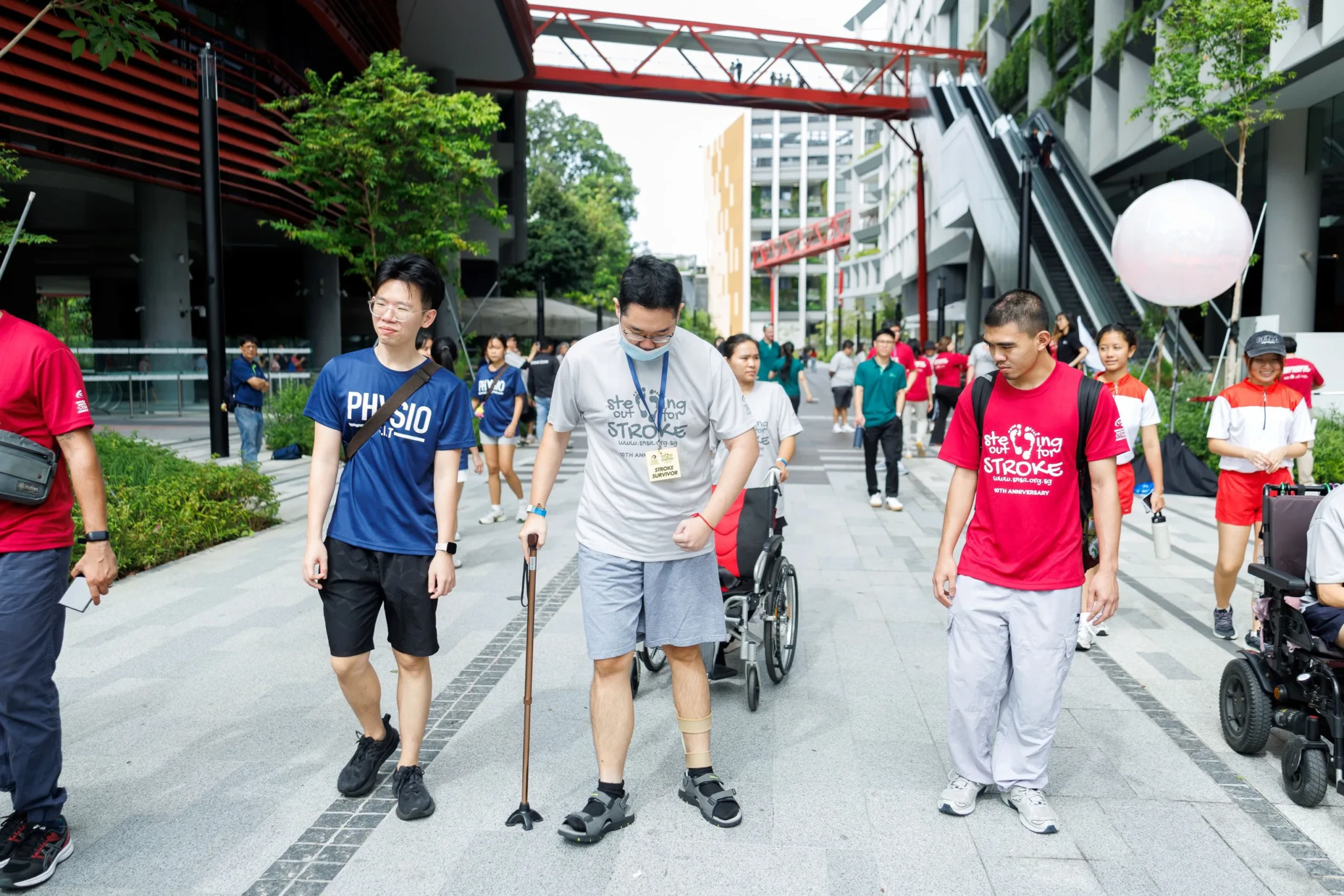
SOFS 2026 was first announced as a two-part day, with a community walk at Bayfront Event Square and an indoor Stroke Experience Journey at Flower Field Hall.
Everything else carries on under one roof, from 3pm until the event wraps at 9pm. Moving indoors is the right decision for a crowd that includes survivors who are still rebuilding stamina and carers who are already stretched thin. Registered participants were told that the revised programme would reach them by email.
The format change marks a real break from last year. SNSA said that edition drew more than 600 participants and 200 volunteers. If you joined the 610 people at Samsung’s first Galaxy Walkathon in September, you know how much a walk depends on the step count. This year SOFS has no step count at all, which puts the stories in the hall at the centre of the day.
What “No to Two” Is About
This year’s edition is co-organised with Bayer, the life sciences company, through its disease-awareness campaign “The Invisible Made Visible” and its “No to Two” message. In plain terms, that means one stroke is enough and the second one is worth fighting off. The event materials don’t name or promote any medicine. That matters in Singapore, where the Health Sciences Authority (HSA) prohibits public advertising of prescription-only drugs. Bayer’s involvement is a partnership on awareness, and readers should treat it that way.
Simon Rosof, Head Asia Pacific at Bayer Pharmaceuticals, framed the goal like this: “Preventing a second stroke deserves as much attention as responding to the first.”
The medical case comes from Dr N V Ramani, a neurologist at Raffles Neuroscience Centre, Raffles Hospital. “Fortunately, there are many effective treatments that can significantly reduce that risk through secondary prevention,” he said. He added that treatment should continue “not just in hospital, but after going home and throughout life.”
The Stuff That Never Shows on a Scan
The risk of recurrence, follow-up care, keeping up with medication, and lifestyle changes: none of these are dramatic, and each one quietly piles onto someone’s to-do list. Survivors may need to manage related health conditions, take prescribed medication properly, and turn up to every appointment for years.
This is where younger family members tend to come in, often without realising it. Dr Ramani said that “caregiver support also plays an important role, including helping with medications and medical appointments.” If you’re the sibling who set up the pill organiser or the grandchild who drives Ah Ma (Grandma, in Hokkien) to her monthly review, you’re already doing secondary prevention, even if no one has called it that.
Kevin Poh, SNSA’s Deputy Executive Director, described the gap the event is trying to fill. “Much of the attention around stroke naturally centres on the moment it happens, and rightly so,” he said. “But for survivors and their families, life continues after that first stroke.”
Where to Spend Your Saturday
The programme runs for six hours, but two parts deserve your time over the rest.
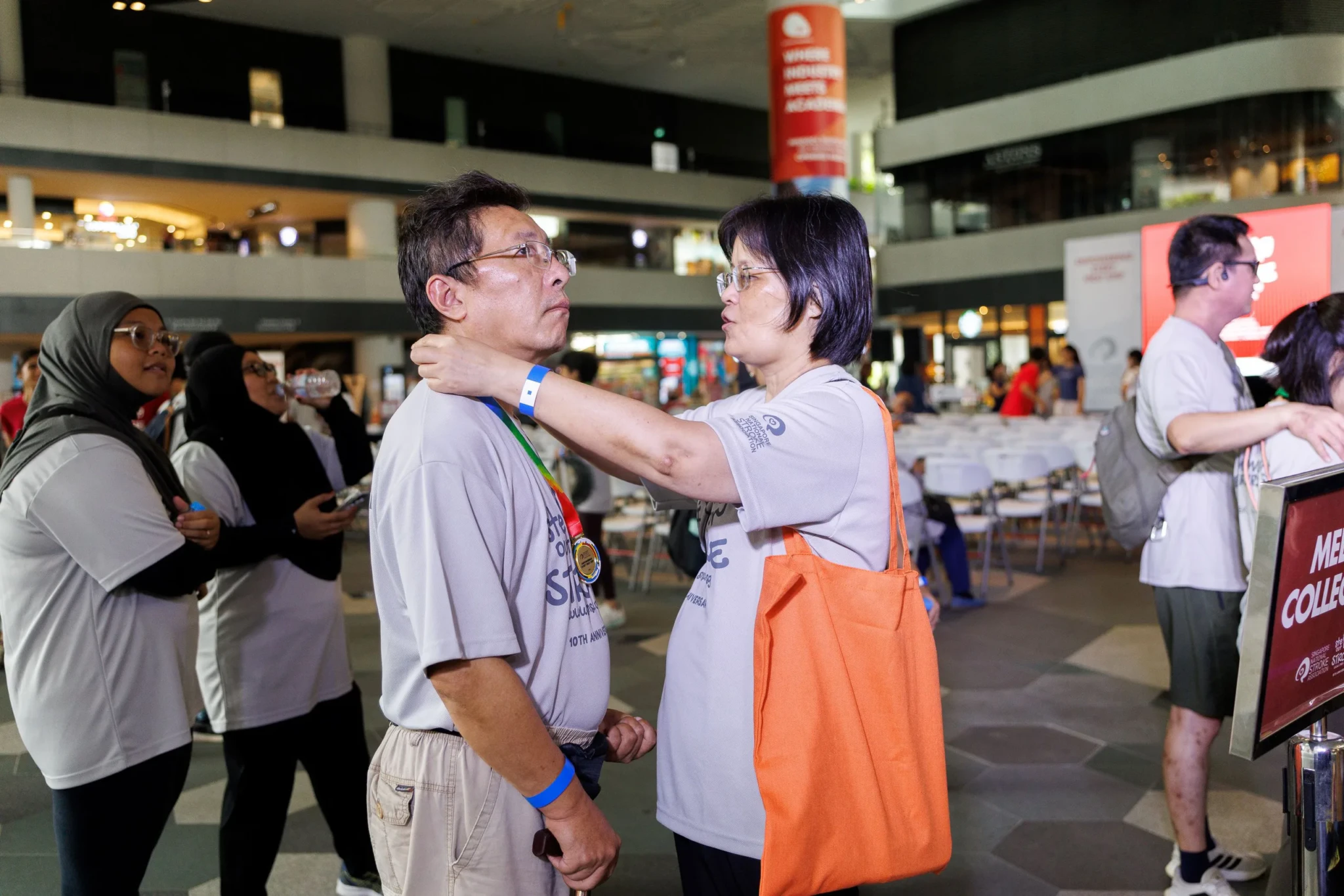
The first is the Stroke Experience Journey, which opens at 3pm and runs again after dinner. SNSA says it will bring together survivor stories and artwork, community support resources, and awareness activities that follow the path from recognising a stroke to recovery, returning to daily life, and prevention. Bayer will run its “The Invisible Made Visible” activation in the same hall. For carers, arriving early and walking through it before the speeches begin is the smartest use of the afternoon.
The second is the survivor sharing at 5.15pm by Mr Suhaimi Yusof and Mr Bernard Lim. Hearing recovery described by the people who are living it will tell you more than any leaflet can.
Elsewhere on the schedule, a mass Piloxing session (a workout that blends Pilates with boxing moves) starts at 4.30pm. Guest of Honour Ms Sylvia Lim gives the opening address at 5.05pm, and SNSA Vice-President Ms Rohaida Rahmat delivers a 30th anniversary message at 5.45pm. The anniversary is accurate, since SNSA was registered as a society in December 1996.
Key Details
🗓️ Date: Saturday, 31 October 2026
⏰ Time: 3pm to 9pm
📍 Location: Flower Field Hall, Gardens by the Bay
📝 Registration: 4pm, for SOFS participants
💬 Survivor sharing: 5.15pm, with Mr Suhaimi Yusof and Mr Bernard Lim
🌸 Flower Dome admission: 6.30pm, for registered SOFS participants and invited guests only
🎁 Grand Lucky Draw: 7.30pm, followed by dinner as the Stroke Experience Journey continues at 7.45pm
🚫 Note: The outdoor walk at Bayfront Event Square has been cancelled because of the haze
Surviving a first stroke gets a family through the emergency, and the years that follow are where the real work happens, much of it handled by the people in the room on 31 October. If you’re one of the people helping someone through that, an afternoon at Flower Field Hall can give you useful information and a hall full of others who understand. Keep an eye on the Singapore National Stroke Association as it marks its 30th year.
Photos and Visuals courtesy of the Singapore National Stroke Association.
Read us first on Google: add DANAMIC as a preferred source and our stories show up more in your Top Stories and AI results.