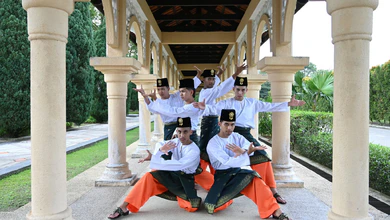
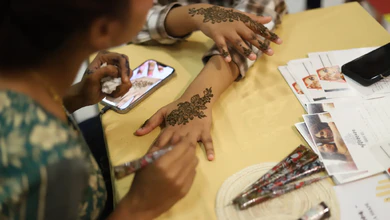
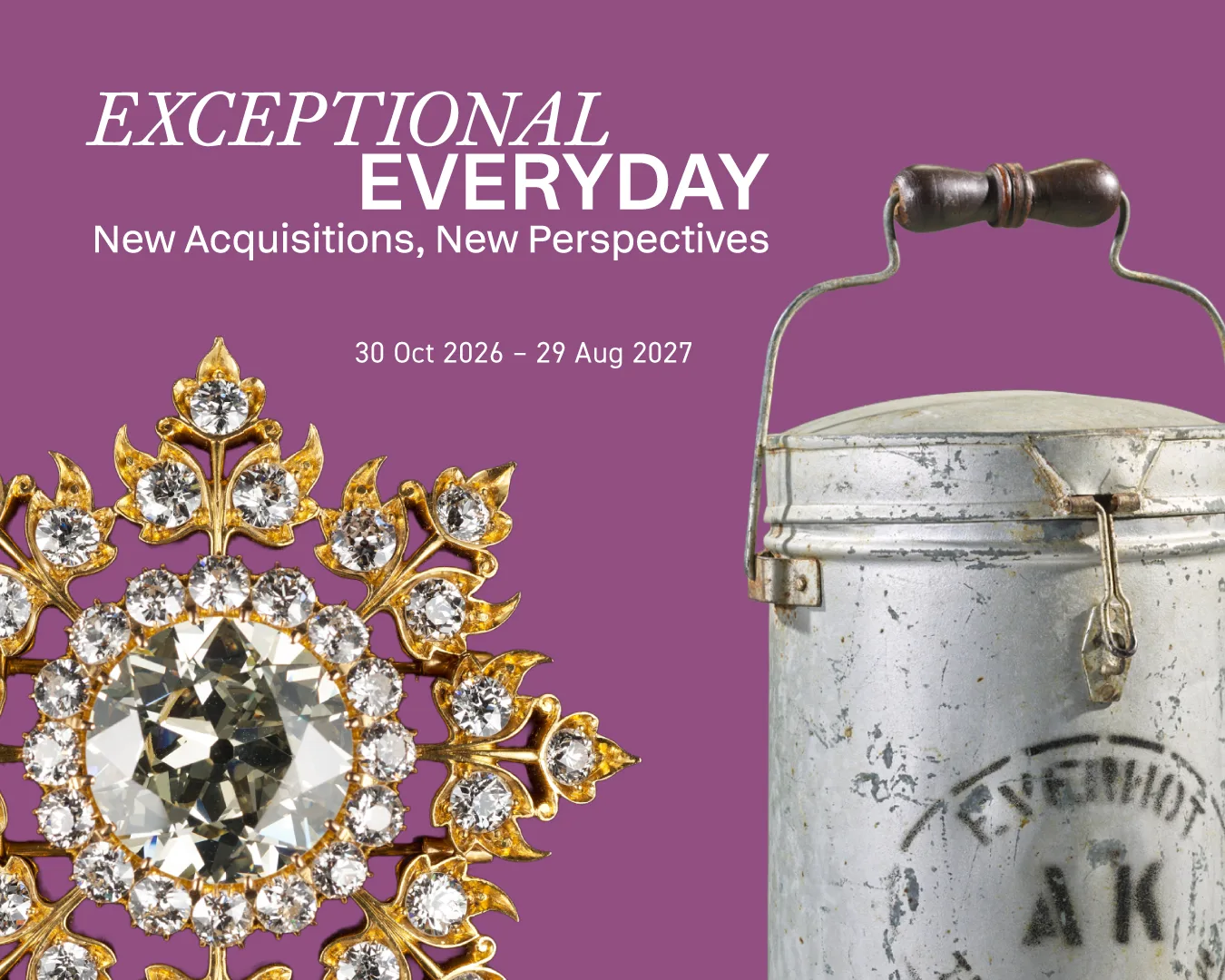
The Peranakan Museum on Armenian Street opens Exceptional/Everyday: New Acquisitions, New Perspectives on Friday, 30 October 2026, and it runs until 29 August 2027. Admission charges apply. That puts one of the city’s most quietly radical museum questions within easy reach of a weekend.
The question is what makes an object Peranakan? The museum’s answer includes mass-produced porcelain, a plain metal food carrier and clothes people wore at home. If any of that sounds like what’s sitting in your grandma’s HDB cupboard, that’s exactly the point.
The exhibition gathers over 150 objects across 14 stories, from furniture and porcelain to clothing and jewellery, many of them on public view for the first time. The objects are grouped under three themes: “Identity”, “Buying” and “Creating”. The Peranakans, long-established residents of Southeast Asia’s port cities, bought, adapted and sometimes made what they needed. The show refuses to pin down one tidy definition of their culture, and that’s refreshing for a museum to admit.
Clement Onn, Director of the Asian Civilisations Museum (ACM) and the Peranakan Museum, says: “Everyday objects can tell extraordinary stories.” He adds that many pieces were gifted by families and donors. That lets the museum keep “not just beautiful things, but the memories and lives connected to them.”
Where It All Started: 1963
The show opens with a coral-red kamcheng, a lidded porcelain jar. The museum describes it as the first known Peranakan object to enter the National Collection, acquired by the National Museum in 1963. From there, the museum began preserving Peranakan objects, and by 1985 it had enough for a Straits Chinese gallery.
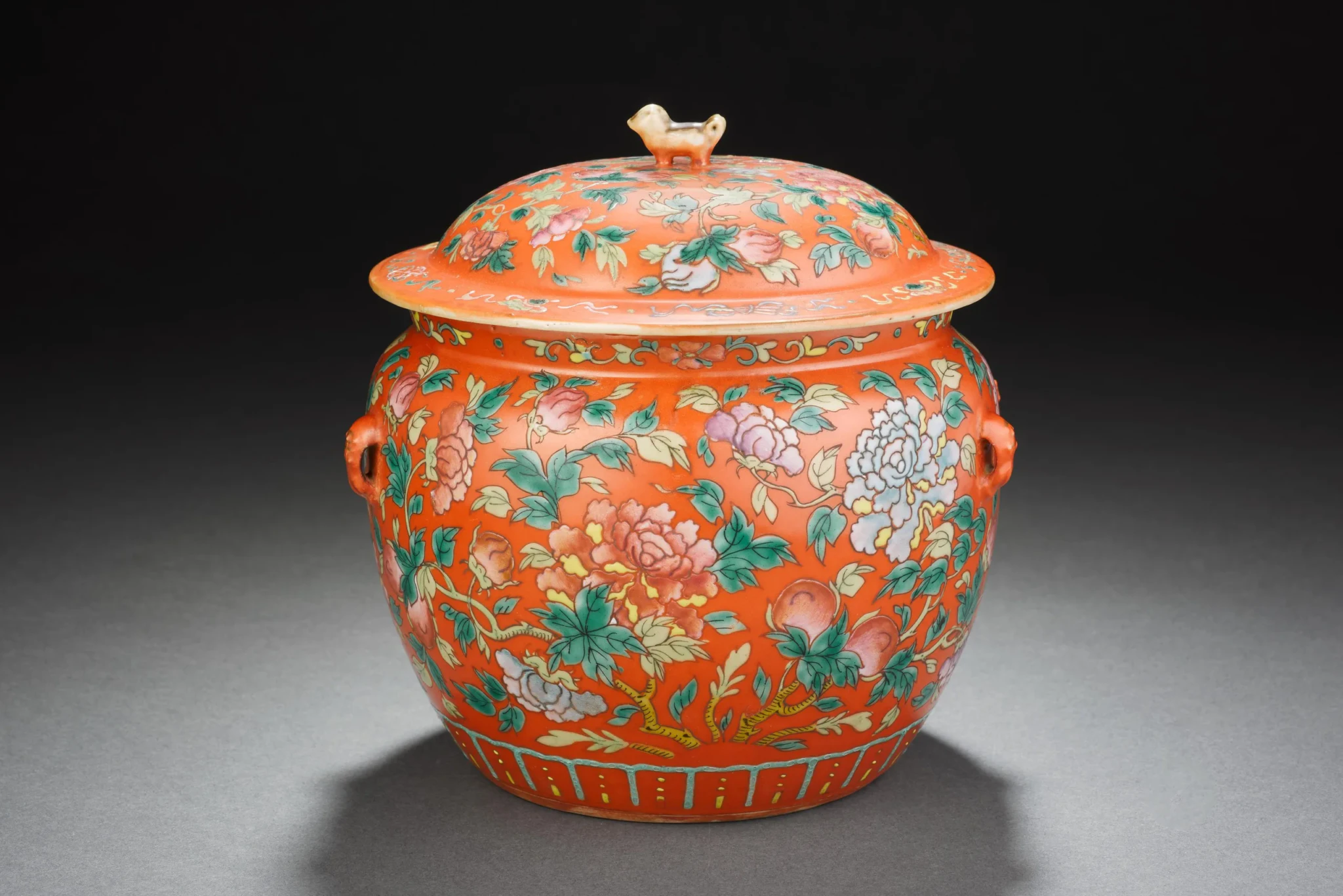
That collection now stands at some 12,000 objects. Anyone who caught the museum’s 2023 reopening has seen the permanent galleries. This special exhibition is where the newest arrivals get their moment.
Identity: Dressing Between Worlds
A portrait of a man from East Java, painted in the late 19th or early 20th century, is a standout here. He wears a Chinese shirt and trousers with leather pumps, a carved cane and a jacket that mixes Chinese frog buttons with Western lapels. The result is a style found nowhere else, and it’s a sharp reminder that fashion can be a workaround.
Then there’s a 1960s samfoo, a collared blouse with frog buttons worn with trousers. It belonged to Oei Seng Neo (1923 to 2001), who was born in Tanjung Pinang in the Riau Islands and later moved to Singapore. She wore samfoos at home. For other occasions, she switched to cheongsams, Western dresses and sarong kebayas.
Elsewhere in the exhibition, mourning jewellery reveals how grief looked different across the region. In Penang, Malacca and Singapore, nyonyas (Peranakan women) wore dark clothing with silver and pearl jewellery. According to the museum, Peranakans in Indonesia kept to customary white instead.
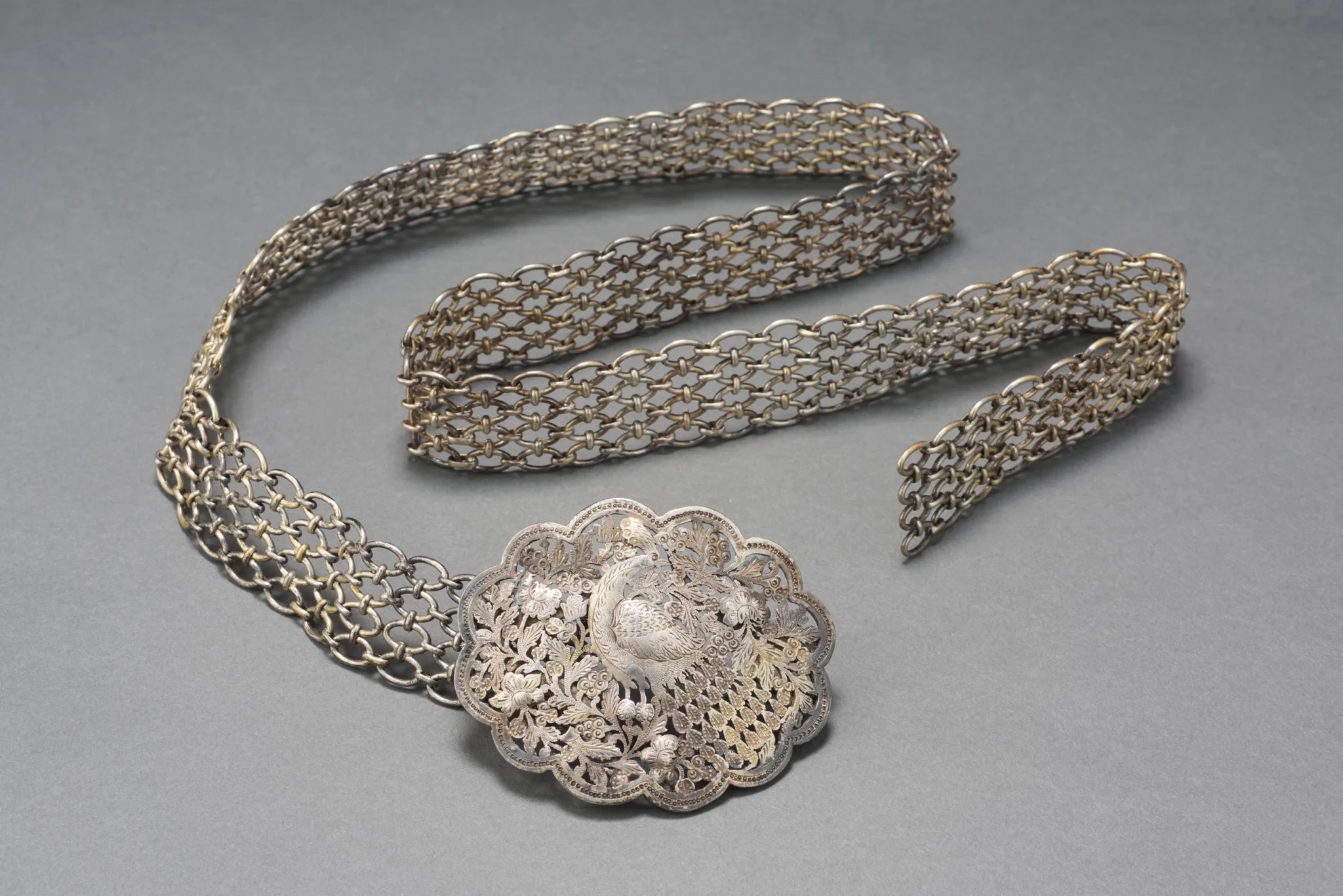
A silver belt and buckle from Aceh, gifted by Kadjin (K. J.) Low, is among the pieces in this group. It is the sort of object that rewards a slow look rather than a passing glance.
Buying: The Tiffin Carrier Twist
This is where the headline earns its keep. Tiffin carriers, called tengkat (“levels”) in Baba Malay, were common household items in the 19th and 20th centuries. The museum says plain versions were widely used in Peranakan homes. Meanwhile, the brightly coloured floral ones have only more recently been labelled, “often misleadingly”, as distinctively Peranakan. In other words, the souvenir-shop version might be the less authentic one.
The insulated carrier on show was bought by Lim Yeok Quan and her husband, Ong Peng Hock, in Bangalore. The couple had sought refuge there before the Japanese invasion of Singapore. Back home, the Ong family used it to carry offerings to their cemetery near Bukit Brown during Cheng Beng, the yearly festival for honouring ancestors.
A pair of 1890s kamchengs makes a similar point. They are decorated with phoenixes and peonies, with goldfish inside, and belonged to Chung Guat Hooi. Her father, Chung Thye Pin, was Perak’s last Kapitan Cina, a title given to a Chinese community leader.
Creating: Brides, Beads and Camels
At the other end of the spectrum is the one-of-a-kind stuff. A bim poh kemanteng (bridal handkerchief) worn by Khoo Gek Choo at her 1940 wedding carries more than a hundred jewelled ornaments. The museum believes the jewels were collected over several generations, probably passing to her through her mother and grandmother.
The pick of the section, though, is the beadwork of Alice Choo Joo Kim (1926 to 2019). One of her clutch purses, from around 1970, shows palm trees shading a camel and an elephant. Tropical, desert and jungle all appear on a single accessory, which makes it the most delightfully random object in the show!
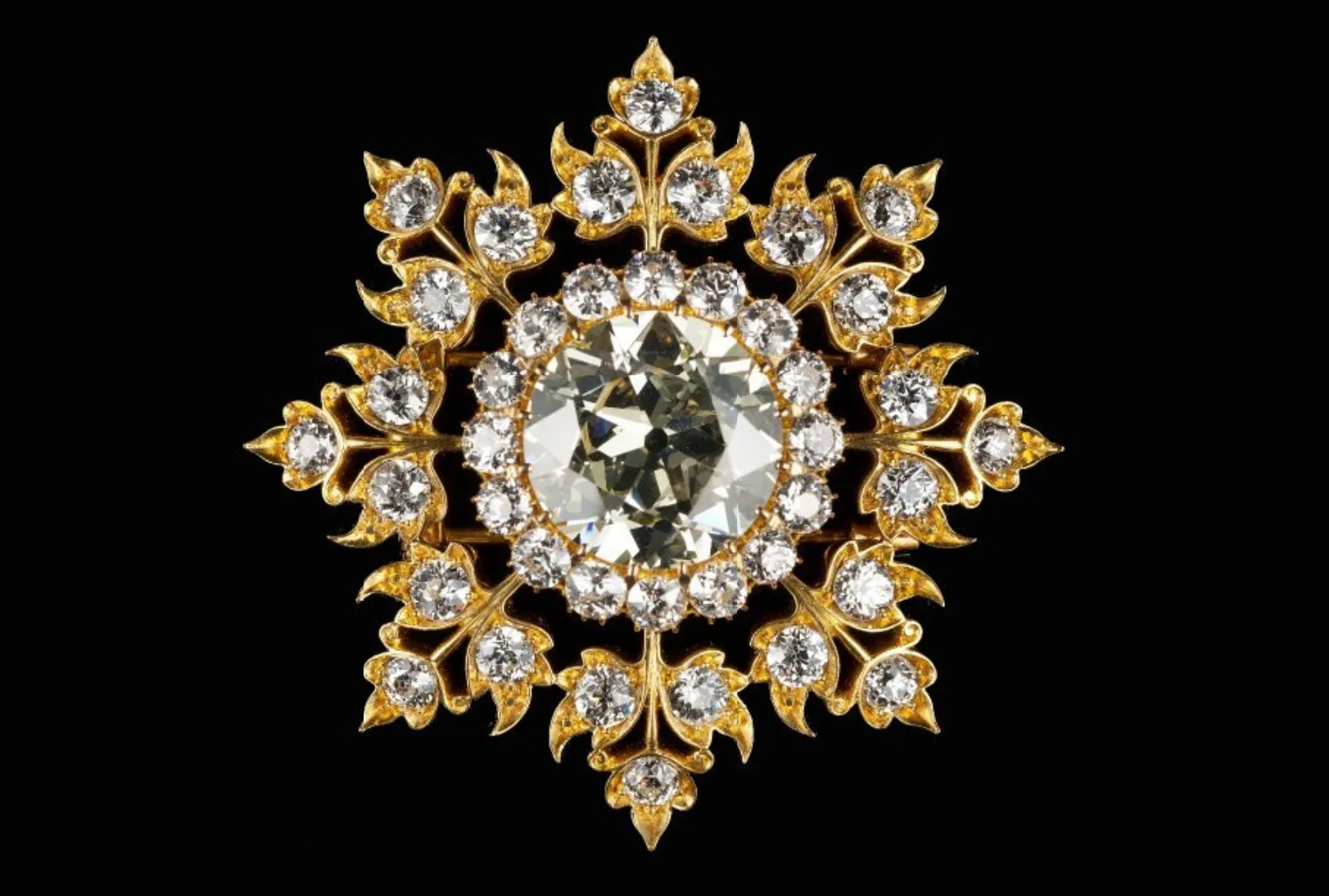
Another highlight is a group of heirloom jewels linked to Lim Liew Saik, a Penang philanthropist. The museum notes their scale and individual designs mark them as special commissions rather than retailer stock.
Hands-On Corners for All Ages
Discovery Corners on Levels 2 and 3 let visitors explore ceramics, furniture and beadwork through tactile activities. An activity trail booklet for ages seven and up comes with stamps to collect along the way. Your final stamp is at the Activity Space, and you can then trade it in at the Level 1 Visitor Services Counter for a sticker sheet. According to the museum, both of these come under the special exhibition ticket.
The Activity Space on Level 2 was designed by Singaporean visual artist HAFI. It has a Design Desk with craft templates, a Portrait Studio where your self-portrait joins the wall, and a Play Zone of oversized soft sculptures. Museum admission applies here.
Worth Planning Around
The opening weekend makes a strong case for visiting early. Community Voices at Peranakan Museum: A Peranakan Indian Celebration runs on 31 October and 1 November from 11am to 6pm, with free admission to most activities, community-guided tours and cooking demonstrations. For a deeper dive, curator Naomi Wang leads tours at 7.30pm on Wednesdays, 25 November 2026, 24 February 2027, 26 May 2027 and 28 July 2027.
🗓️ Date: 30 October 2026 to 29 August 2027
⏰ Time: Daily, 10am to 7pm (until 9pm on Fridays), per the museum’s listing
📍 Location: Special Exhibitions Gallery, Peranakan Museum, 39 Armenian Street, Singapore 179941 (a 10-minute walk from City Hall, Bras Basah or Bencoolen MRT stations)
🎟️ Tickets: Admission charges apply. Children six and below enter free
🔗 Details: Exceptional/Everyday on the Peranakan Museum website
Exceptional/Everyday is a show that sends you home looking at your own shelves differently, wondering which plain-looking jar or carrier has a Bangalore-sized story behind it. Plan your visit on the Peranakan Museum’s exhibition page, and maybe ask your family about that old tiffin carrier before your trip!
Photos and Visuals courtesy of the Peranakan Museum.
Read us first on Google: add DANAMIC as a preferred source and our stories show up more in your Top Stories and AI results.