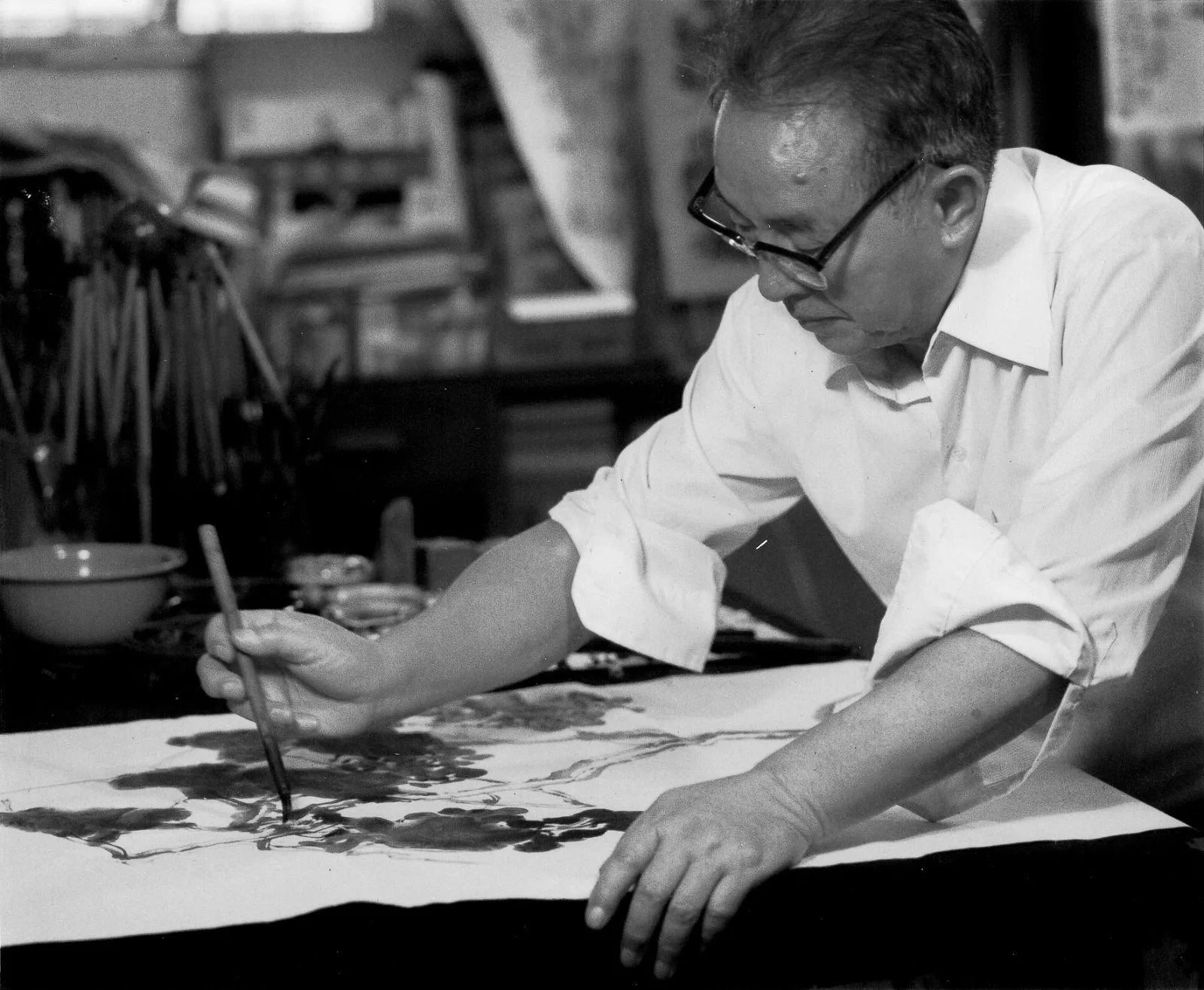
Most people can name one teacher who saw something in them before they saw it themselves. For a generation of Singapore ink painters, that teacher was Fan Chang Tien. From 16 October 2026 to 31 January 2027, Fan Chang Tien: Rhythm of the Southern Brush at National Gallery Singapore places his life and his students side by side, and entry is free for Singaporeans and Permanent Residents (PRs).
Fan was a painter who settled here in 1956 and gave the rest of his life to painting and teaching. His students include Cultural Medallion recipient Nai Swee Leng and Chua Ek Kay. The Gallery calls the show the first major exhibition to offer a holistic perspective on his life and legacy, and it brings together over 80 works and archival materials. Usually a teacher like Fan turns up as a footnote in his students’ biographies, so it’s a pleasure to see him at the centre of the room.
From Shanghai to the Tropics
Fan’s story begins in Shanghai in the 1920s, where he trained at the city’s prominent art schools under Zhu Wenyun and Wang Geyi. Both men were disciples of Wu Changshuo, a leading figure of the Shanghai School, a tradition known for expressive brushwork rooted in classical Chinese ink practice. According to the Gallery, Zhu gave Fan a sharp, lyrical touch, while Wang’s quick and decisive strokes strengthened his command of brush and ink.
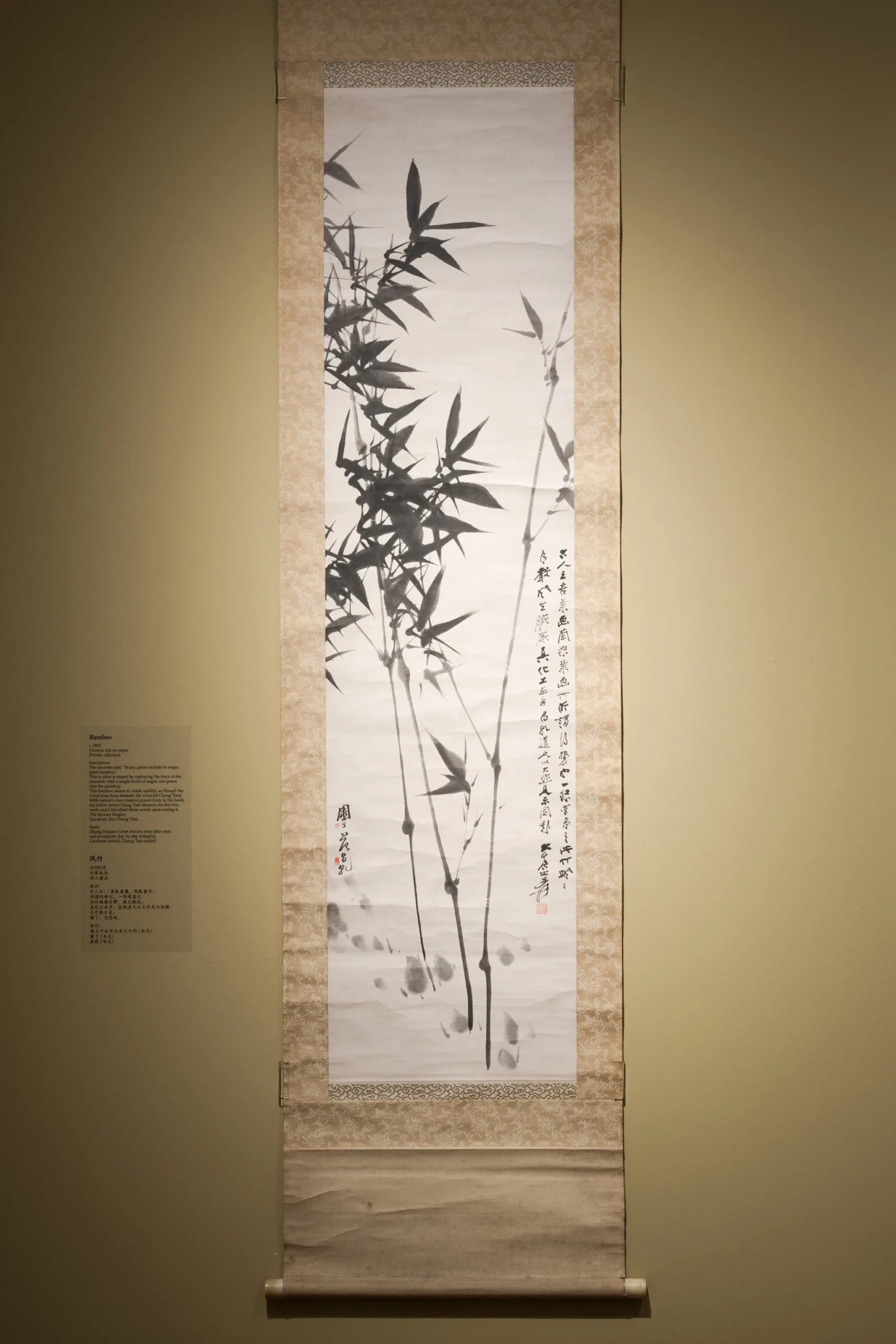
He then spent nearly nine years in Bangkok before moving to Singapore, and the opening section, Moving South, puts that chapter front and centre. Its standout is Bamboo (c. 1953), which carries an inscription by the renowned Chinese artist Zhang Daqian praising Fan’s talent: “With nature’s own creative power truly in his hand…”. Having a compliment like that written onto your own scroll is roughly the 1950s version of a legend reposting your work, and the painting hung at Fan’s 1956 exhibition in Bangkok.
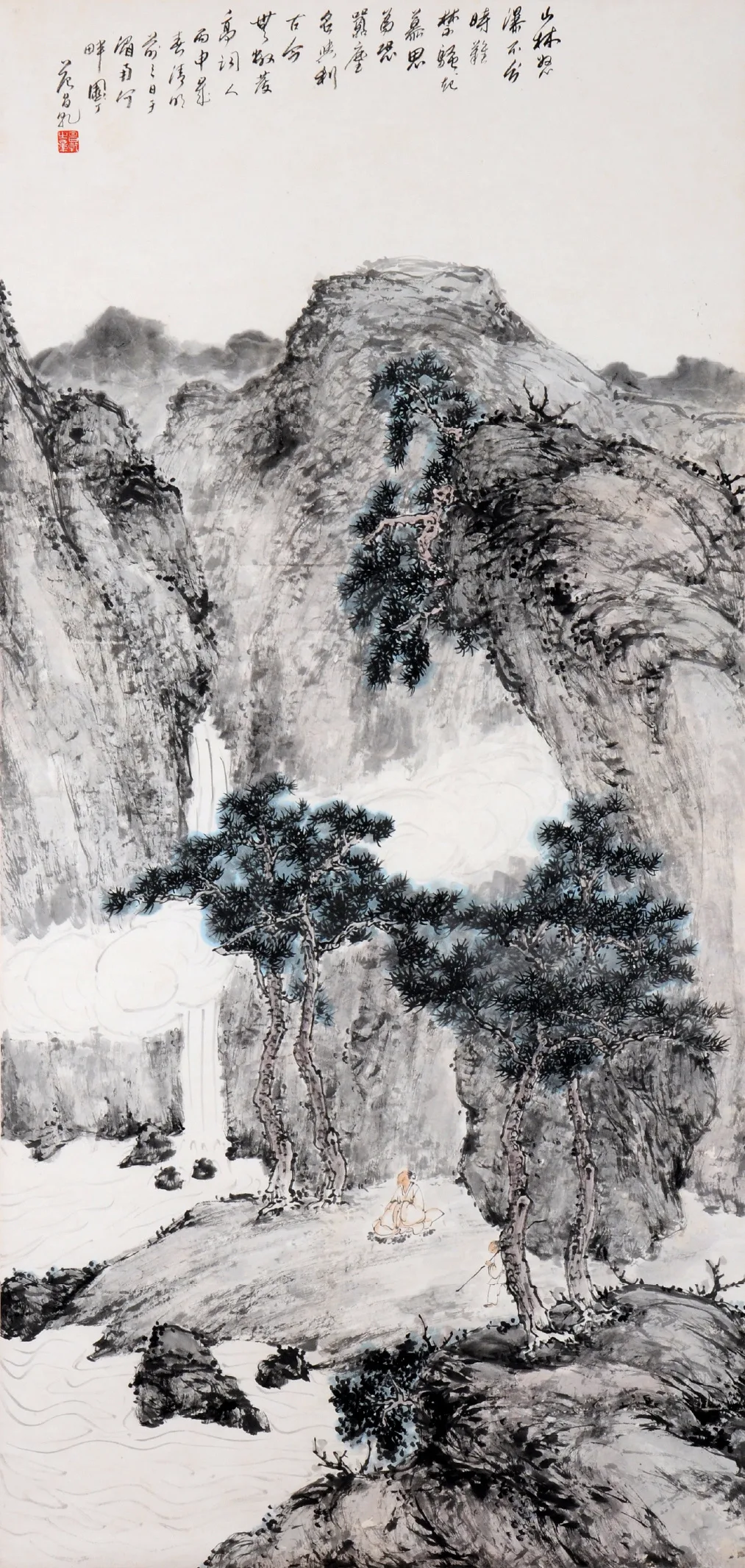
Watching the Waterfall (1956), an early work linked to his Bangkok period, shows where Fan’s mind wandered when he wasn’t teaching. Its inscription describes a waterfall that “roars in the mountain forests regardless of season”. The painting belongs to Wandering through Nature, a section on his shanshui (mountain-and-water) paintings as places for contemplation and imaginative escape.
Those sit within five sections in total, with Nurturing the Self, Rejoicing in the Everyday and Tending the Garden making up the rest, across painting, calligraphy, poetry and seals. Dr Cai Heng, the Gallery’s Project Director and Senior Curator, frames the show around character as much as craft: “The values of self-cultivation, integrity, and generosity shaped Fan’s artistic practice, and offer an important lens through which to understand his work.” That’s a refreshingly human way into ink painting, which can feel intimidating when you can’t read the inscriptions.
Bamboo, Mynahs and a Coffee Flask
Bamboo was Fan’s favourite subject. In scholarly Chinese painting it stands for integrity, humility and resilience. In Four Hanging Scrolls of Ink Bamboo (1979), his inscription says he would rather paint bamboo than chase wealth or status, which is about as clear a mission statement as any painter has ever written on his own work.
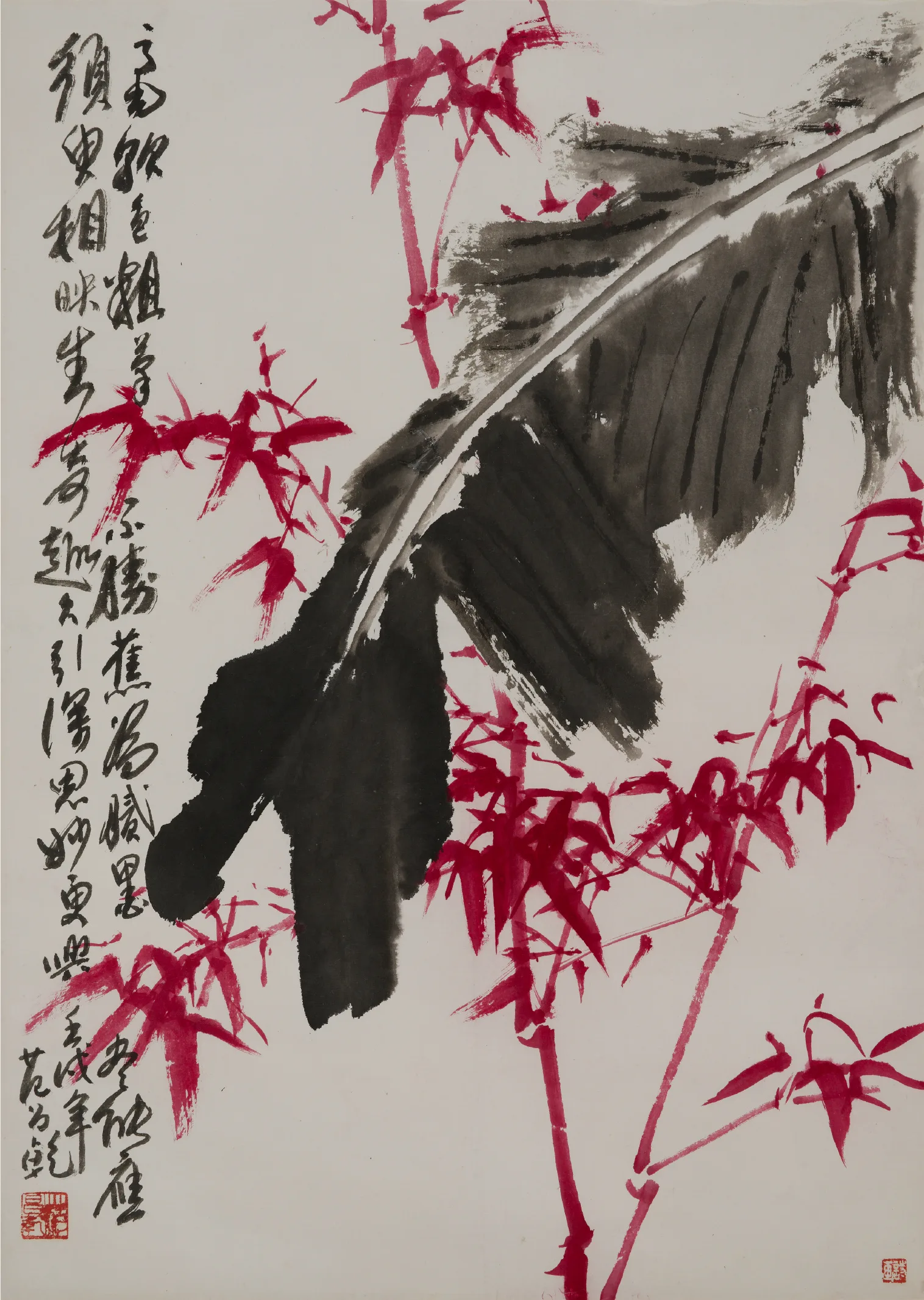
He didn’t stay locked inside tradition, though. Red Bamboo with Banana Leaf (1982) swaps black ink for red stems and adds a tropical plantain leaf, the kind you’d pass on any walk through a Singapore park.
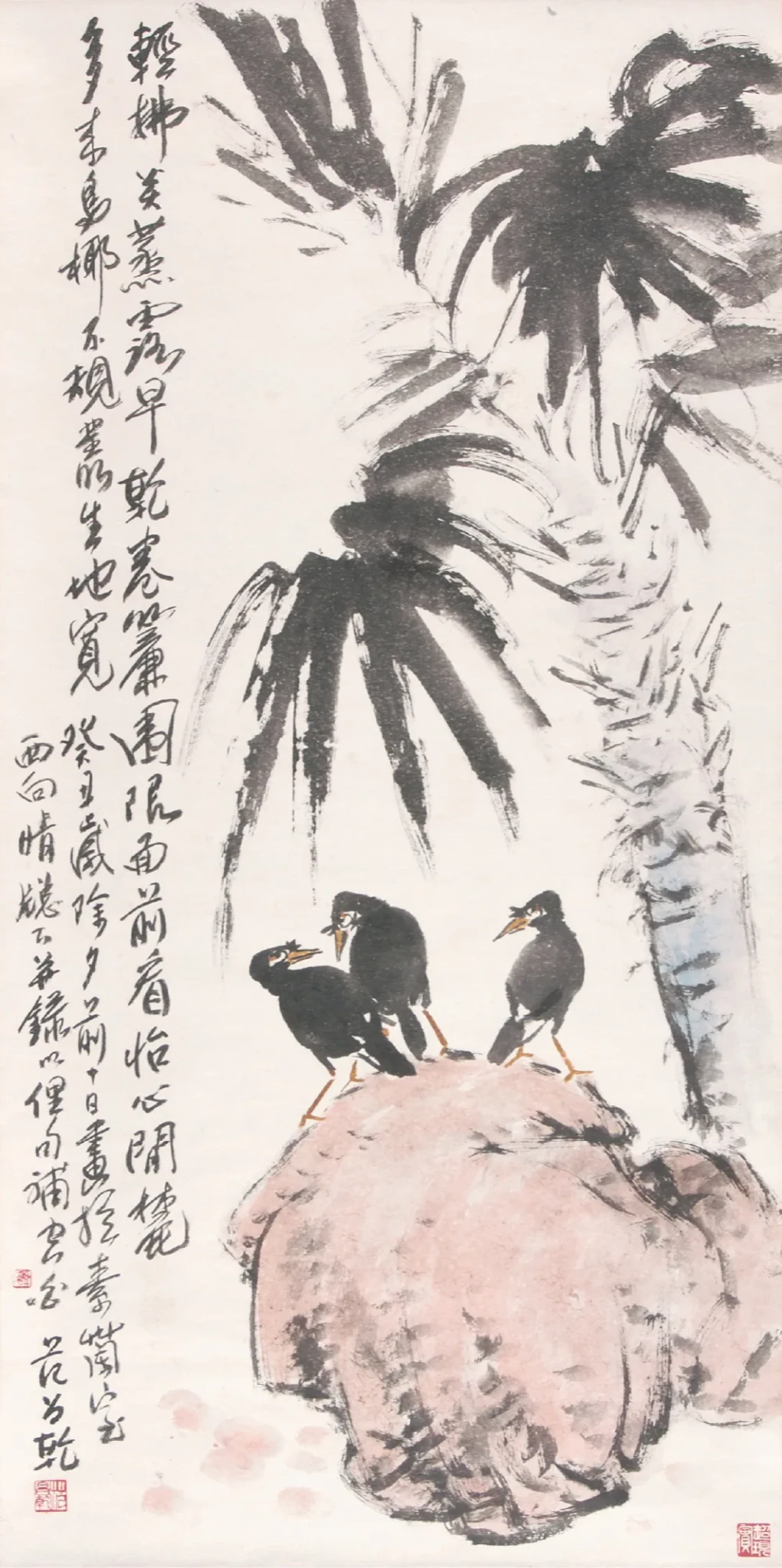
Rejoicing in the Everyday is the section where Fan becomes unmistakably local. Mynahs, sparrows and ducks turn up among palm trees. Kampong Scene with Cyclist (1964) is one of only two known works by Fan depicting local scenery, and its glimpse of kampong (village) life rewards anyone who slows down in front of it.
The pick of the show is The Gathering of Poets (1971), a classic scholars’ gathering reimagined with figures drinking coffee and reading newspapers. It’s essentially a kopitiam (traditional coffee shop) hangout painted in the old style, and it’s very funny once you notice it. The scholar-artist room plays along with a stamp station where visitors build their own composition from seals inspired by Fan’s mynahs, ducks, cockerels and a coffee flask, then take the result home.
Why They Called Him the ‘Gardener’
The final section, Tending the Garden, is the reason to go. The Gallery describes Fan as a “gardener” who grounded students in traditional Chinese ink painting while encouraging them to grow their own voices. The room brings together work by Ling Cher Eng, Low Eng, Nai Swee Leng, Tan Oe Pang, Lim Kay Hiong, Lee Soo Chee, Chen KeZhan and Chua Ek Kay.
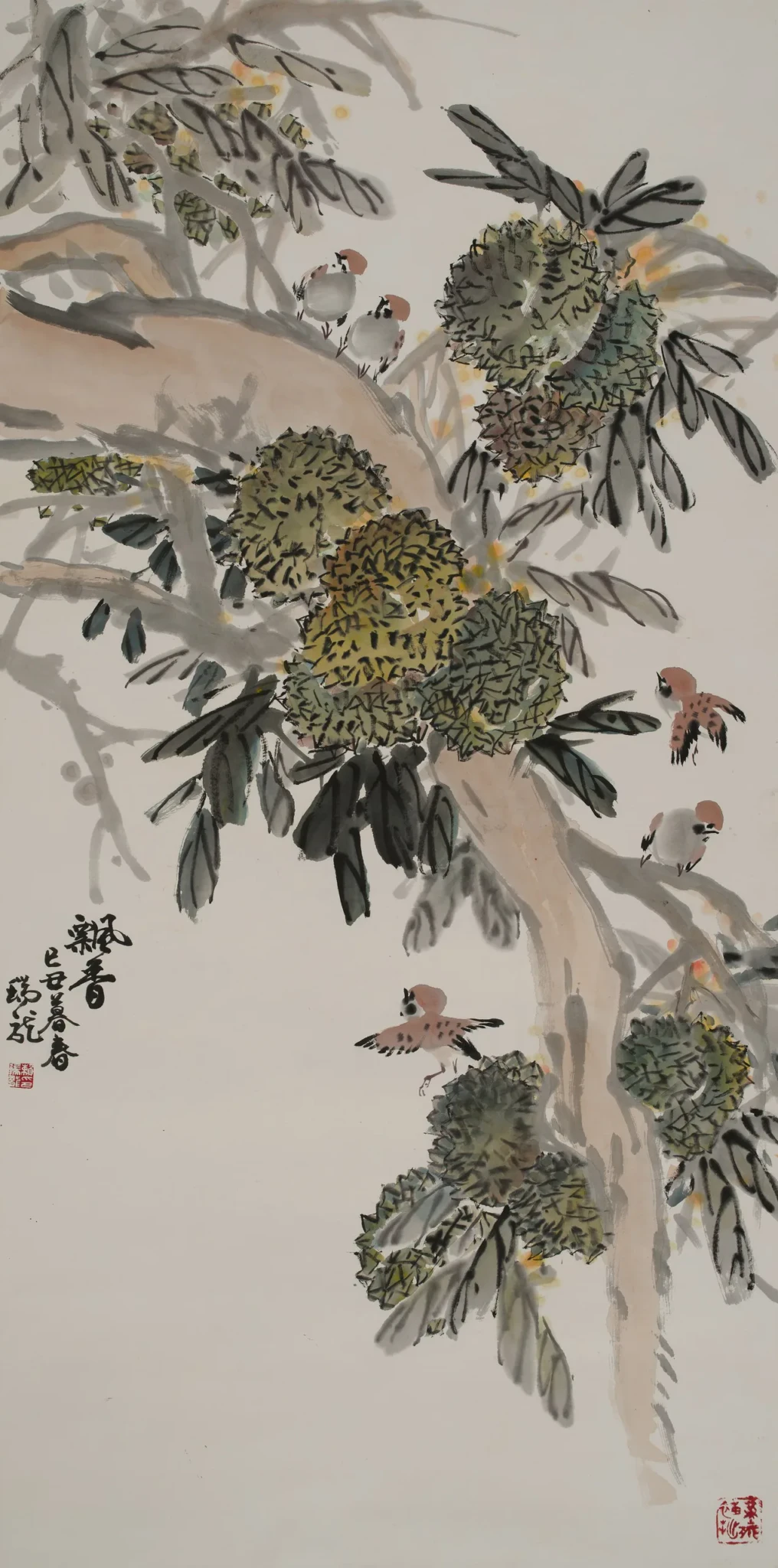
Nai, who received the Cultural Medallion in 2025, and Tan both studied under Fan at Whampoa Secondary School and later at his private Su Lan Studio. That means this lineage started in an ordinary school art class. Their pieces show how the same lessons can grow in different directions: Nai’s Durians and Sparrows (2009) continues in the tradition, while Tan’s Fish and Lotus (2000) takes a more modernist approach. Video interviews with both artists, in which they talk about learning from him, play alongside the paintings.
Fan’s greatest body of work is the people he taught, and that’s the lesson for every young artist walking through this room. Creative scenes don’t appear out of nowhere. They get built by someone who keeps showing up, whether that’s a secondary school art teacher or the senior who reviews your portfolio without being asked.
The exhibition ends with Bird under the Banana Leaf (1987), one of Fan’s final works, made in hospital days before his death. Its loose strokes and familiar local subject make a quiet, moving full stop, and a detailed timeline of his journey south closes the show.
Krump Meets Ink on 17 October
The opening weekend has the most unexpected crossover of the season. Echoes of Ink pairs Krump dancer Michelle Ang (aka Mishka / Sista Beast), founder of Roar City Grounds, with Koh Yu Jie, co-concertmaster of the Singapore National Youth Chinese Orchestra, for a free dance-and-erhu response to Fan’s painting. The erhu is one of the huqin family of Chinese bowed string instruments. Sets run on 17 October at 2.30pm to 3pm and 4pm to 4.30pm in the Singapore Courtyard, Level 2, City Hall Wing. A street dancer answering a 20th-century ink master is exactly the kind of handover this show is about!
The free Opening Lecture, Fan Chang Tien and the 20th Century Artists of Eastern Guangdong, takes place the same day from 2pm to 3pm in The Ngee Ann Kongsi Auditorium, Level B1, City Hall Wing, and registration is required. Chinese art historian Dr Wang Ai traces artists from the Chaoshan area as they moved from Guangdong to Shanghai and on to Southeast Asia, and curator Lim Shujuan then places Fan within Singapore’s art history. The lecture overlaps with the first Echoes of Ink set, so lecture-goers should aim for the 4pm performance.
For the deepest look at the exhibition, curators Lim Shujuan and Chee Jin Ming lead after-hours Curator Tours in Mandarin on 16 October and in English on 20 November. Both run on a Friday from 7.30pm to 8.30pm and cost S$45 standard or S$40 concession. That price makes more sense once you know each tour comes with two All Access passes valid for three months (worth S$30 for Singaporeans and PRs, S$60 for other nationalities). If your calendar is already crowded with picks from our things to do in Singapore this October guide, the November English tour is the easier one to book.
🗓️ Date: 16 October 2026 to 31 January 2027
⏰ Time: Daily, 10am to 7pm, according to the Gallery’s October to December 2026 guide (ticket sales end 30 minutes before closing)
📍 Location: Wu Guanzhong Gallery, Level 4, City Hall Wing, National Gallery Singapore, 1 St Andrew’s Road, Singapore 178957
🎟️ Tickets: General Admission pass required; free for Singaporeans and PRs, S$20 for other nationalities according to the same guide
🔗 Details: Fan Chang Tien: Rhythm of the Southern Brush
If you paint, design, or once had a teacher who refused to give up on you, this is the rare museum show where the teacher finally gets top billing. Check the hours, book your tickets and register for the opening weekend programmes on the National Gallery Singapore exhibition page, then bring along the friend who got you into art in the first place!
Photos and Visuals courtesy of National Gallery Singapore.
Read us first on Google: add DANAMIC as a preferred source and our stories show up more in your Top Stories and AI results.