She sent out CV after CV for six months and heard nothing back. When an offer finally arrived, the salary range fell short of what she had hoped for, and she took it anyway because she was exhausted.
That account came from a first-time mother aged 24 to 32, classed in the report as PMET (professional, managerial, executive or technician), speaking to researchers for a study released at SAGE 2026. She had done the preparation, refreshed the skills and rebuilt the routine. The market simply did not answer, and the study suggests she is far from alone in that.
What the Study Actually Did
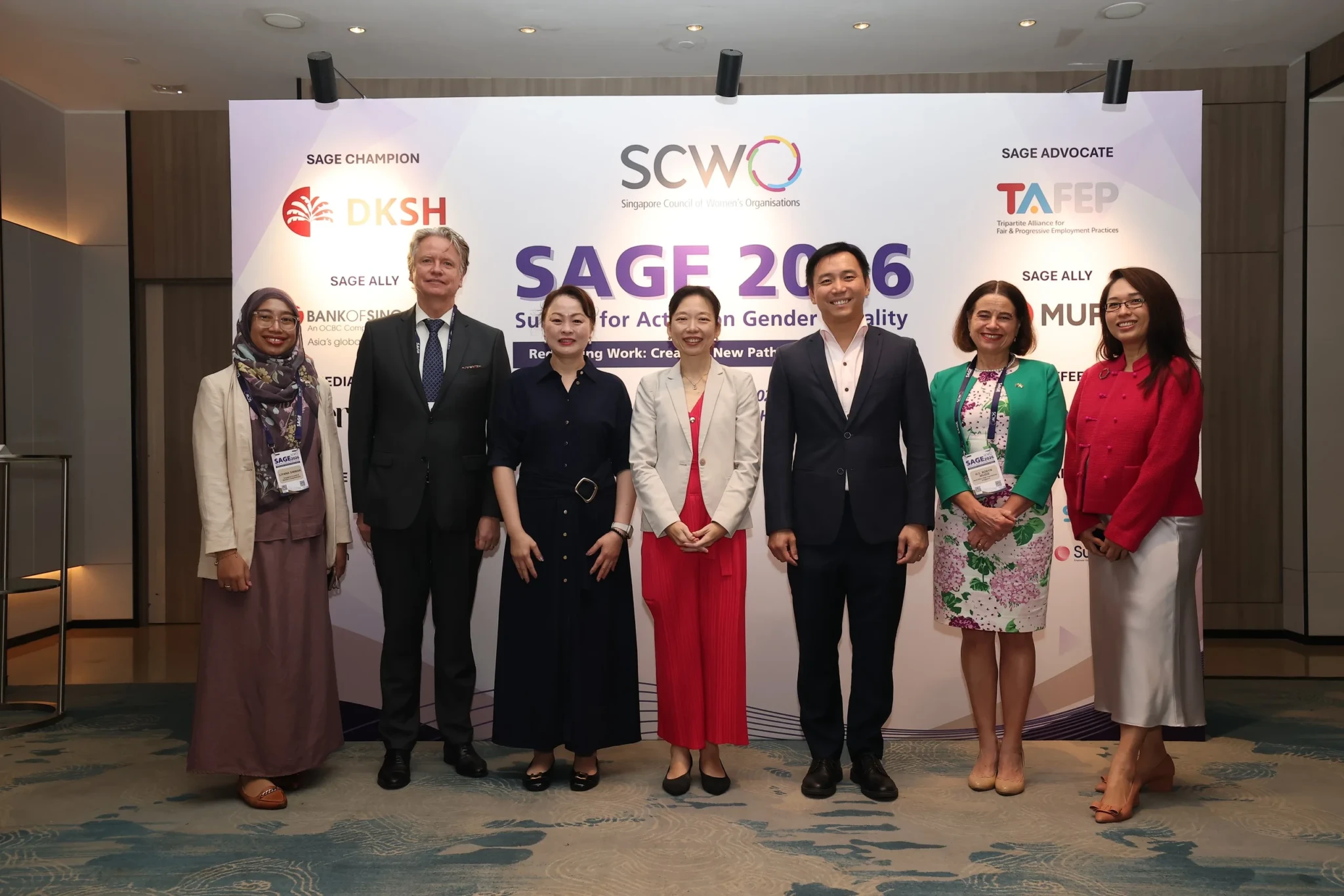
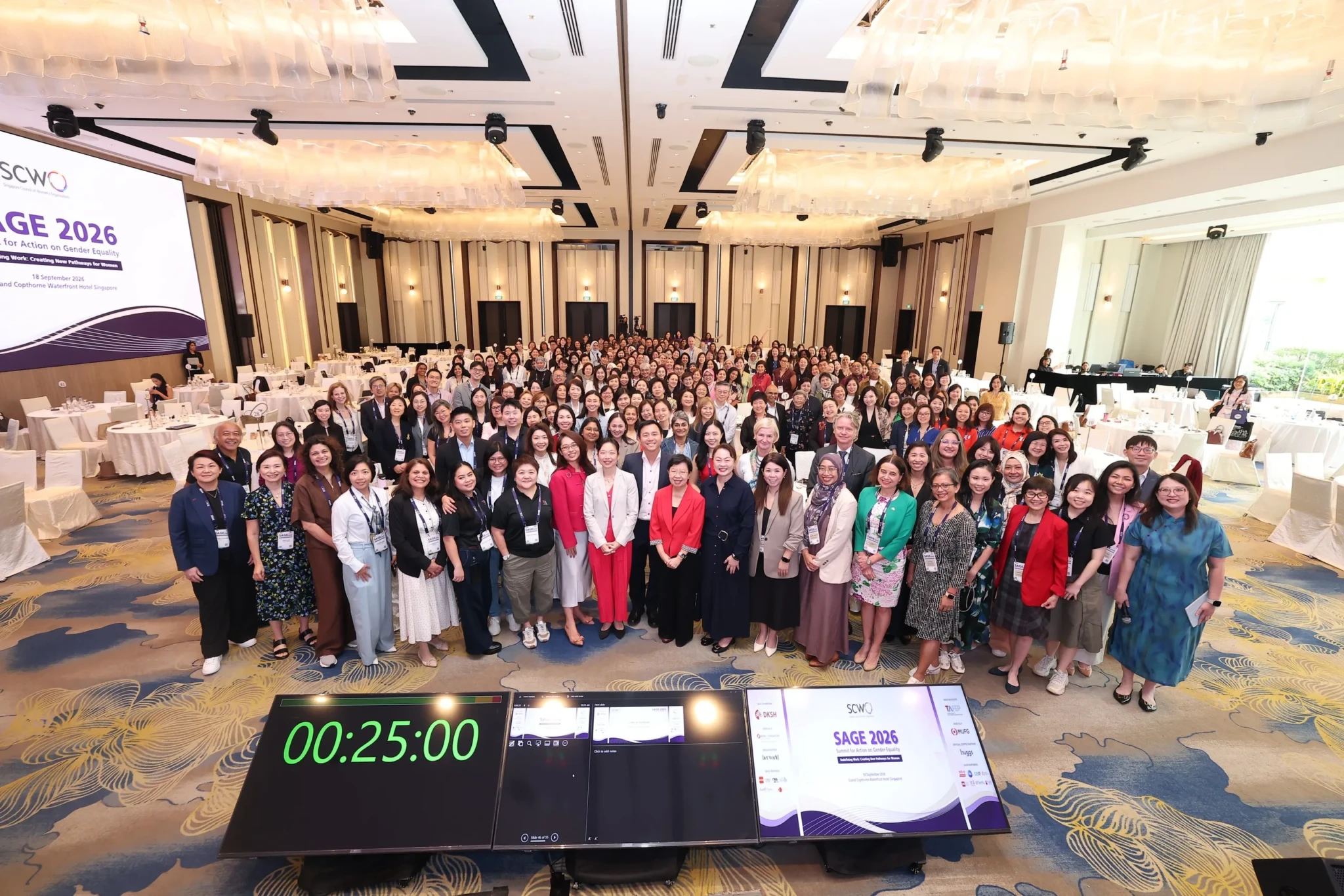
The Singapore Council of Women’s Organisations (SCWO), a federation of women’s groups here, released Women’s Workforce Re-entry: Challenges, Barriers & Opportunities on 18 September 2026 at its annual Summit for Action on Gender Equality. The summit ran at Grand Copthorne Waterfront Hotel on Havelock Road, under the theme Redefining Work: Creating New Pathways for Women.
There is real heft behind the findings. Twenty in-person focus groups, 120 women, held face to face from 7 to 27 July 2026, each session running two hours in English. Alongside that sat a 10-question online poll of 502 women aged 24 and above living in Singapore, fielded on 29 and 30 August 2026, of whom 299 had taken a career break or were on one. The focus group material is qualitative, so it describes patterns among the women in the room rather than the country at large.
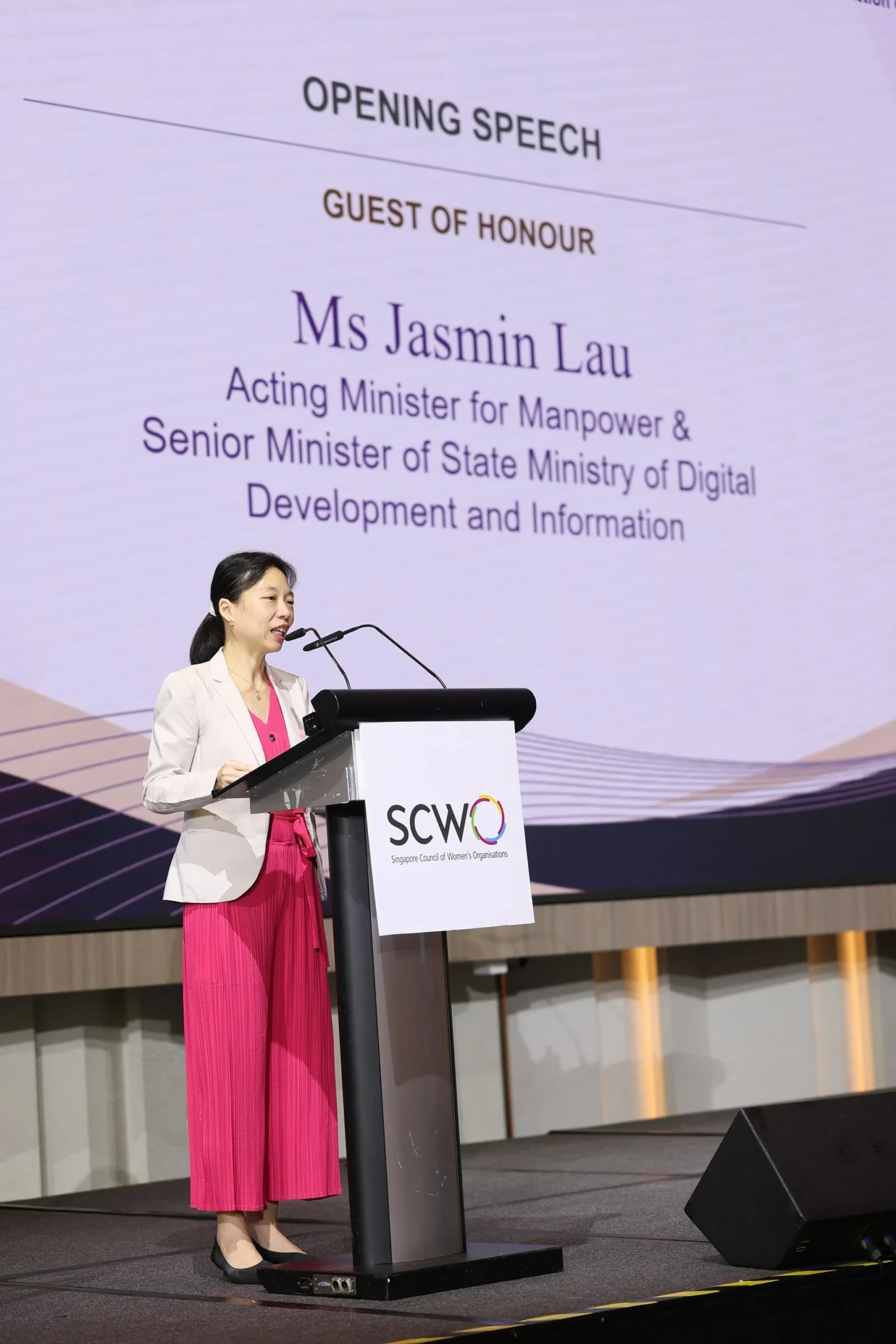
Guest of honour Ms Jasmin Lau, Acting Minister for Manpower and Senior Minister of State at the Ministry of Digital Development and Information, delivered the opening address, describing women who send out resumes without a callback and are told their experience no longer quite fits.
The Numbers That Should Worry You
Here is the finding that reframes the rest: 80% of the polled women who had taken or were on a break said they intended to return to work. Wanting back in was never the issue.
What happens next is where it falls apart. Close to seven in ten of the 502 women polled believe a break makes finding suitable work harder, only 33% of those with break experience think employers are making genuine efforts to support returners, and roughly two in five knew where to find relevant support at all.
Singapore’s headline numbers look healthy, which is what makes that gap so awkward. Ministry of Manpower data shows the resident female labour force participation rate for women aged 25 to 64 climbed from 74.1% in 2015 to 80.5% in 2025, and the gender pay gap narrowed from 16.3% in 2018 to 14.3% in 2023. Participation is up, and re-entry is still a bottleneck.
Why Younger Returners Feel It
You might read “career break” and picture someone two decades ahead of you. The report’s breakdown of returner profiles is blunt about that. Among participants, younger returners hit caregiving pressure and career-building pressure in the same stretch of life, and the report records their worry about longer-term pay and progression penalties.
Then there is the hiring process itself. Participants described low callback rates despite high application volumes, plus an information gap about how interviews had changed while they were away: gamified assessments, multi-round formats, none of it briefed to them. Breaks got picked apart through personal questions rather than job-relevant ones, and one mother who returned within a year said employers looked at her as though she were a fresh graduate.
## Flexibility Is the Whole Ballgame
Ask the 502 women polled what they most want from return-to-work support and the answer is not more courses. 61% picked flexible work arrangements, ahead of training, coaching and job matching. Training addresses a skills problem many of them do not have, while flexibility addresses the constraint that never goes away.
On paper, the ask is already recognised. The Tripartite Guidelines on Flexible Work Arrangement Requests took effect on 1 December 2024, and every employer here now needs a formal process for handling requests across flexi-place (remote or hybrid), flexi-time (staggered or compressed hours) and flexi-load (part-time or job-sharing). A returning employee submits a written request, the employer owes a written decision within two months, and a refusal has to come with reasons grounded in business outcomes such as cost or feasibility. A manager who simply prefers everyone at their desk is not a valid reason, and TAFEP, the tripartite body on fair employment, is where an employee takes it when the process is ignored.
Read that against the guidelines’ own limit and you see the problem: this is a right to ask, never a right to get. The report is sharp on where that plays out. Part-time arrangements often came with the same workload at reduced pay, with reduced-hour boundaries ignored by colleagues and clients. Multinationals offered formal policies more often than small and medium enterprises, where access typically hung on an individual boss’s discretion. One former government school teacher told researchers she had exhausted her childcare leave during a hand, foot and mouth episode, asked for flexible hours instead, was refused, and left a job she would otherwise have kept. Seven days was the whole ask.
The Law Is Not Here Yet
The Workplace Fairness Act is the piece most readers assume already covers this. Parliament passed it on 8 January 2025 and the President assented on 3 February 2025, but the commencement date is still to be appointed and gazetted, so it is not yet in force.
When it does start, it names eleven protected characteristics, and caregiving responsibilities sits among them alongside age, sex, marital status, pregnancy, race, religion, language ability, nationality, disability and mental health condition. Employers will not be able to write a protected characteristic into a job advertisement, nor make a hiring decision on one, including as one reason among several. Two caveats matter for the women in this study. The Act currently exempts employers with fewer than 25 employees, with smaller firms brought in later under a phased rollout, and a career gap on its own is not a separate protected ground unless it connects to a characteristic the Act names.
33 Programmes, One Missing Pathway
SCWO’s scan of the support ecosystem turned up 33 non-government initiatives run by 26 organisations, sitting on top of public schemes for skills upgrading and career coaching. That is a lot of help, yet only around two in five surveyed women knew where to find any of it, and a similarly low share felt what existed matched their needs.
Look at how the money is actually gated and the fragmentation gets concrete. SkillsFuture Credit is the easy one: S$500 for Singapore Citizens aged 25 and above, a S$4,000 mid-career top-up at 40 and above, claimed through MySkillsFuture with Singpass, with no employer and no recent CPF contributions required. The SkillsFuture Level-Up Programme training allowance is where it tightens, because that payout (50% of average monthly income, from S$300 to S$3,000 for full-time training) requires earned income in the last 12 months. A woman three years into caring for a parent has no such income, so the very allowance designed to make full-time retraining survivable is closed to the people furthest from work.
Employer-side schemes carry their own sequence. SWDA’s Career Conversion Programmes fund up to 70% of a trainee’s monthly salary, capped at S$5,000 and rising to 90% and S$7,500 for citizens and permanent residents aged 40 and above or long-term unemployed, which is generous money. It only unlocks once an employer has already offered a role on at least a 12-month contract at a minimum S$3,000 fixed monthly salary. Career coaching through Connect, run by the Skills and Workforce Development Agency (SWDA), is part of the support that already exists, and the FGD participants found the career coaches’ advice too general to move them. The ladder exists. The rung that turns preparation into an employer saying yes is the one nobody hands you.
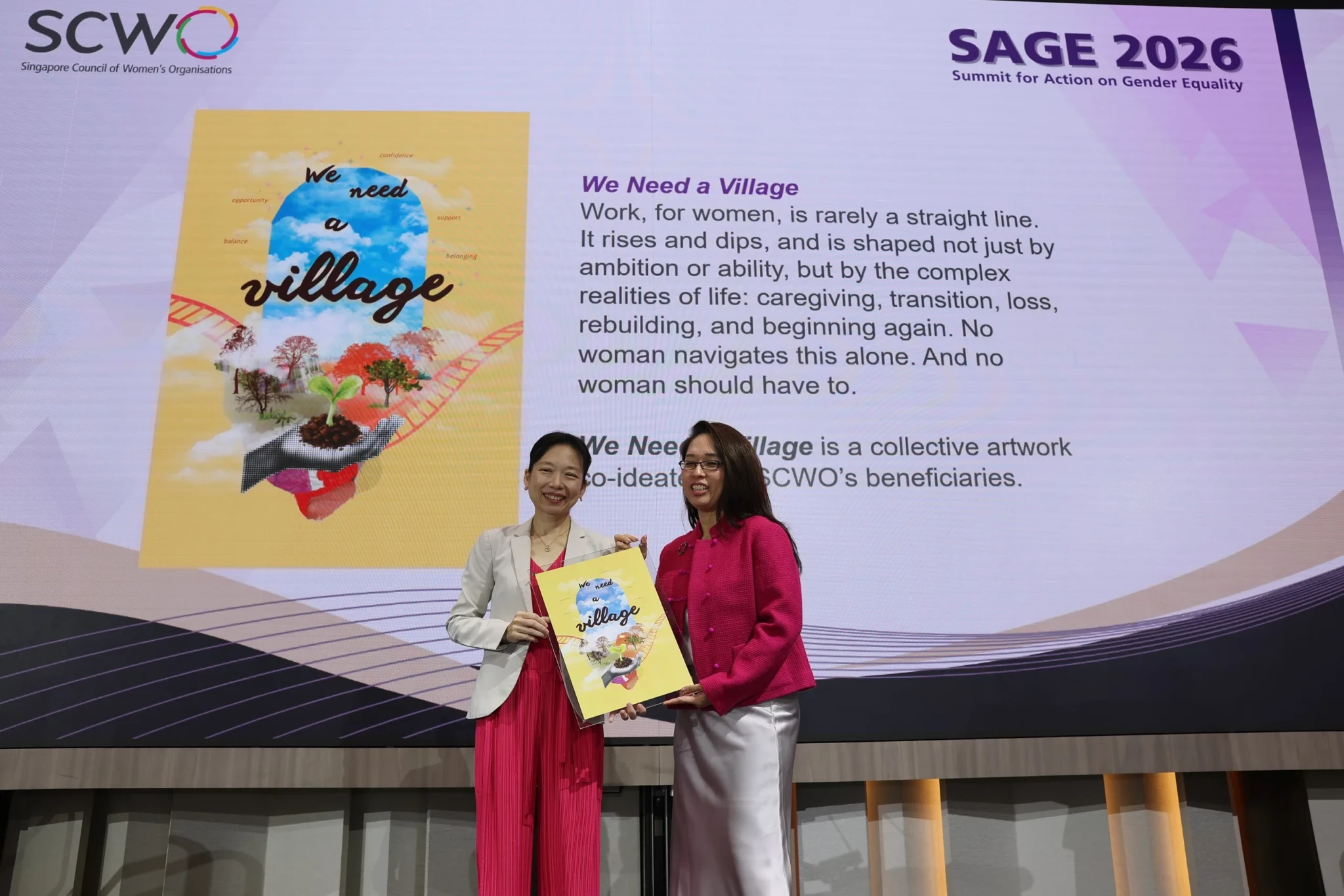
What the women asked for is refreshingly unromantic: direct employer introductions, active job matching, small-group networking with hiring decision-makers, and placement programmes with upfront clarity on what comes next, whether a conversion or a credible route into a similar, suitable role. Warm referrals, over and over, separated a successful return from a long silence, which is an uncomfortable finding, because a caregiving break is precisely when a network goes cold. SCWO’s answer is SCWO CoLab and an inaugural 2026/27 CoLab Challenge, with partners including NTUC Women and Family, the Singapore National Employers Federation, the Singapore Human Resources Institute, the National Council of Social Service, and Mums@Work (Singapore).
Support for the Grey Zone
The second announcement speaks to a pattern running through the research. Participants described subtle bias that was hard to substantiate: being passed over for projects, colder treatment, a shift in how they were managed once caregiving entered the picture. Without clear evidence, several concluded a formal complaint would not go their way and let it drop.
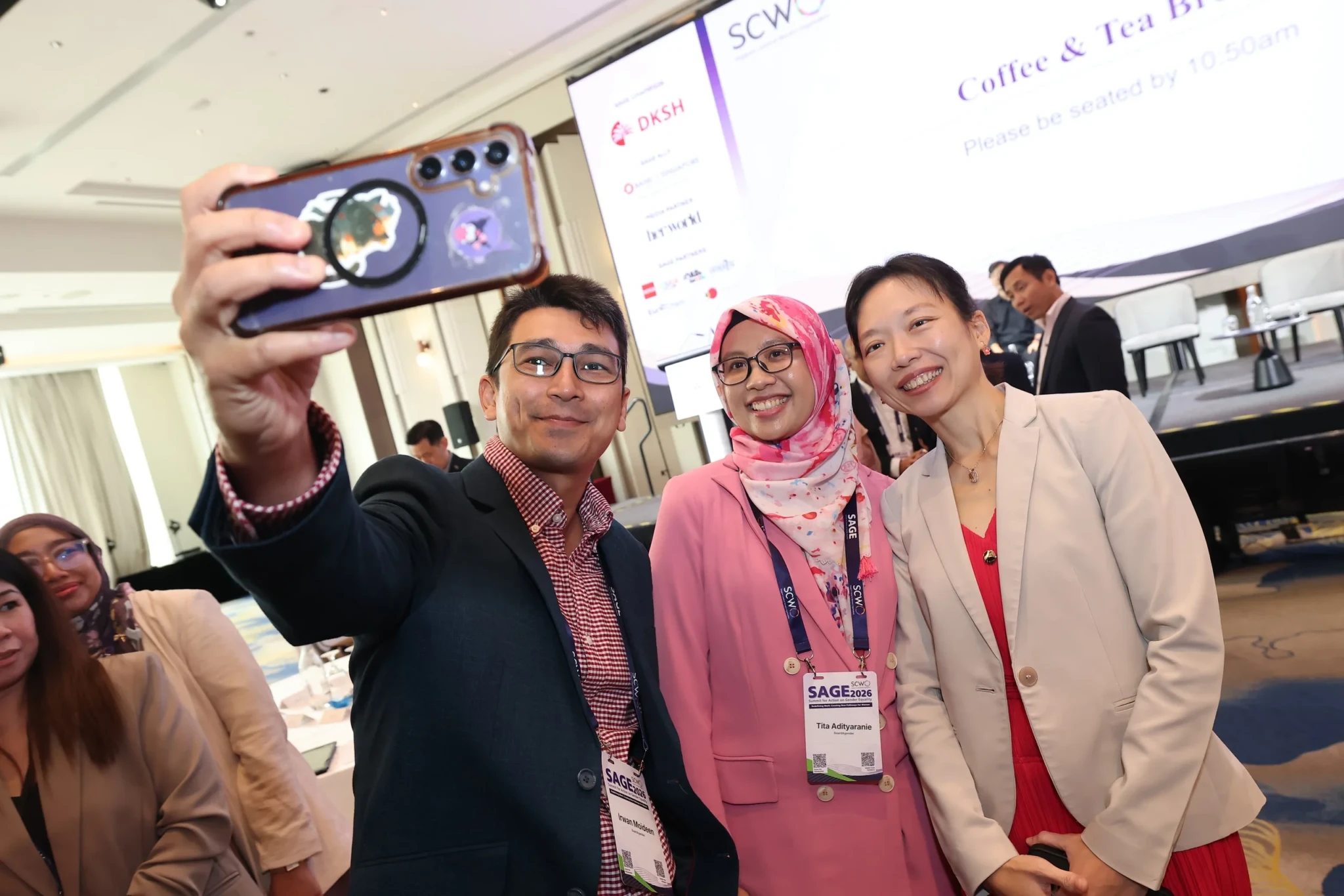
SCWO has launched a Workplace Counselling and Support Service, with support from the Ministry of Manpower, for individuals facing workplace discrimination and harassment, and it is open to both women and men. This is counselling and support, not legal representation, and it is not a channel for filing a complaint against an employer.
The service can be reached by helpline, textline, email and walk-in support, and it accepts self-referrals as well as referrals from community organisations and partner agencies. It starts operating in the first quarter of 2027, for women and men experiencing workplace discrimination or harassment. The official material does not give operating hours, cost or expected wait time. Readers should not treat the announcement as a filing route or infer access terms SCWO has not stated.
A career break is a pause in a working life, and the market keeps reading it as an ending. That gap runs through the whole report.
🗓️ Date: Friday, 18 September 2026
⏰ Time: 8.30am to 5pm
📍 Location: Grand Copthorne Waterfront Hotel, 392 Havelock Road, Singapore 169663
🎤 Guest of Honour: Ms Jasmin Lau, Acting Minister for Manpower and Senior Minister of State, Ministry of Digital Development and Information
📊 Research released: Women’s Workforce Re-entry: Challenges, Barriers & Opportunities, from 20 focus groups with 120 women and a poll of 502 women
🤝 Also launched: SCWO CoLab and the 2026/27 CoLab Challenge, plus the Workplace Counselling and Support Service supported by MOM
The most useful thing in this report is its five return-to-work milestones, and its finding that warm referrals and professional networks frequently distinguished successful returns from prolonged, low-response job searches. If a break is anywhere in your next few years, that is the part worth acting on early! Details on the research, the summit and where SCWO takes CoLab next sit on the SAGE 2026 page, and it makes a fitting follow-on from the conversations we have had here before with women building careers on their own terms, including five women on International Women’s Day.
Visuals courtesy of the Singapore Council of Women’s Organisations.
Read us first on Google: add DANAMIC as a preferred source and our stories show up more in your Top Stories and AI results.