Picture whoever gets handed a preschool classroom. There’s an invisible checklist attached to that image and almost nobody questions it: the right paper qualification, the right voice, the right way of holding a room of four-year-olds moving in six directions at once.
Six people in Singapore cleared that bar without ever landing on anyone’s shortlist. Chen Wanyi, June Lin, Catherine Joan Devadasan, Arassi Rajkumar, Shriya Bhaskaran, and Weng Jiaying trained for eight months as Assistant Movement Co-facilitators, then walked into five preschools and co-led creative movement sessions for more than 100 children. All six are Persons with Intellectual Disabilities (PWIDs).
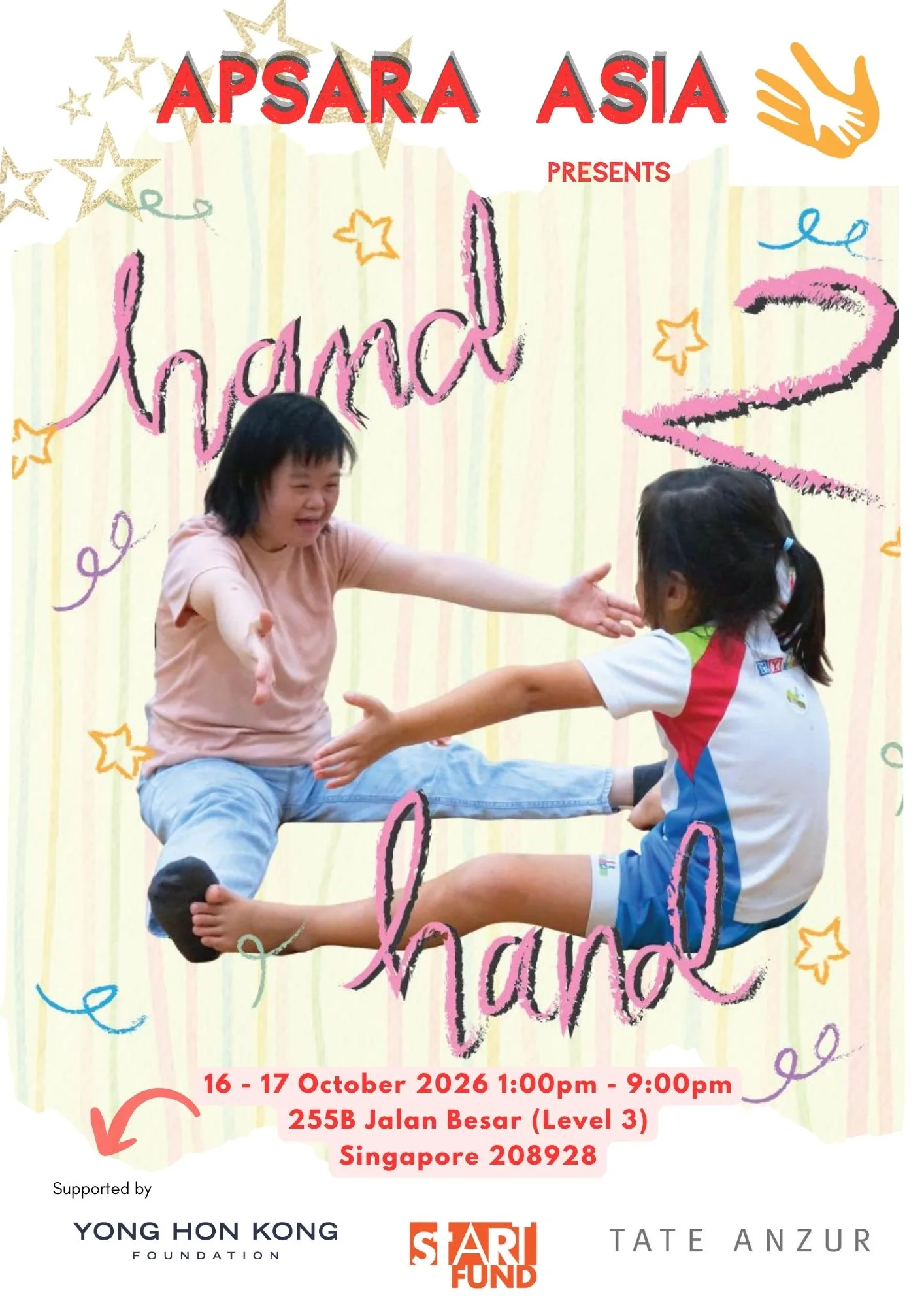
The photographs and video from those eight months are now an exhibition. Hand2Hand opens to the public on 16 and 17 October 2026 at Tate Anzur on Jalan Besar, and admission is free. Behind it is Apsara Asia, a Singapore social enterprise that builds arts-based employment skills training for people with intellectual disabilities.
Eight Months, Then a Classroom
The number to sit with is the eight. Studio training came first, then an on-site internship: lesson planning, classroom craft, and the unglamorous repetition of getting a routine right before any child sees it.
Then came the classrooms, at five M.Y. World preschools around the island. Imran Manaff, managing director of Apsara Asia, put numbers to that stretch when DANAMIC asked: “Through the OJT, we managed to reach out to 5 preschools and a total of 100 pre-schoolers,” he says, using the shorthand for on-the-job training. He describes what the six went through as employment skills training, built around a working role rather than a day out. Anyone who has watched a preschool teacher keep a dozen small humans pointed the same way knows the job is choreography and crowd control at once. Doing it to a lesson plan is work.
Why the Kids Are the Point
Adults walk into inclusion training carrying a lifetime of assumptions. Four-year-olds don’t. Put a capable adult in front of them, ask them to move, and they respond to the person.
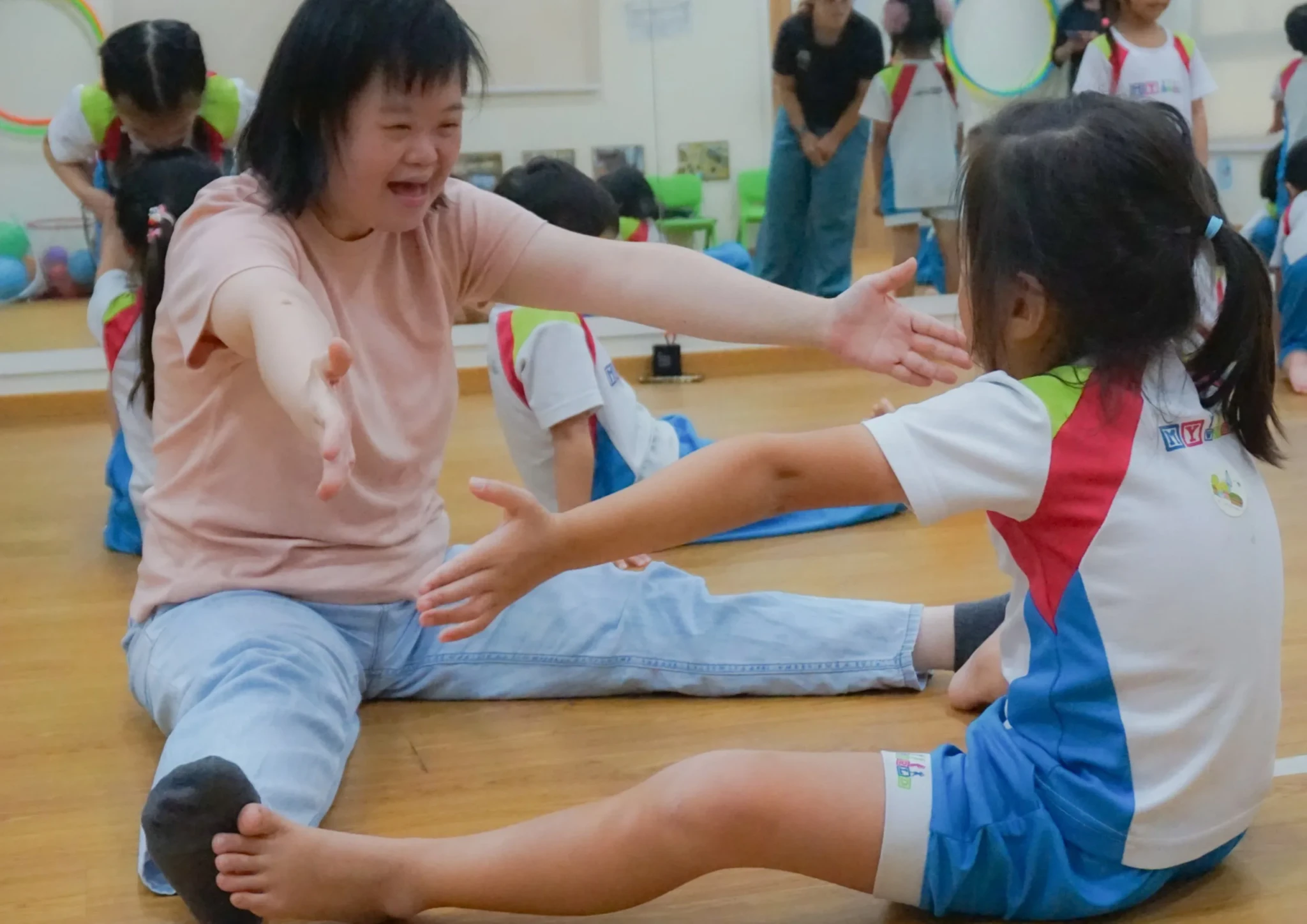
That’s the strategy sitting under the whole programme, and it’s the smartest thing about it. The team at Apsara Asia puts it this way: “Inclusion isn’t something we just talk about; it’s something we move through.” Meet PWIDs as teachers at four, and the stereotype never gets a chance to install itself. Same logic as getting girls into a robotics lab before anyone tells them it isn’t for them.
The only thing standing between these six and a classroom was an invitation.
What’s on the Walls
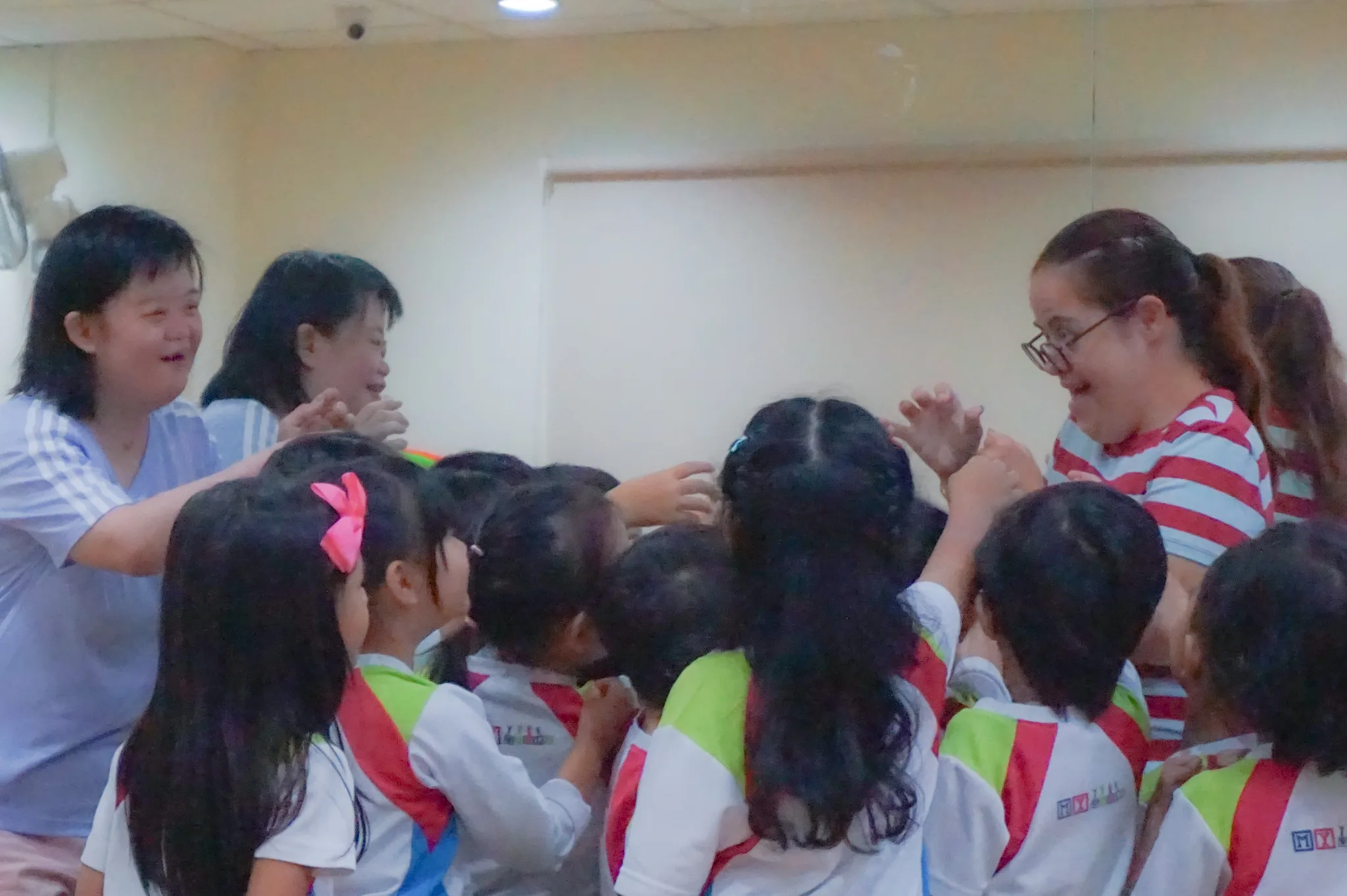
Three strands run through the exhibition. Studio narratives cover the months of preparation, shot documentary-style rather than staged. Classroom galleries show the six running dance play routines with children who look thrilled to be there.
The third strand is the one to linger on. The Digital ‘Voices’ series collects recorded reflections from the co-trainers, the early childhood educators who worked beside them, and parents. Hearing a parent say what shifted in their child does something a written report cannot. If one strand earns the climb up to Level 3, it’s that one.
Where This Started
Imran traces the idea to early 2025: give people with intellectual disabilities employment skills training by bringing arts experiences to young children, and build role identity while you’re at it. Hand2Hand is the pilot that came out of that thought. When questions reached him this September he was boarding a flight to Manila, where dancers with disabilities he works with were performing at an arts market, so the preschool run is one strand of a busy year.
It took a small crowd to run, and M.Y. World preschool opened its classrooms. Support came from the Yong Hon Kong Foundation, the National Arts Council’s stART Fund, Tate Anzur, and Maya Dance Theatre, whose Diverse Abilities Dance Collective (DADC) has run a professional platform for performers with disabilities since 2018. Three students from LASALLE, part of the University of the Arts Singapore, worked on the documentation, which puts it closer to the student-led video work that usually beats a polished brand film.
What Happens Next
The programme doesn’t stop at the gallery. Apsara Asia says it will keep working with M.Y. World preschool to train the current cohort further and take in new trainees, with what these eight months taught them shaping the next round of skills training.
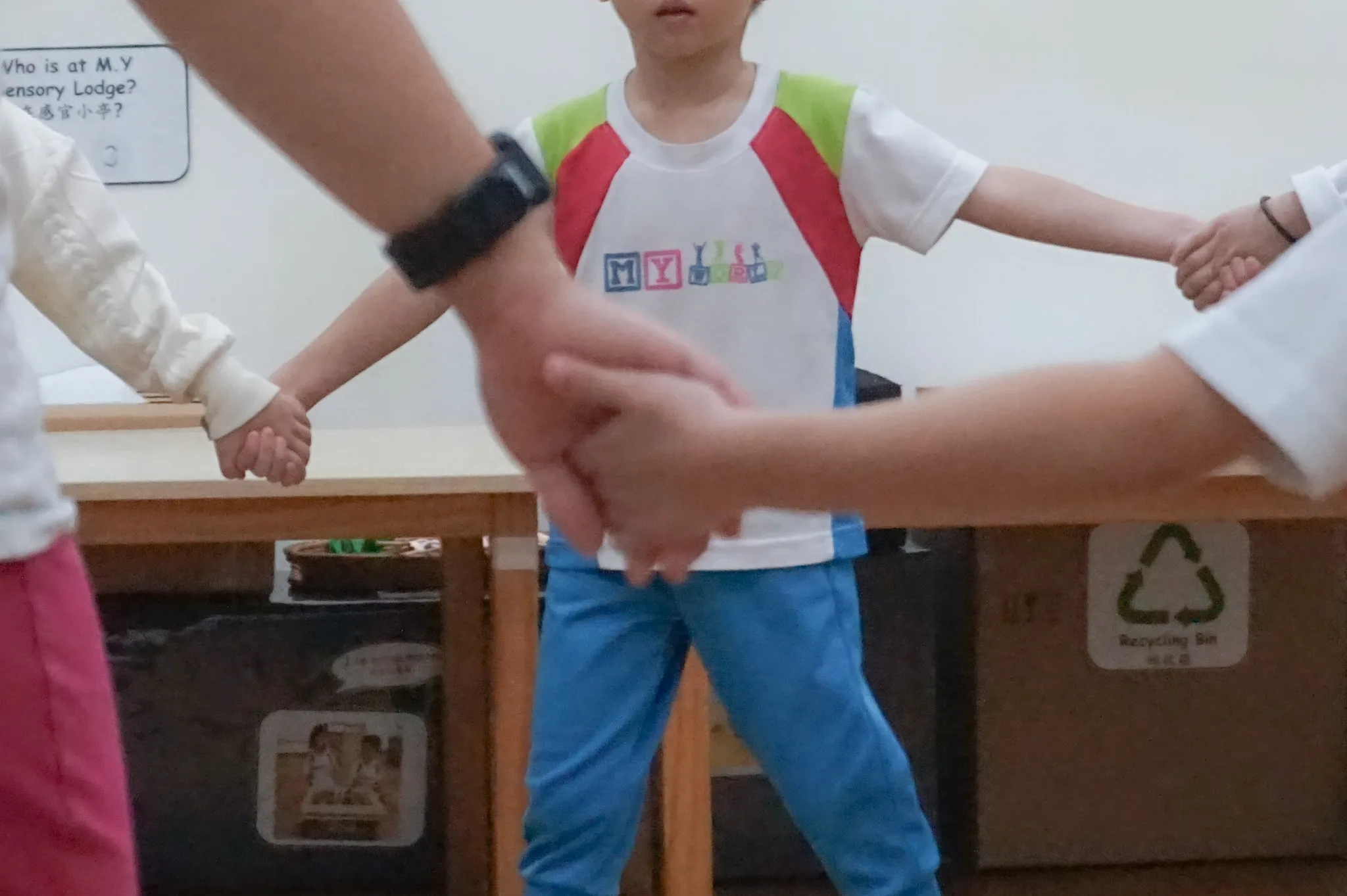
That matters more than a photo series. Pictures move people for an afternoon, while a repeatable pipeline that puts trained co-facilitators into mainstream classrooms changes what a hiring manager believes is possible.
The official opening reception on 15 October 2026 runs from 7pm to 9pm, ahead of the public days, with Ms Ku Geok Boon, chief executive of the Early Childhood Development Agency (ECDA), as Guest of Honour. ECDA is the regulator for every preschool in the country. Its chief turning up to look at photographs of PWIDs co-leading classrooms says something about where this is meant to go.
🗓️ Date: Friday, 16 October to Saturday, 17 October 2026
⏰ Time: 1pm to 9pm daily
📍 Location: Tate Anzur, 255B Jalan Besar, Level 3, Singapore 208928
🎟️ Admission: Free
📸 On show: Studio narratives, classroom galleries, and the Digital ‘Voices’ interview series
🥂 Opening reception: 15 October 2026, 7pm to 9pm, with ECDA chief executive Ku Geok Boon as Guest of Honour
🤝 Supported by: Yong Hon Kong Foundation, NAC stART Fund, Tate Anzur, and Maya Dance Theatre
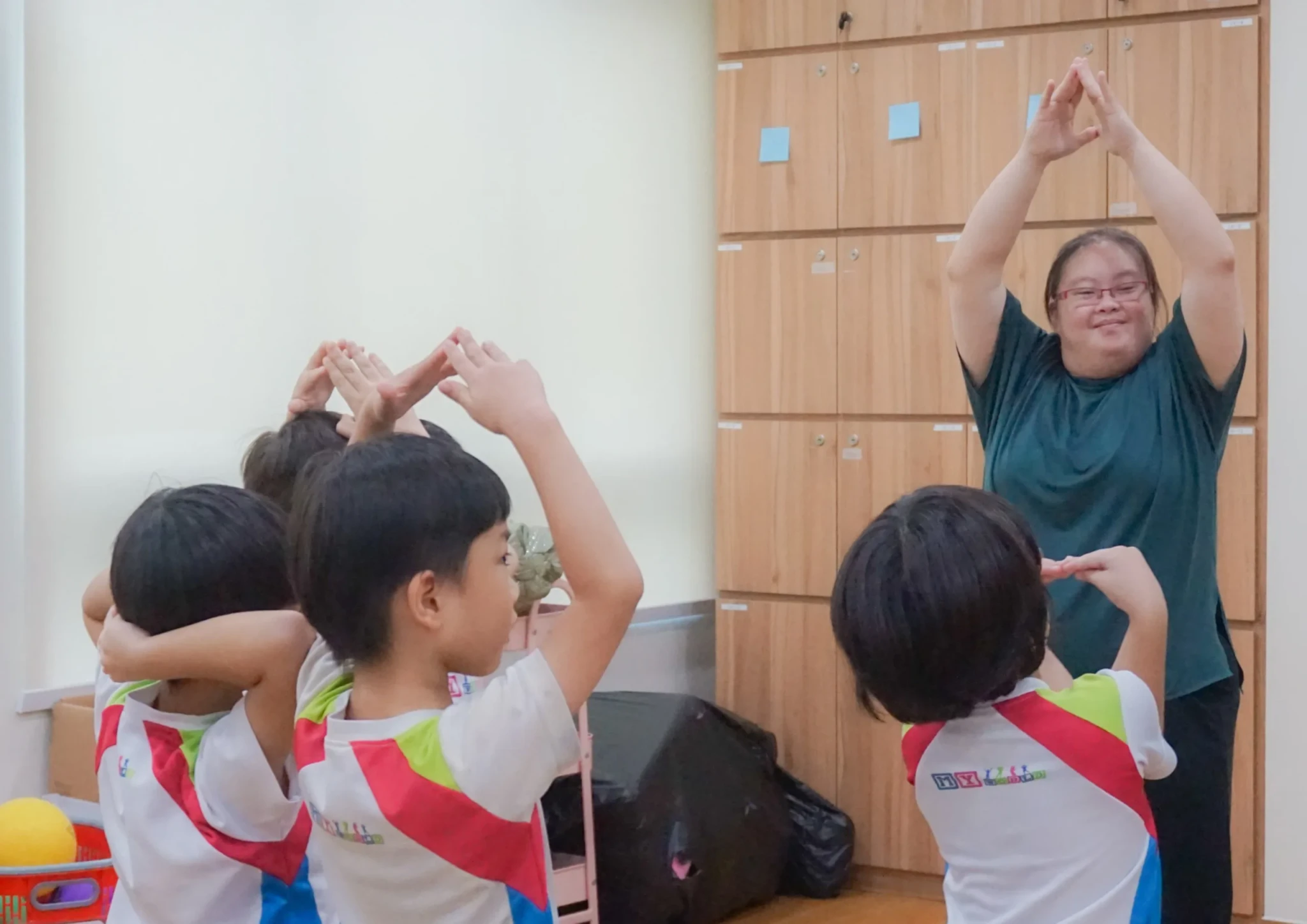
Two days is a short window, so block out 16 and 17 October now and set a reminder the night before. The 9pm close is the friendly option for anyone finishing work late, Jalan Besar is an easy Friday detour, and free entry removes the last excuse. For the full exhibition details and what Apsara Asia is training next, head to the Apsara Asia website.
Photographs by Nadya Maharani Larissa Putri. Photos and Visuals courtesy of Apsara Asia.
Read us first on Google: add DANAMIC as a preferred source and our stories show up more in your Top Stories and AI results.