Updated 7 September 2026 with corrected attribution.
You know the cart. A rectangular block of ice cream, one slab hacked off with a cleaver, wedged into a fold of rainbow bread. It cost a dollar when you were seven. It’s harder to find now, and one day it won’t be there at all.
Three students refused to let that happen quietly. They wrote a proposal about it, and someone paid them to go do it.
That’s the short version of the TF-NUS Heritage Champions Student Showcase, held at Temasek Shophouse on Saturday, 5 September 2026. Ten student-led heritage projects, laid out as a public exhibition, with a fireside chat where the teams talked through what they’d found.
The programme behind it ran over two years and two cohorts, pulling in 125 students from institutes of higher learning. Everyone went through heritage preservation training at NUS Libraries and an ideathon run with Temasek Foundation and the National Heritage Board, the same agency behind the travelling market exhibition we covered back in 2022. The top five teams in each cohort then got up to S$7,000 and six months to build the thing. Between them, the 10 projects have reached more than 1,000 members of the public.
Ice Cream Uncle Gets a Book
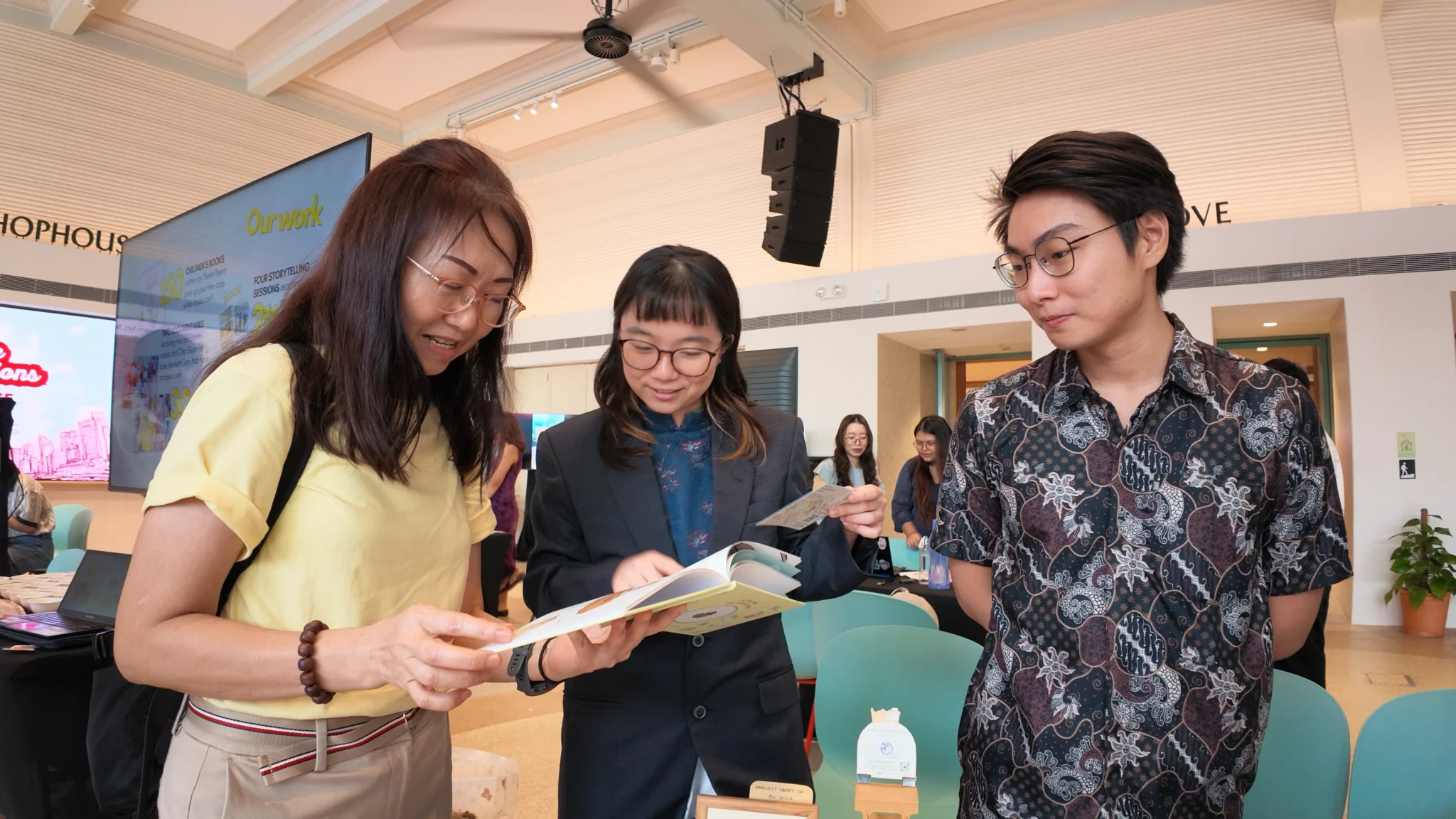
Scoops of Memory is the team behind the headline. Lai Xin Yu from NUS, Theint Theint Zaw Tun from NTU and Totaan Aljean Choong from Ngee Ann Polytechnic spent their six months interviewing roadside ice cream hawkers, including a Mr Yeo, and turned what they heard into a children’s book called My Ice Cream Uncle.
The book anchors storytelling sessions at libraries and preschools, which have reached over 100 children, parents and teachers. A 15 to 20 minute documentary is in development, with a preview planned for the 5 September event, and the team keeps a running social media archive of the trade and the people in it.
The reasoning is blunt and correct. Long-time hawkers are retiring, almost nobody younger is taking up the cart, and a trade with no successors leaves no record unless someone sits down and makes one.
“Preserving heritage is not just about documenting the past but ensuring that the voices and memories from yesterday will be remembered tomorrow,” said Choong, 20. “I am grateful to NUS Libraries and Temasek Foundation for giving us the opportunity to save a scoop of Singapore’s history for generations to come.”
Singapore Is a Nation of Islands
Shore to Shore went offshore with a single argument: Lazarus, St John’s and Sisters’ Islands were never only picnic spots. Lazarus Island had 251 residents in 1957. St John’s held a major quarantine station for people arriving in Singapore. Resettlement, land reclamation and redevelopment scattered those communities and their maritime traditions.
So the five-student team built programmes that put people back on the water. A boat-making workshop taught jong racing, an island pastime built around miniature wind-powered boats, then sent participants out to race their own. There was an eco-writing workshop on Big Sister’s Island, intertidal walks led by Friends of Marine Park volunteers, and a St John’s heritage tour where former islanders talked about what living there was like. Their website carries recorded interviews and a 360-degree virtual tour.
They drew around 280 attendees and were featured at Singapore Heritage Festival 2025, the annual run of tours and talks we’ve sent readers towards before.
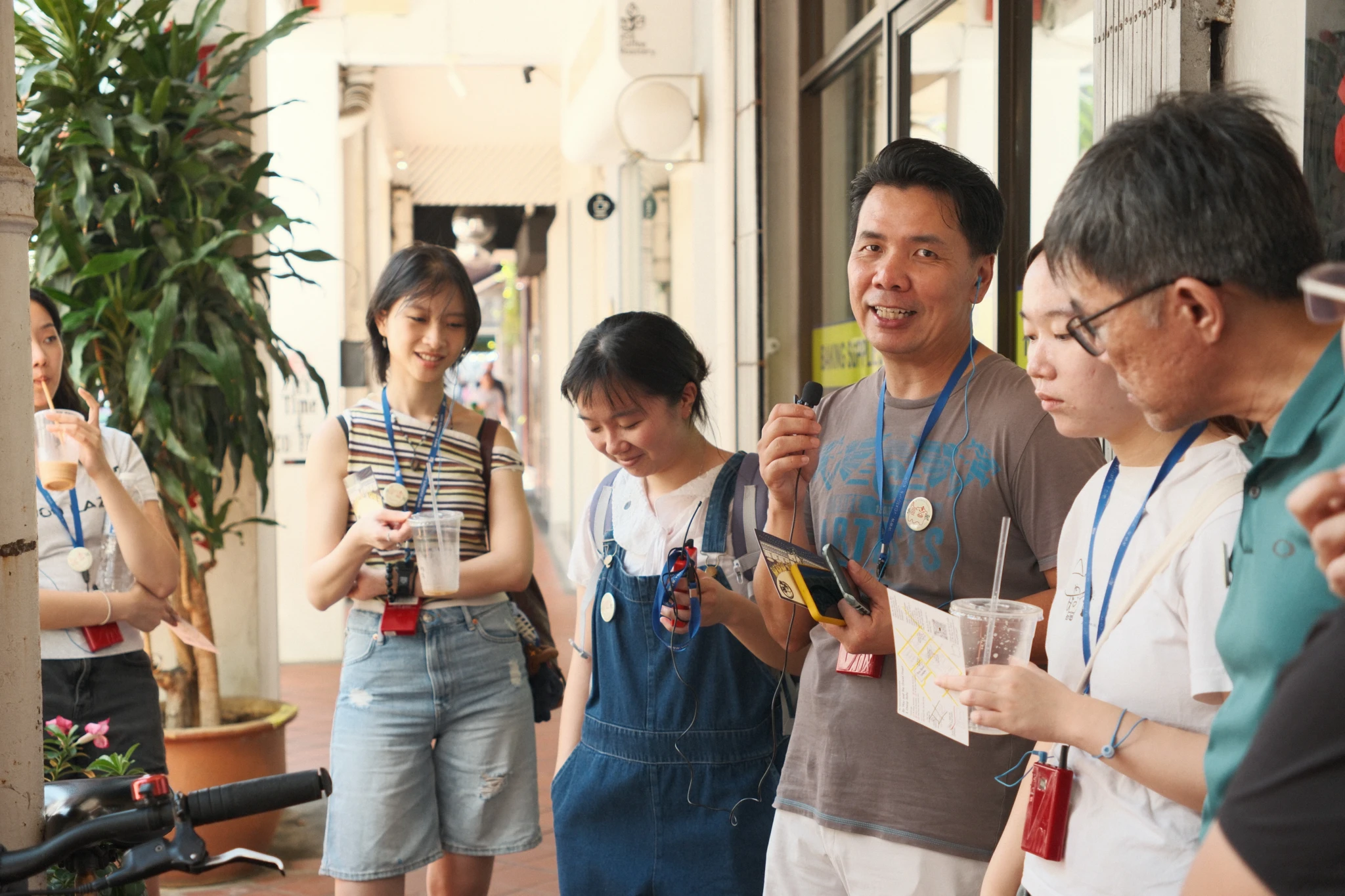
“Through Shore to Shore, we wanted people to see that Singapore’s story extends beyond the mainland,” said Rachel Lie, 22. The team is now applying for a Young ChangeMakers grant to fund a second edition.
Cooking Dinner With Ration Cards
Wartime Tuckshop ran four cooking workshops. All four sold out, with the final session on 26 August.
The format does the teaching for you. A short briefing on wartime scarcity, rationing and hyperinflation, then mock ration cards handed out, then everyone cooks with tapioca and sweet potato because that’s what families had. Recipes, photographs and participants’ own reflections sit in an online cookbook.
Reading the phrase “food shortage” does nothing. Being told to make dinner out of a tuber and a ration card is a different lesson entirely, and the sold-out sessions suggest people knew it.
The Communities Who Were Here First
The Good OL Days covers ground most Singaporeans were never taught in school. The Orang Laut are Indigenous maritime communities with roots across Singapore, Johor and Indonesia’s Riau Islands. They supported Malay rulers and guarded the sea trade routes that made the region worth fighting over, and some later settled on offshore islands such as Pulau Semakau.
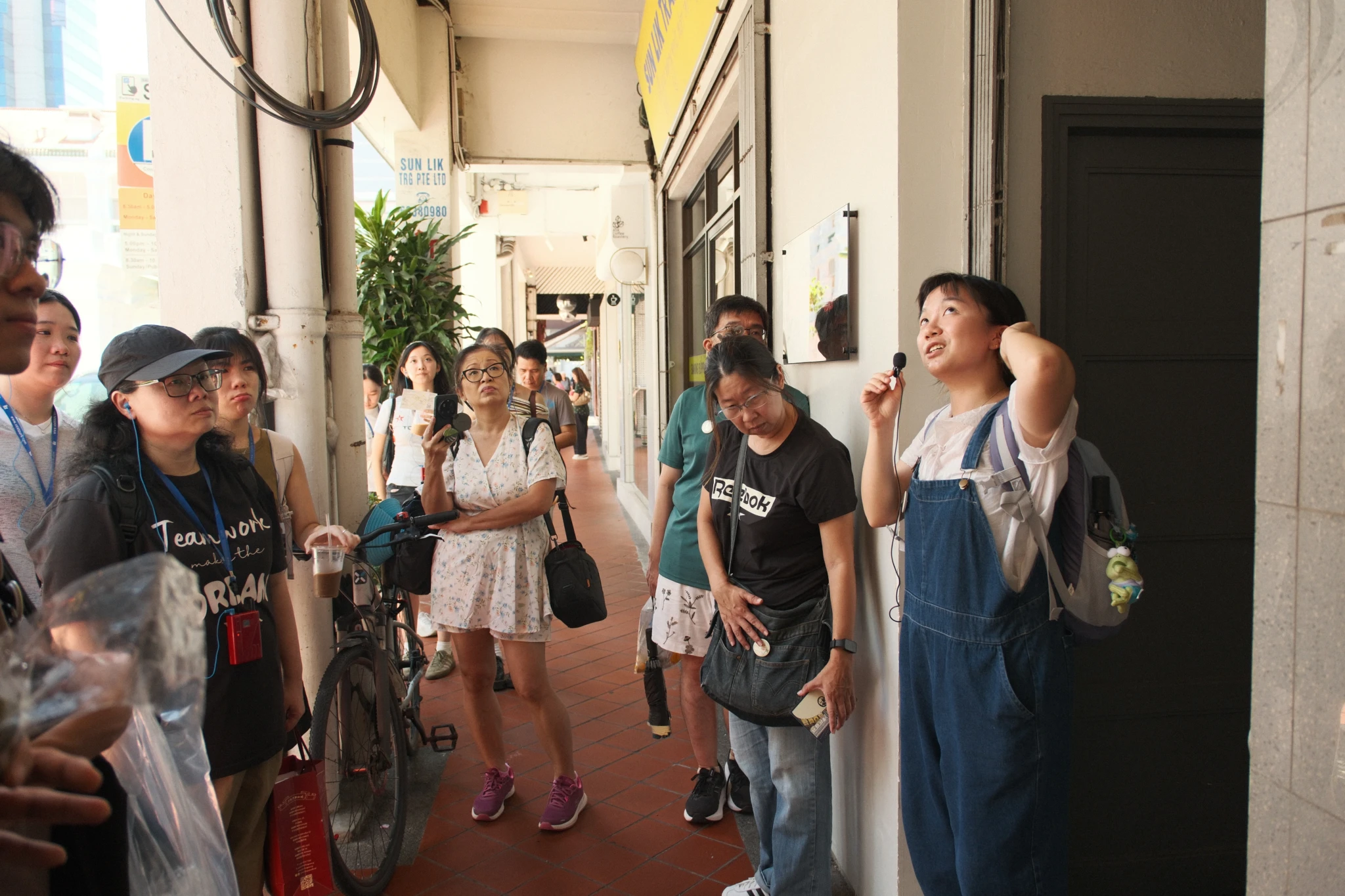
The team mapped four groups, the Orang Gelam, Orang Kallang, Orang Selat and Orang Seletar, onto an interactive map and timeline that ties their movements to place names you already use: Kallang, Punggol, Sembawang. There’s also a self-guided Orang Seletar trail through Sembawang, which turns the history into an afternoon you can walk.
800 Stamp Cards, Six Businesses
Hainanese Cooked went after a claim hiding in plain sight. Hainanese chicken rice, Nanyang coffee and the Singapore Sling, invented by Hainanese bartender Ngiam Tong Boon, all trace back to one community whose name fell off the label once the dishes went national. The team’s research suggests Hainanese kitchens may have helped popularise laksa too.
Their format was a stamp rally across six Hainanese businesses, so you pick up the history and spend money at the shop in the same trip. At least 800 stamp cards were taken up, which is a lot of foot traffic for a student project. A children’s book launched at the 5 September event, with a digital edition to follow.
5 More Projects Worth Your Time
The rest ranged wide. Finding Chinatown built a trail through six heritage businesses with hands-on stops, including roasting bak kwa (barbecued pork slices) and a traditional tea ceremony. MamaMIA documented the neighbourhood mama shop, the corner provision store that doubled as a place to loiter, through owners’ own accounts, and rebuilt one as a pop-up at Fernvale Community Club. Anchored Memories dug into HarbourFront’s maritime and working-class past with A Wave in Time, a public run at the National Library with four interactive stations and activity booklets.
EternaTrees treated trees as archives, with five guided walks at Kong Meng San Phor Kark See Monastery, Sembawang and Toa Payoh-Bishan, including the story behind the tree on the S$5 note. Ten Years to Grow a Tree traced Traditional Chinese Medicine in Singapore through a 360-degree virtual medicine hall, a digital timeline, and qigong and tai chi workshops.
Heritage Lives Outside the Glass Case
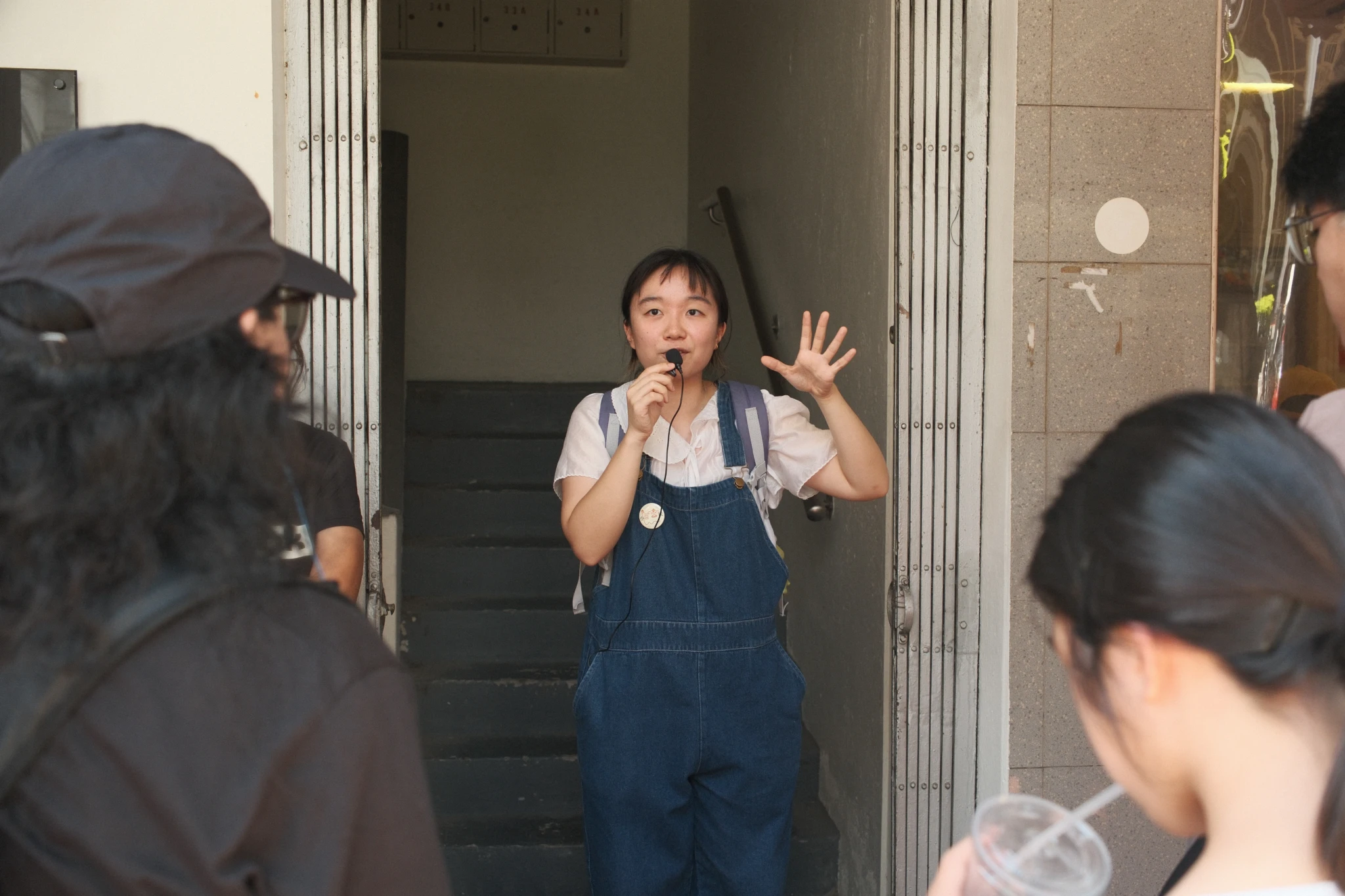
Guest of Honour Ms Goh Hanyan, Senior Parliamentary Secretary at the Ministry of Culture, Community and Youth, toured the exhibition and spoke with participants, including the Scoops of Memory team.
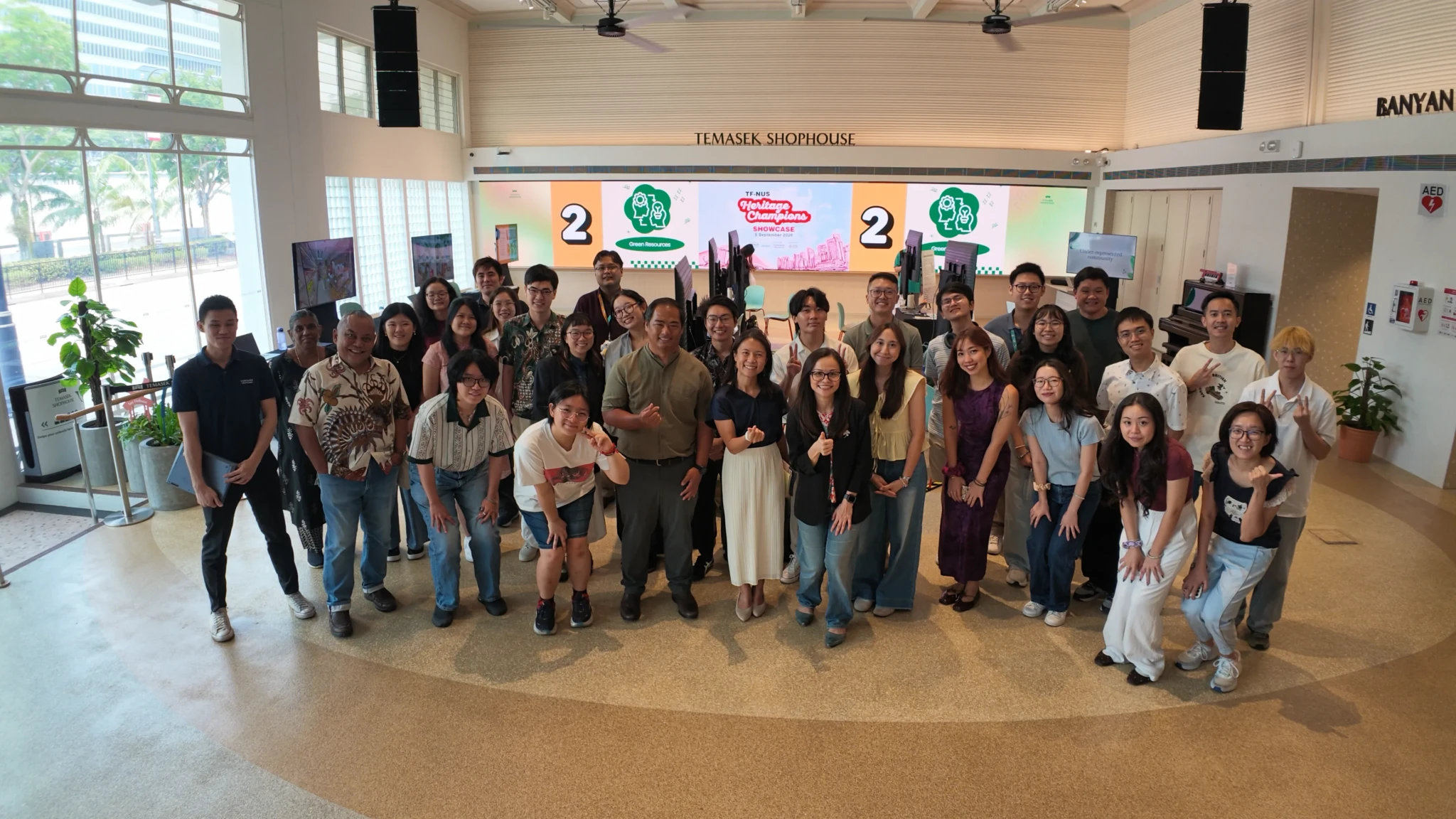
“Singapore’s heritage is not only found in monuments and historic buildings,” said Associate Professor Natalie Pang, University Librarian at NUS. “It also lives in everyday experiences, memories, food, places and the stories of communities.”
Ms Amira Karim, President of the Singapore Heritage Society, put the sharper point on it. The projects, she said, help young people “develop the confidence and vocabulary to advocate for the histories and communities they care about”, which matters as questions about how the city develops and conserves keep coming.
Mr Jervais Choo, Deputy Director for Organisation Design and Innovation at the National Heritage Board, said the teams had managed something harder than a good deliverable: they forged real relationships with heritage communities on the ground.
How S$7,000 Stacks Up
Now the practical bit, because the number is the story. S$7,000 looks tiny beside the National Heritage Board’s Heritage Grants Scheme, where Minor Project Grants reach S$50,000 and Major Project Grants reach S$150,000, generally covering up to 80% of qualifying costs. There’s a Heritage Research Grant of up to S$150,000 over two years as well. Those are open calls aimed at registered organisations, and they expect you to turn up with a track record.
On the youth side, the National Youth Council’s Young ChangeMakers grant offers up to S$3,000 for most youth-led projects and S$5,000 for higher-impact ones, open year-round to Singaporeans and PRs aged 15 to 35 through the OurSG Grants portal. That’s the one Shore to Shore is chasing. The Youth Action Grant goes up to S$70,000, but it’s built for youth-led registered organisations running sustained community work, not three people with a good idea and a shared Google Doc.
What TF-NUS Heritage Champions adds is the scaffolding around the cheque: preservation training from NUS Libraries, an ideathon, mentors, and NHB backing, for teams of tertiary students. You don’t need to already know how to run an oral history interview or approach a hawker who’s been asked for photos before. That’s the whole design.
The barrier was never the money. It was permission, and 125 students went and handed it to themselves.
🗓️ Date: Saturday, 5 September 2026
📍 Location: Temasek Shophouse, Singapore
🎓 Programme: TF-NUS Heritage Champions, run by NUS Libraries with Temasek Foundation and the National Heritage Board
💰 Funding: Up to S$7,000 and six months for the top five teams in each cohort
🎯 Eligibility: Teams of tertiary students from Singapore institutes of higher learning
👥 Scale: 125 students, two cohorts, 10 funded projects, more than 1,000 members of the public reached
🏛️ Guest of Honour: Ms Goh Hanyan, Senior Parliamentary Secretary, Ministry of Culture, Community and Youth
If you’ve been sitting on an idea about your grandmother’s recipes, the last provision shop in your estate, or a trade nobody in your family bothered to write down, treat this as the nudge. NUS Libraries has said the programme will continue, with partner discussions ongoing, and details for the next run will be posted at nus.edu/heritagechamps. Bookmark it now, because every team here started exactly where you are, with one thing they refused to let disappear.
Visuals courtesy of NUS Libraries.
Read us first on Google: add DANAMIC as a preferred source and our stories show up more in your Top Stories and AI results.