Death Stranding’s release in 2019 was a polarising one for many gamers—and for good reason, it’s probably Hideo Kojima’s weirdest title produced yet. A delivery simulator that includes a baby to detect ghosts; who would have thought that this would work? And yet, it managed to captivate me in ways I didn’t expect. So it was no surprise that I went into Death Stranding 2: On the Beach with great excitement.
Death Stranding 2: On the Beach is a sequel in the truest sense of the word. It’s everything about the original and more, with upgraded tools to help you explore its post-apocalyptic world. But it also means that if you didn’t warm up to the first game, there is not much new that would endear you to this one.
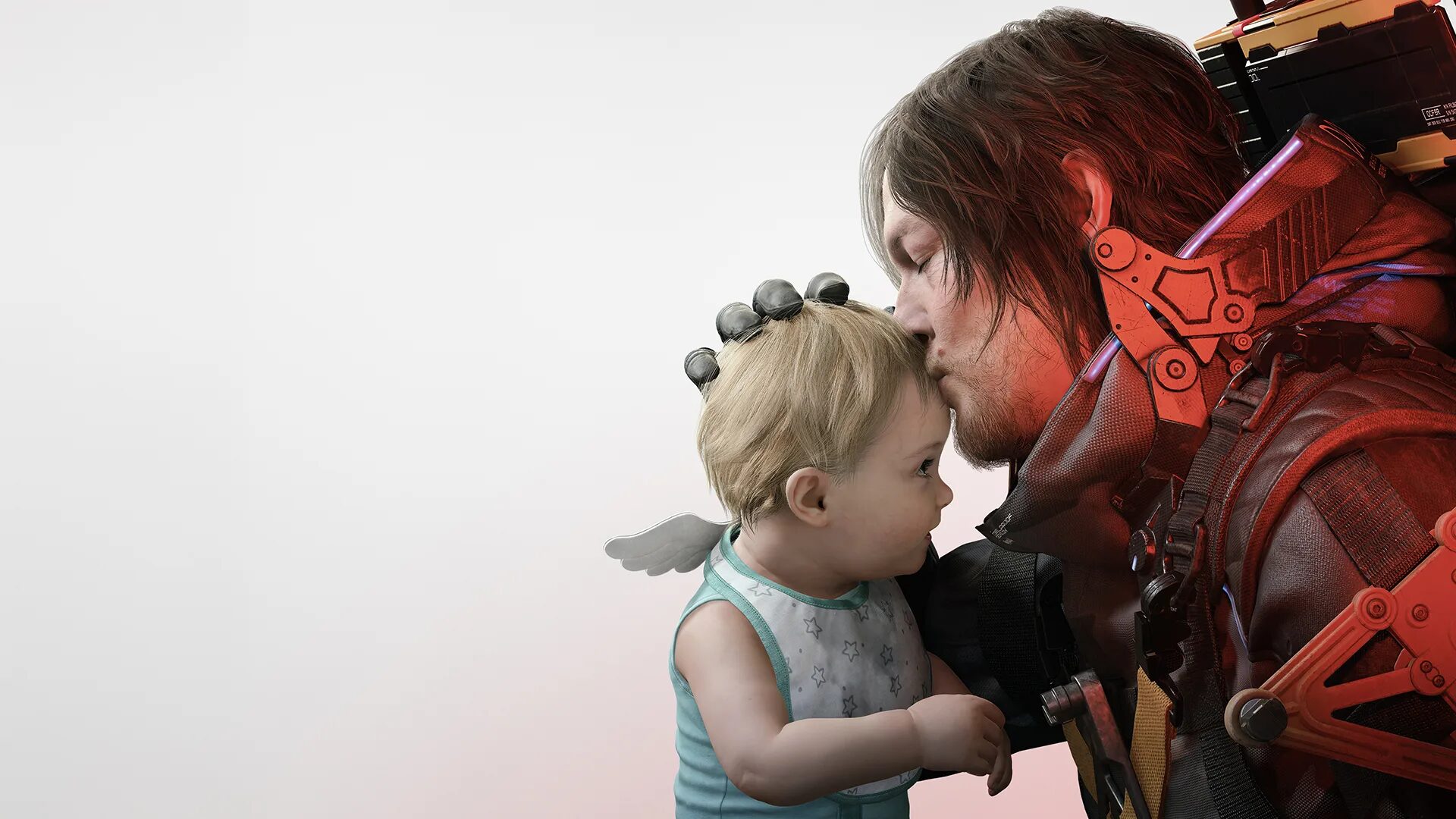
Again, you’ll be stepping into the well-travelled boots of Sam Porter Bridges, who is actually happily retired and raising Lou (your BB in the first game, now just a little older) in isolation when you start Death Stranding 2. But circumstances eventually thrust Sam back into being a Porter, where he is tasked to connect Mexico and Australia into the Chiral Network.
And thus begins the cycle once again—planning your route, managing your delivery load, patiently navigating the dangerous world; it is all back, and I love it. There is a certain sense of catharsis when going through the gameplay loop that feels almost relaxing when going through each arduous journey in the original game, which is ironic considering how bleak the setting is. Death Stranding 2: On the Beach simply provides more of that.

It still feels good to determine how to transport cargo to your destination, and even better when you can make future trips faster. Constructing a network of ziplines that connect 3 to 4 delivery locations always gives me a dopamine rush, as does building roads after patiently gathering the necessary resources. But the sequel brings more ways to make deliveries easier. As you start connecting more places to the chiral network, you get access to more tools to utilise. If you’ve played Director’s Cut, there are familiar ones like the Cargo Catapult and Chiral Bridge, but there are new ones to discover like the Transponder, which essentially teleports you to another Transponder on the map (albeit without your cargo). It’s a virtuous cycle that has you looking forward to seeing what new stuff you get as you make more deliveries.
If anything, Death Stranding 2: On the Beach feels unencumbered compared to the original game. The game is pretty generous in enabling you to make deliveries quickly; in fact, I would say I barely travelled on foot. You’re given a vehicle fairly early in the game, which makes things super easy going forward. While this may seem like a bad thing, I actually felt like it acted more like an incentive to play the game more. I would frequently be compelled to attempt one more order because of the new ease with which I can now make deliveries, which just adds a sense that you are constantly making progress. I do appreciate, though, that the game does give lots of moments to pause, with Fragile often encouraging Sam to have a rest in the private rooms.

While Mexico is a part of the game, it is really Australia that you’ll be experiencing for most of your playthrough. Compared to the USA, Australia has more varied locations to encounter. On one occasion, you may trek through a jungle, while another has you climbing the steep snowcapped mountains to make your deliveries. With respect to Death Stranding 1, it gets samey after a while, and the sequel does put more natural eye-candy to admire. I’ve stopped a few times just to take in the sights of the stark landscapes, which look beautiful even on my base PS5.
And much like Australia in real life, the world of Death Stranding 2: On the Beach is more dangerous to traverse than before. The game pits you against the elements as you make your deliveries. Quakes, avalanches, and other natural challenges await Sam in the vast Australian map, which makes the world feel more alive than ever. Conceptually, it’s a good idea that helps the loop of deliveries become more dynamic, but I can’t help but feel that the execution is undercooked. Wildfires are a cool occurrence that requires you to use the new Tar Cannon tool to craft a safe pathway, but in my over 70-hour playthrough, I only came across it twice. Meanwhile, quakes are little more than annoyances that stop you for just a few seconds—there’s nothing about it that makes you go ‘oh, how do I overcome this?’.

Beyond the naturally occurring obstacles, you also have enemy encounters as a roadblock for many deliveries. I never felt that the first game needed more action—it was plenty engaging for me—but I understood why people were disappointed by the lack of it. Death Stranding 2 addresses those criticisms in a big way. There is a lot more combat to be had, and the game supplies you with multiple ways to tackle them.
Whether by stealth or guns blazing, you can choose how to approach a combat encounter, but most of all, it is always satisfying. Silently slinking through an enemy camp and tying everybody up gave me the same amount of enjoyment as blasting bandits away with rockets. It is to the game’s credit as well that you’re still having fun even if your approach didn’t go to plan. Having to think quickly on your feet when someone sees you and alerts the whole base brings its own sense of excitement. Plus, if you prefer a specific approach or weapon, the game also rewards you with passive boosts the more you use them.

And the weapons you get are really cool to play with as well. Among them are holographic grenades that help hide Sam or scare bandits off, electric rods that can be thrown, and late in the game, you can even get a rubber pizza dough that incapacitates enemies. Better still, the enemies also get better tools the deeper you get into it, giving you more excuses to try everything out. Probably the best update is that most weapons are unified to be effective against both humans and BTs, so I never had to fret over what to use.
Narratively, however, Death Stranding 2: On the Beach lacks that same mysteriousness that permeated the original. Perhaps it might be because much of the world’s secrets were already told in the first game, but there was a distinct lack of impact when learning a new piece of information throughout the story. It felt more like a traditional plot, just going through the motions of the story beats.
Death Stranding was already a weird game, but with the sequel, the needle points more towards the goofy. You won’t find another game that will have a talking doll that moves at a slow frame rate. But I do like the new cast of characters. Each person comes with their own unique personality and quirks that quickly endear you to them, wonderfully performed by their respective actors.

Shioli Kutsuna is simply precious as the wholesome Rainy, while Elle Fanning is great playing the child-like Tomorrow. Speaking of goofy, Higgs returns as the antagonist of the game, and Troy Baker chews the scenery oh so well. He really is the highlight of the cast, giving an unhinged performance that’s like the Joker to Sam’s Batman, all while being a half-robot rocker that wields an electric guitar that shoots electric bolts—every scene with him is unforgettable.
My only gripe is that you don’t interact much with the characters outside of cutscenes, so it feels like you don’t get to know them as much as you could. Death Stranding has always been a lonely game—after all, Sam is solo when making deliveries—but there is a sense of lost potential with the new cast.

The best way to describe Death Stranding 2: On the Beach is that if the first game was like the movie Alien, then this is its Aliens. You simply get more with the game—more deliveries, more locations, and of course, more action. If you already loved the original, the backdrop of Australia is going to make you even happier playing it.
I’m not as intrigued as I was when I first played in 2019, but the game is still engaging in its own right. I love that it is able to have fun with itself without apologising. Though I have already sat through the credits, Death Stranding 2 continues to entice me to go back on the road and make deliveries, and I think that’s the biggest indication of how much I enjoy it.
Screenshots taken on PS5.
Death Stranding 2: On the Beach
Read us first on Google: add DANAMIC as a preferred source and our stories show up more in your Top Stories and AI results.