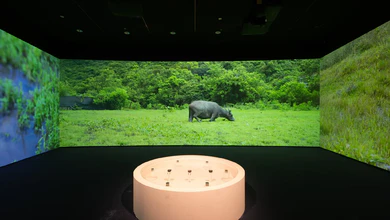
National Gallery Singapore and Shanghai Art Museum opened Lim Tze Peng: A Singapore Story in Ink on 6 November 2026, and it runs in Shanghai until 7 April 2027 with free admission for all visitors. If you’re flying to Shanghai this festive season or over the March holidays, here’s a chance to see Singapore’s ink master in a city that knows its ink.
Lim, born in Singapore on 28 September 1921, was the country’s oldest living and active artist until he passed away in February 2025. The new show traces nearly eight decades of his work. The part worth the detour is his hutuzi (糊涂字), a style of Chinese calligraphy that pulls characters so far out of shape that reading them stops being the point.
Calligraphy You Can’t Read on Purpose
Hutu (糊涂) is the Chinese word for muddled or confused, so hutuzi translates roughly to “muddled characters”. According to the Gallery, Lim developed the script from the mid-2000s, as he moved between representation and abstraction to express how he felt as well as what he saw.
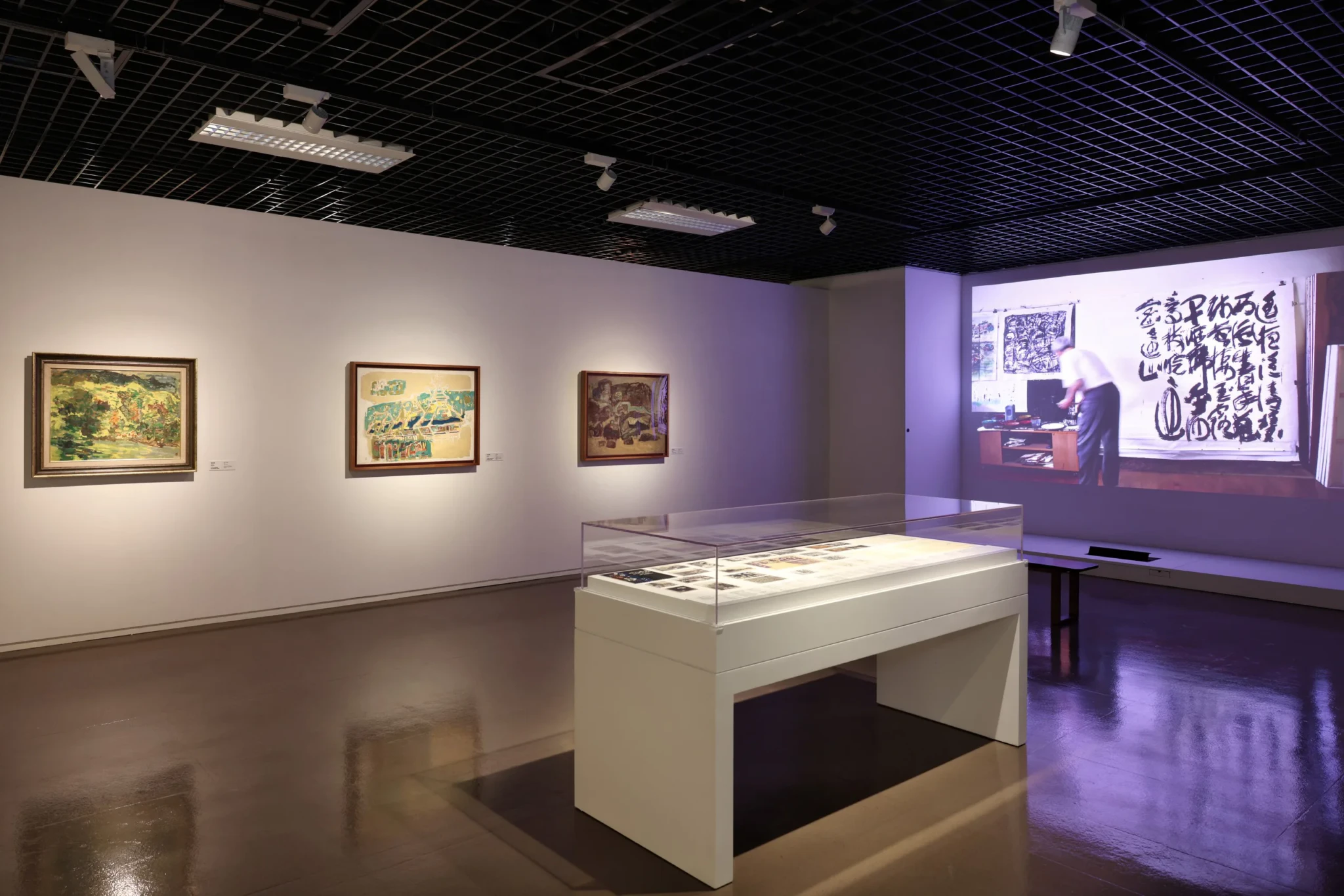
Our take: this is why it lands with a generation raised on memes. A meme works because you recognise the original image even after it’s been stretched, cropped and remixed beyond any sense, and hutuzi does the same thing to Chinese writing. The characters are still recognisable as characters, but they’ve been bent into something you read with your gut first.
The clearest example is Abstract Colour Calligraphy (Extract from a Tang Poem) (c. 2012), a new addition to the display measuring 190 × 200cm. The Gallery says Lim took a stanza from Meng Haoran’s Tang-dynasty poem Climbing Lanshan Mountain in Autumn and Sending a Letter to Zhang Wu, then stretched, layered and entangled the characters, putting expression ahead of legibility. That’s a 1,300-year-old poem turned into a wall of motion, and at almost two metres square, it’s the one to plan your visit around.
The other work that earns your time is Untitled (2008). Lim made it soon after recovering from a life-threatening illness that year, and the Gallery acquired it after its 2024 exhibition. The Gallery reads the shifts in gesture and colour as Lim’s principles for “A Good Painting”, particularly rhythm, locality and seeing, and as proof of his belief that painting and calligraphy could carry emotions that words couldn’t.
Back to Dàpō and Xiǎopō
Before the abstraction comes the Singapore your grandparents might recognise. The first section, From Dàpō to Xiǎopō (大坡·小坡), is named after the areas on either side of the Singapore River, stretching from present-day Outram Park to Kampong Glam, where Lim returned again and again to sketch daily life in ink and oil.
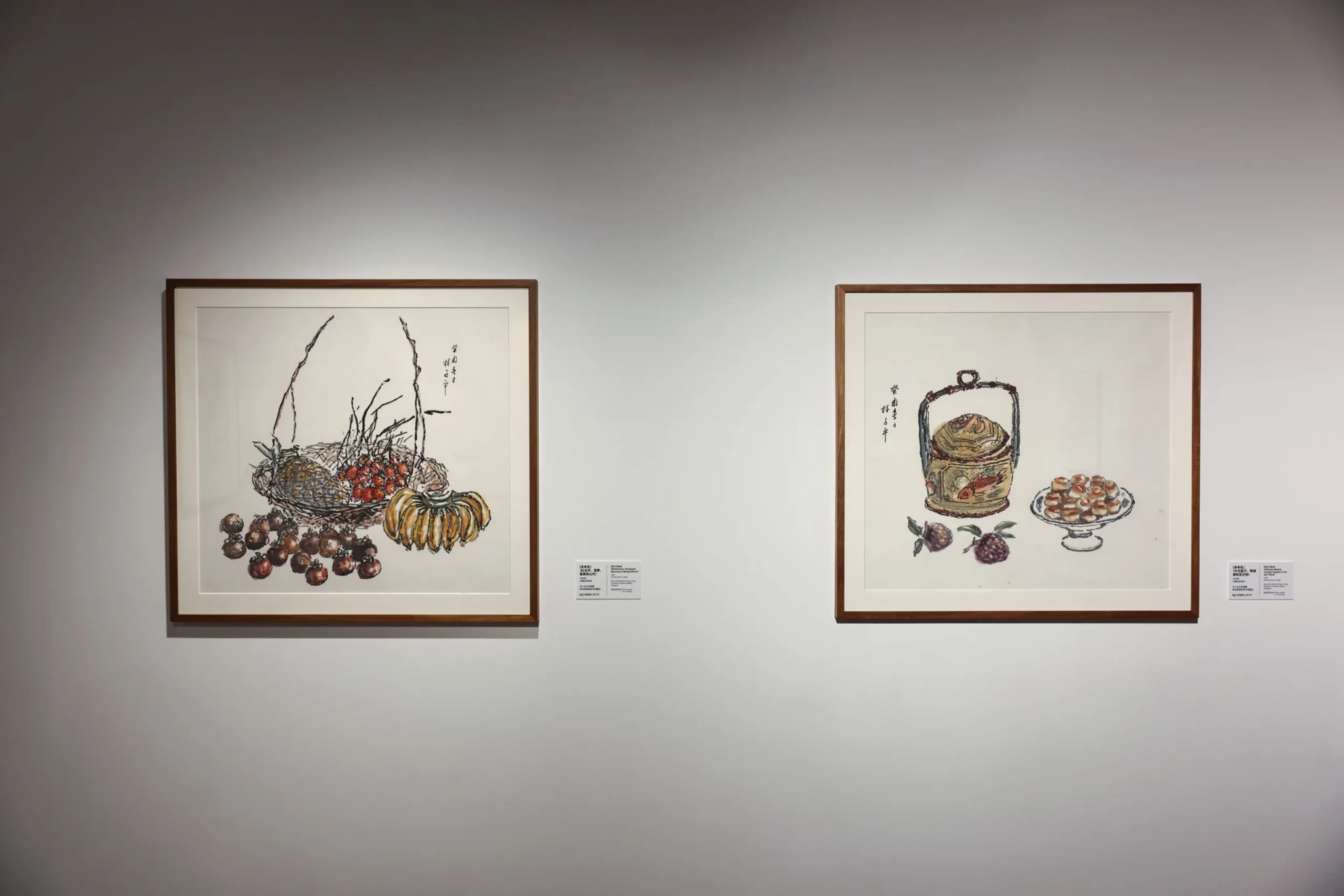
Newly added to this section are [Not titled] (Chinatown Street Stall) (1974) and [Not titled] (New Age Barber Shop) (1991), both zooming in on the shops people walked past every day. The pick for anyone who loves old Singapore is Old Shophouse Row at Johor Road (1979), which the Gallery says captures a stretch of the city that has since disappeared to redevelopment. It’s a 68 × 138cm record of a street you can’t visit anymore!
The section also pairs Singapore River II (c. 1976), an oil on canvas and Lim’s first donation to the National Collection, with Singapore River (Coleman Bridge) (1979) in ink from the Istana Art Collection. Same river, three years apart, two completely different hands, and together they show Lim’s shift from oil to ink in the 1970s.
Bali, Brunei and Lijiang
The second section, Expeditions through Art (旅途·艺途), follows Lim’s travels from the 1960s to the turn of the millennium. As a founding member of the Ten Men Art Group, he made five trips with fellow artists to Malaysia, Indonesia, Thailand and Cambodia between 1960 and 1970. Catalogues from the group appear in this edition for the first time, alongside photographs Lim took of the Dàpō and Xiǎopō areas.
Bali stuck with him longest. Since his first visit in 1962, Lim painted hundreds of sketches and paintings of the island, and the new addition [Not titled] (Bali Scene) (1989) frames a temple behind a canopy of hanging foliage. There’s a sweet bonus for Chinese audiences too: Li Jiang III (1997), depicting Lijiang Old Town in Yunnan, was selected specially for the travelling show.
Why Shanghai Gets It Now
Lim isn’t a stranger to China. He held a solo show at Shanghai’s Liu Haisu Art Museum in 2009. He received the Cultural Medallion, Singapore’s highest arts award, in 2003, and represented Singapore at the 5th Shenzhen International Ink Biennale in 2006.
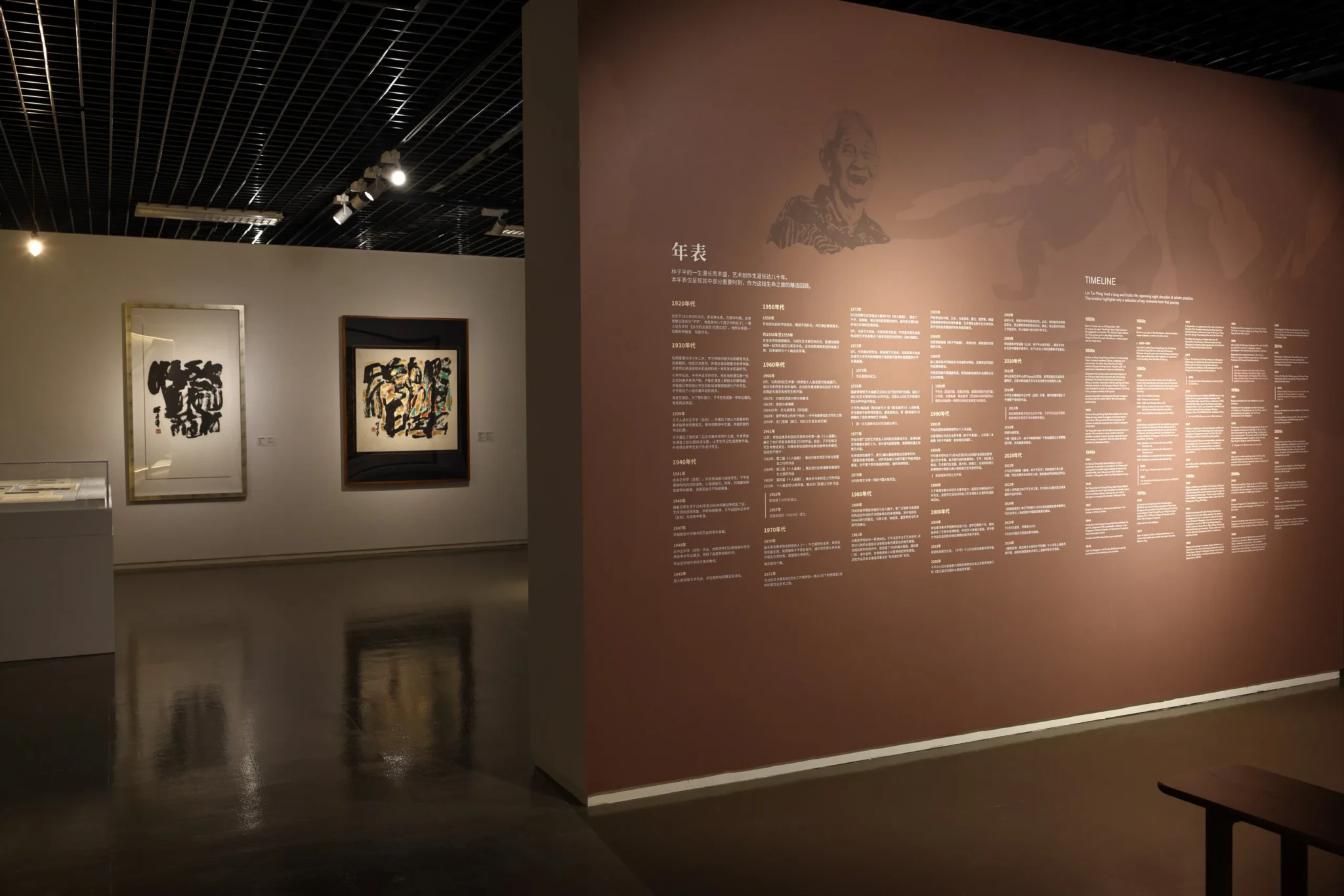
This time, the show is part of Shanghai Art Museum’s 70th anniversary series of international collaborations. The museum, founded in 1956, now sits in the renovated China Pavilion from Expo 2010. Its executive director, Wang Yichuan, called Lim “a self-taught pioneer whose practice bridged Chinese traditions and his lived experiences in Southeast Asia to reimagine ink.”
Dr Eugene Tan, CEO and Director of National Gallery Singapore, said that “for generations, Lim Tze Peng has captured the rhythms of Singapore life, and his artistic journey is inseparable from our art history.”
When the Gallery staged Becoming Lim Tze Peng in 2024, our take was that art doesn’t change, it evolves. Two years on, the same story has crossed borders, and it reads even better with half the walls refreshed.
🗓️ Date: 6 November 2026 to 7 April 2027
📍 Location: Shanghai Art Museum, No. 205 Shangnan Road, Pudong New District, Shanghai
🎟️ Admission: Free for all visitors
🖼️ Sections: From Dàpō to Xiǎopō, Expeditions through Art and Worlds Seen and Within
✈️ Next Stops: Shenzhen Art Museum and Fujian Art Museum, planned for later in 2027
If Shanghai is on your travel list before April, set aside an afternoon for a Singaporean who spent his final decades proving that a brush, a Tang poem and zero interest in staying neat could stop a room. Find the full exhibition details on National Gallery Singapore’s exhibition page, and keep an eye there for the Shenzhen and Fujian dates in 2027!
Photos and Visuals courtesy of National Gallery Singapore.
Read us first on Google: add DANAMIC as a preferred source and our stories show up more in your Top Stories and AI results.