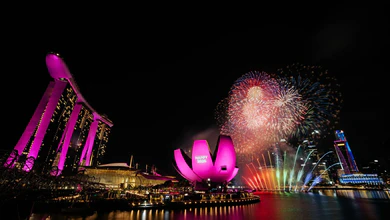
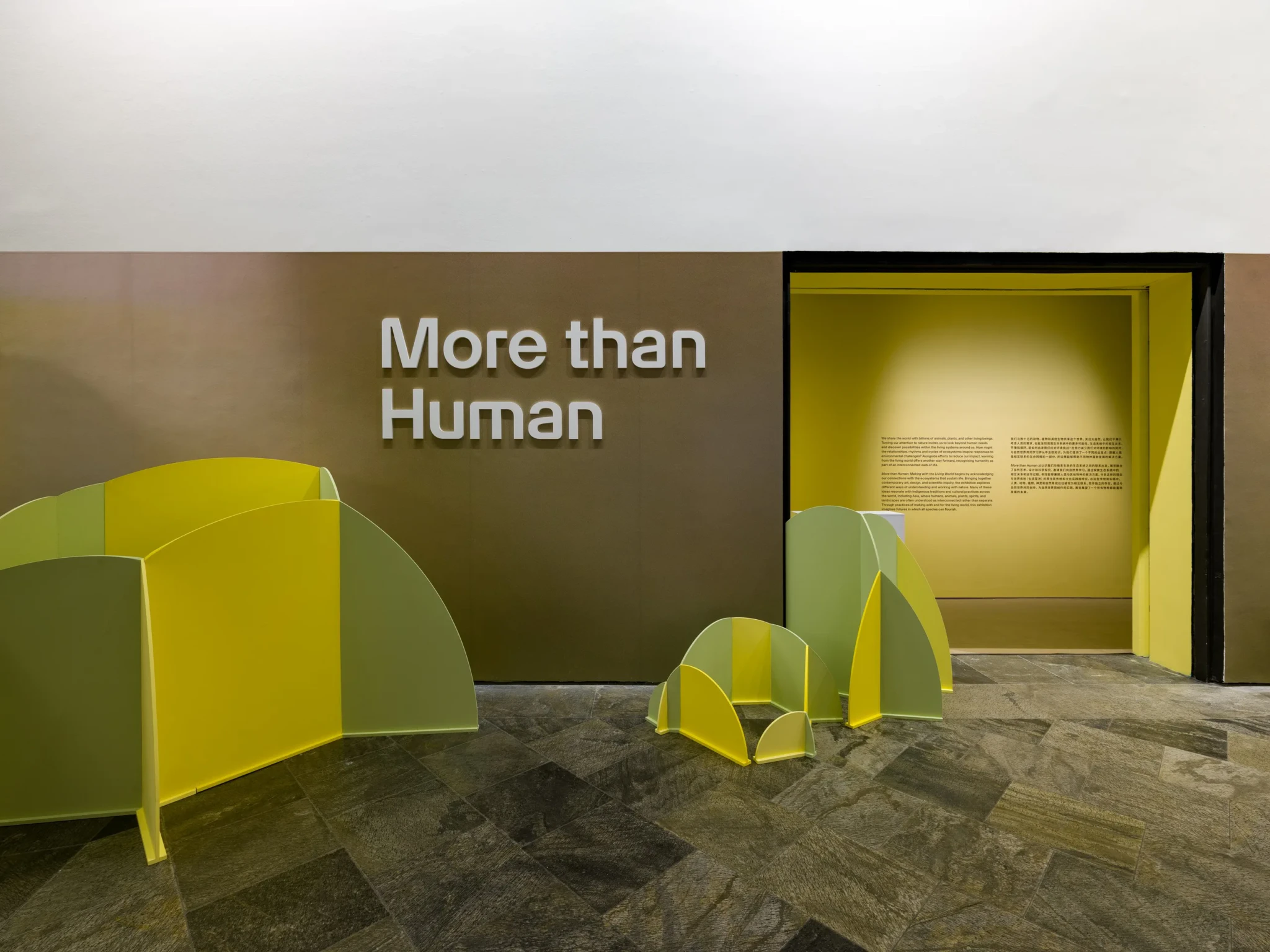
More than Human: Making With the Living World opens at ArtScience Museum on Saturday, 28 November 2026 and runs till 16 May 2027. That gives anyone in Singapore close to six months to catch the exhibition’s Asian debut. Its question is a refreshing one if climate headlines leave you drained: what happens when humans stop playing the main character and start treating beavers, fungi and rivers as fellow designers?
A London Show, Expanded
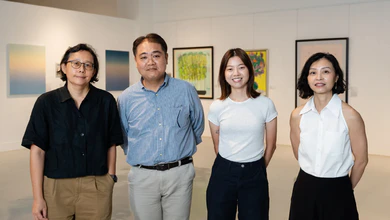
The exhibition comes from the Design Museum in London. It was developed with Future Observatory, the Design Museum’s national research programme for the green transition. ArtScience Museum co-curated this Singapore edition and added 25 works with support from DesignSingapore Council, bringing in perspectives rooted in the species, places and cultural traditions of Singapore and Asia. The total now sits at over 140 artworks, projects, immersive installations and interactive experiences by nearly 55 artists, designers, architects, researchers and communities.
Justin McGuirk, Director of Future Observatory, says he is “thrilled to see this expanded version” open here, “with the addition of immersive installations and new works by Southeast Asian artists.” That regional layer is the reason to go, and it’s a big part of why we were excited when we previewed the beaver art and digital wetland earlier this month.
Three Chapters in a Hedge Maze
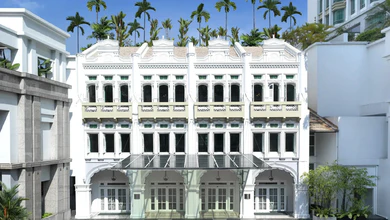
Singapore-based Lekker Architects designed the exhibition space, drawing on hedge mazes, archipelagos and woodlands, so the layout itself nudges you to wander instead of march. The route moves through three chapters. Being Landscape looks at our place within interconnected ecosystems, Making with the World treats nature as a collaborator in design, and Shifting Perspective closes with ways of seeing the world beyond a purely human point of view.
Masks, Lightning and Qigong
According to the museum, the first chapter treats the land as a living system where people, animals, plants, rivers, forests and spiritual beliefs are tangled together. Zarina Muhammad’s Observing Omens Drawn by Lightning (2025) is the regional anchor here. It combines film, sound, sculpture and masks made with regional artisans to trace Southeast Asian maritime histories, from coral reefs and shifting shorelines to the old practice of reading signs in tides, weather and lightning.
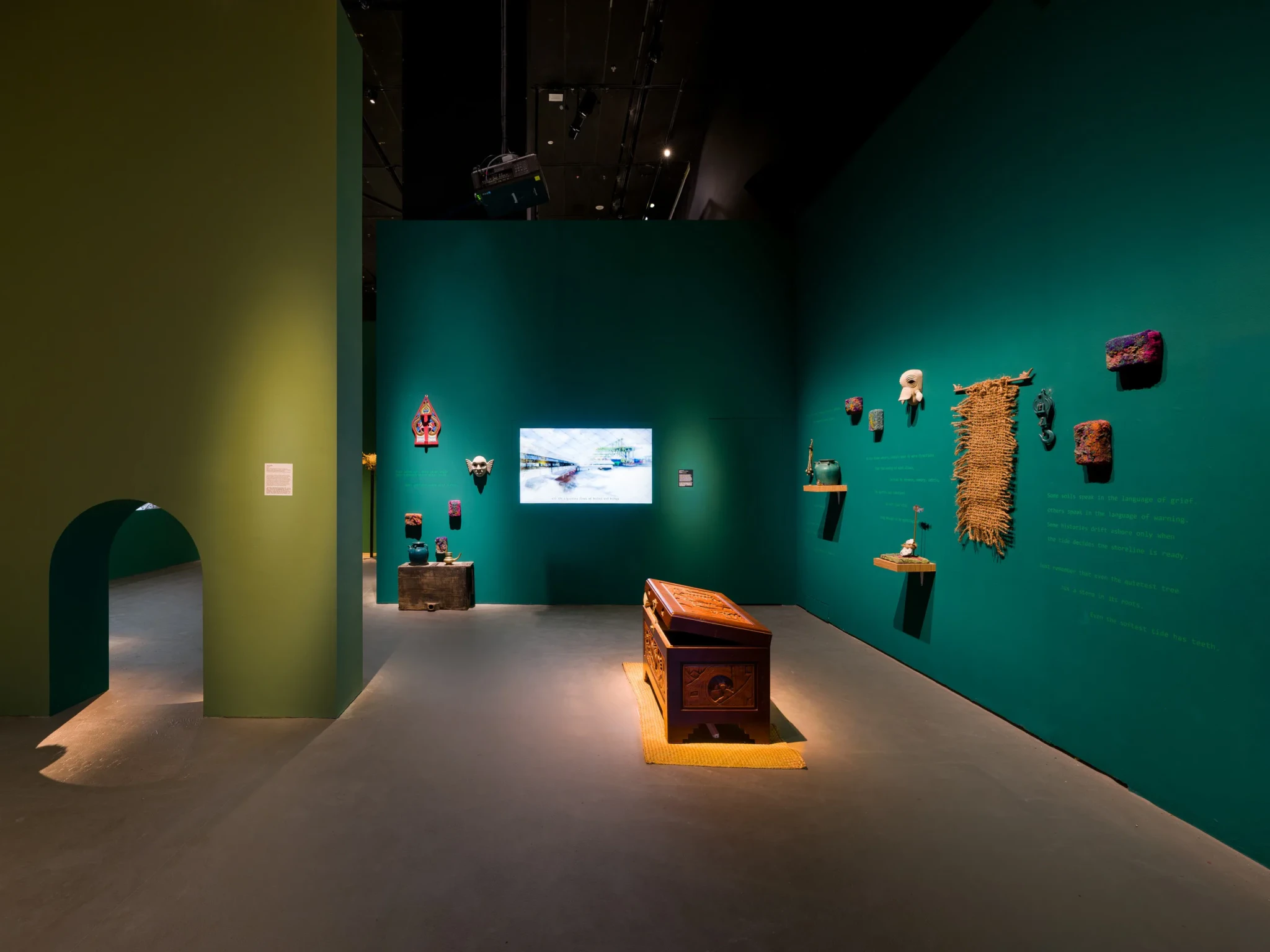
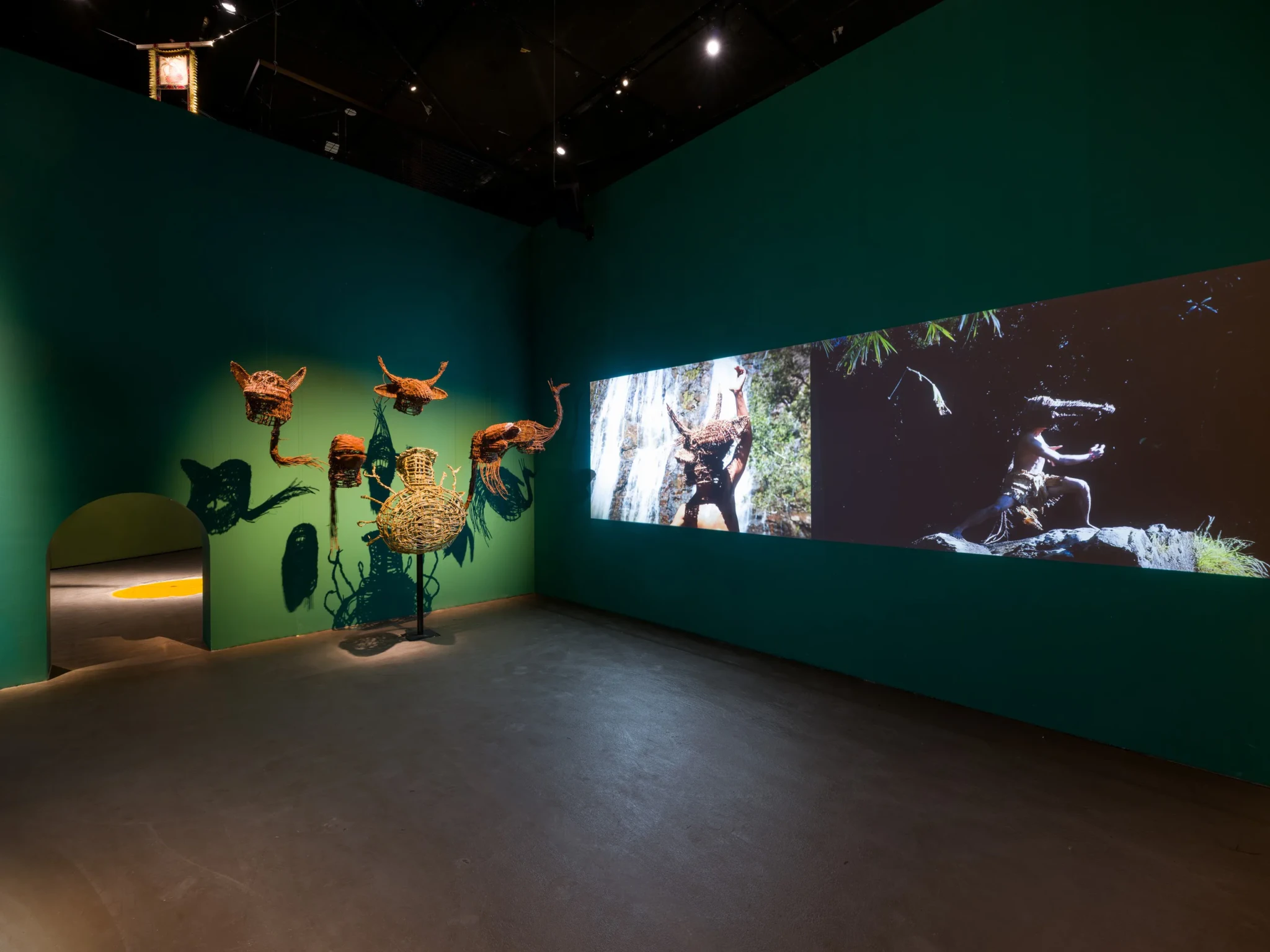
Khvay Samnang’s Within the Forest (2026) is the other one to linger at. It explores the knowledge and spiritual traditions of Cambodia’s Indigenous Chong people through videos and animal masks created with Chong craftspeople. That collaboration is the point of the work, since the people whose knowledge is on display helped make what you’re looking at.
Elsewhere in the chapter, Zheng Bo’s Ecosensibility Exercise: Fragrant Eight-Section Brocade (2024) reworks qigong, the traditional Chinese breathing and movement practice, into a sequence about swapping energy with the environment. The baskets woven by the Ye’kuana people of the Venezuelan Amazon carry the chapter’s most moving detail: the museum says each weaving begins with songs asking the rainforest’s permission to gather materials.
Who Gets Credit When a Beaver Carves?
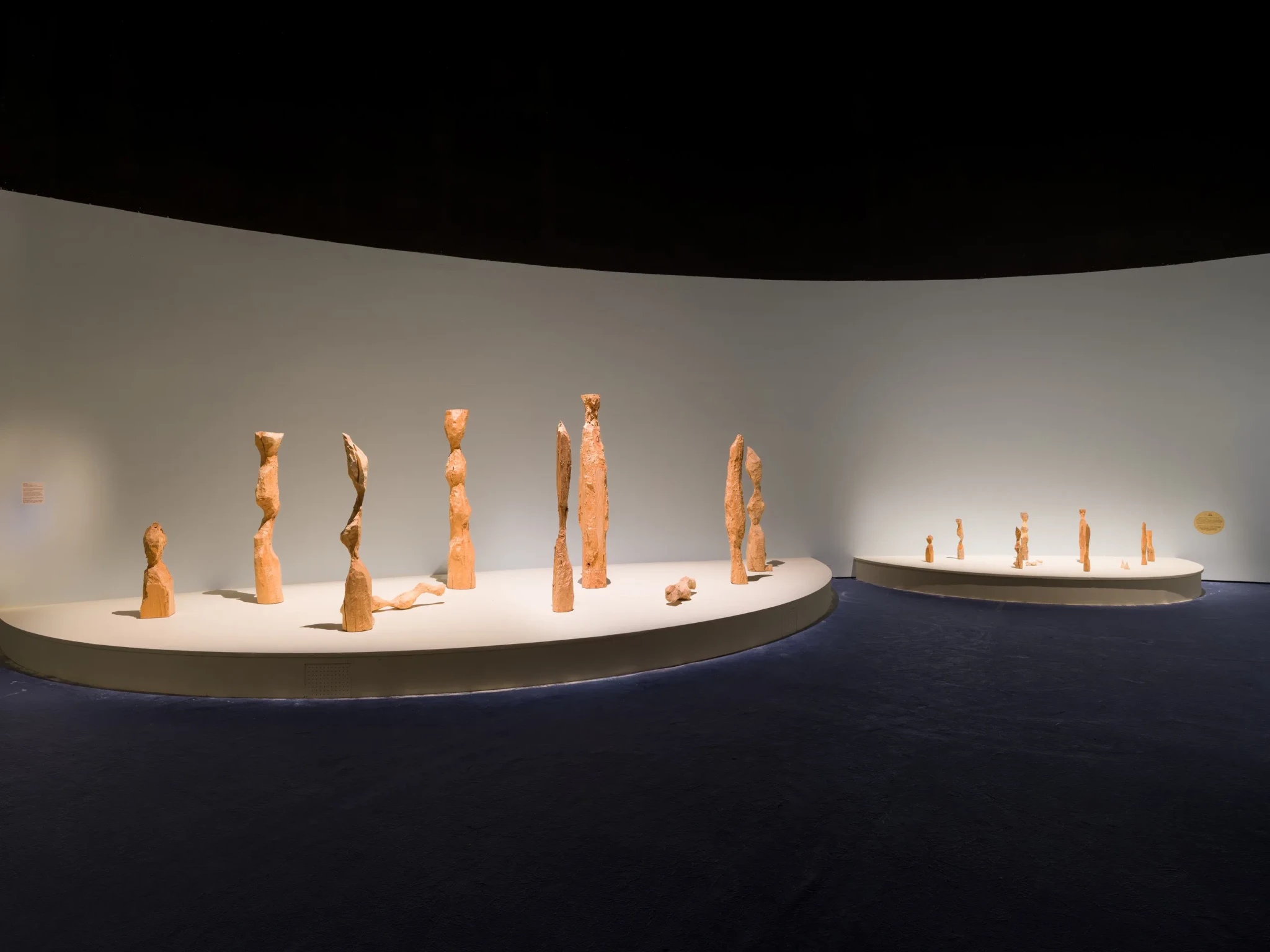
The second chapter is where nature becomes a co-designer, and Aki Inomata’s How to Carve a Sculpture (2018 to ongoing) sums up the whole show in one room. Inomata placed wooden blocks inside beaver enclosures and collected the gnawed forms. She displays them next to enlarged versions, one carved by a human and one by computer-controlled milling, which leaves you asking who the artist really is: the beaver, the wood, the machine or the woman who set it all up?
The sambar deer work hits closer to home. In Alam Se-Kita Reimagined (2026), commissioned by ArtScience Museum, design studios thesupersystem and VAAS use field research with Singapore’s sambar deer to build tools and prototypes through an approach they call Poly Species Design, which treats other species as stakeholders. Alam Se-Kita is Malay for “our place as one”, fitting for an animal once thought locally extinct that has returned to forests now carved up by roads.
Studio SKLIM’s Lo-Hi Tech 03: Urban Bio-Tats (2026) is the one Singapore residents will recognise in their own neighbourhoods. Built from plant-based biocomposites, terracotta, solar technologies and biotextiles, its modular structure holds small habitats for the Common Palm Civet, Red Junglefowl and Ornate Sunbird, animals that already share the city with us.
Local institutions bring the science. The National Parks Board’s HortPark recreates insect hotels from its Bee Trail for solitary bees and wasps, while the National University of Singapore’s Experimental Marine Ecology Lab shows reconstructions of Fish Houses, first deployed around Pulau Hantu. Historic fish and crustacean traps from the Malay Peninsula and Borneo, on loan from the Asian Civilisations Museum, round things off, and many were built to let smaller fish escape so populations could recover. Sustainable design, it turns out, is older than the term!
Bats, Buffalo and Glowing Spores
The final chapter, Shifting Perspective, turns to senses humans mostly miss, using sound, scent, vibration and touch to explore fungal networks, animal perception and the journeys of seeds. Zheng Mahler’s Lantau Trilogy, made between 2020 and 2026 and presented together for the first time according to the museum, follows the bats, water buffalo and fungi of Hong Kong’s Lantau Island through forests, wetlands and urbanising villages.
Superflux’s Nobody Told Me Rivers Dream (2025) uses sensors along London’s River Thames and AI models to pick up signals people struggle to perceive, such as birdsong before storms and wind moving across water. Zai Tang’s Duets (2026) does something similar for the critically endangered Straw-headed Bulbul, slowing its paired songs down into increasingly abstract visuals.
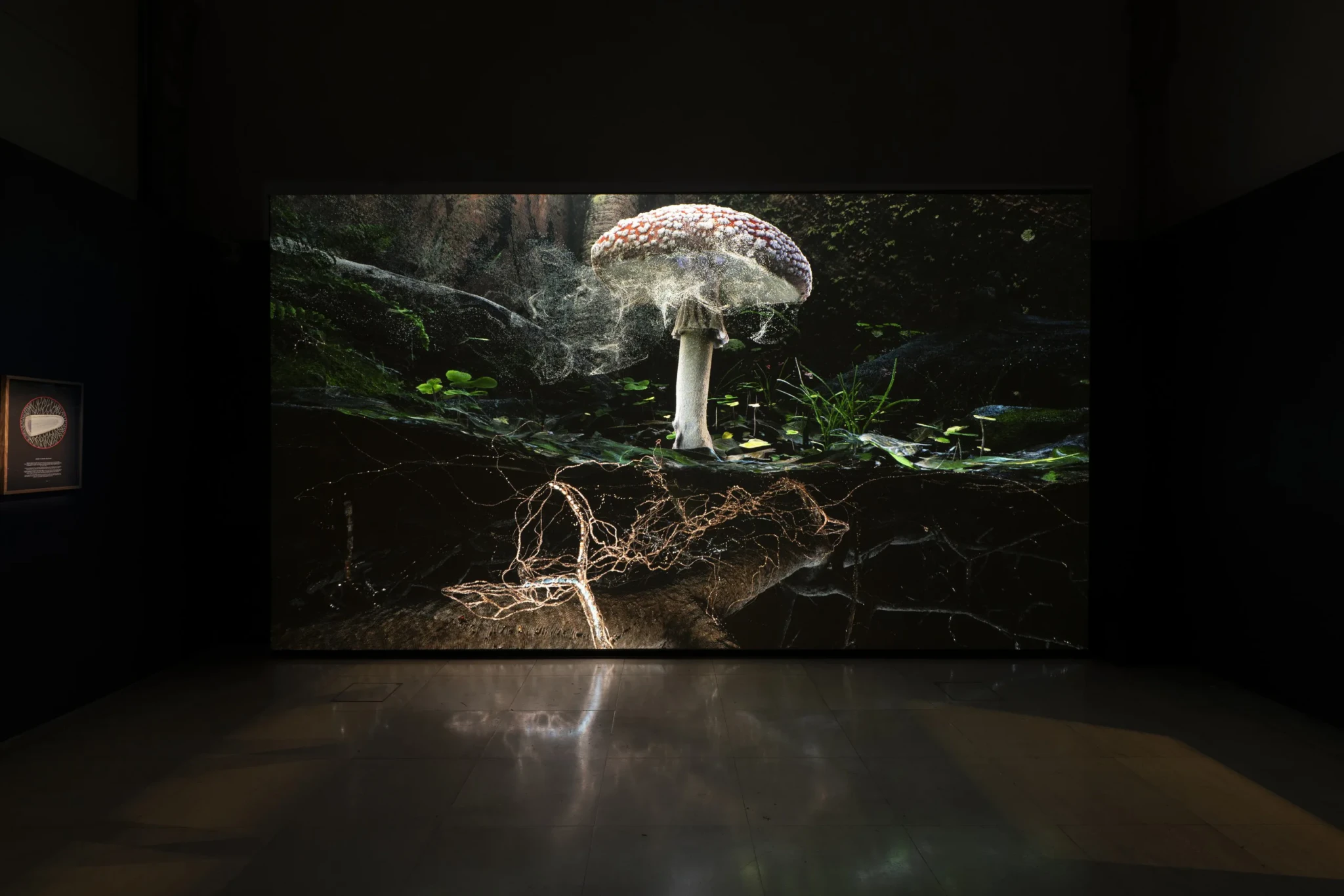
For the big-screen moment, head to Marshmallow Laser Feast’s Poetics of Soil: Fly Agaric I (2025). The London collective uses research and extended reality technologies to take you underground through the fly agaric mushroom, showing how fungi link plants, microbes and soil above and below the surface.
Julia Lohmann’s Kelp Council (2025) is the calmer counterpoint. Visitors step into a gathering of seaweed species collected across Europe and East Asia, set to a soundscape of the rising and falling tide, and it asks how humans might use seaweed as a design material while respecting it as a living species.
Worth a Slow Weekend
With more than 140 works across three chapters, this is a show to take slowly rather than sprint through for one photo. Angelita Teo, Vice President of Attractions at Marina Bay Sands, says the museum hopes visitors “leave with a renewed sense of curiosity”, and the beaver sculptures alone should take care of that.
🗓️ Date: 28 November 2026 to 16 May 2027
📍 Location: ArtScience Museum, Marina Bay Sands
🧭 Chapters: Being Landscape, Making with the World and Shifting Perspective
🌿 Works: Over 140 by nearly 55 contributors, including 25 added for Singapore
🏛️ Organisers: Design Museum, London, with Future Observatory; co-curated by ArtScience Museum and supported by DesignSingapore Council
If you’ve been looking for a version of the climate conversation that sparks curiosity instead of dread, this one is worth a Saturday. Mark 16 May 2027 as the last day, and leave room for a second visit!
Photos and Visuals courtesy of Marina Bay Sands, Zheng Mahler, Studio SKLIM, Aki Inomata, Khvay Samnang, Marshmallow Laser Feast at Somerset House Trust, and Lightning (2025) by Zarina Muhammad.
Read us first on Google: add DANAMIC as a preferred source and our stories show up more in your Top Stories and AI results.