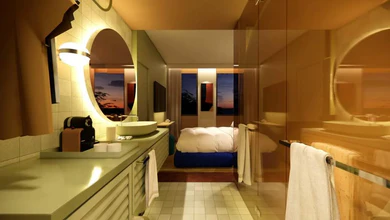
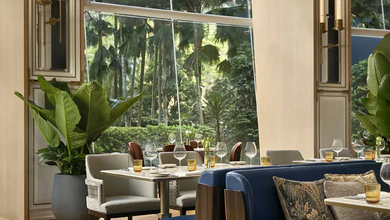
lyf Chinatown Singapore, The Ascott Limited’s social living property, has been taking guests since 3 July 2026. Its 90 units sit in restored pre-war conservation shophouses and a newly built annex, on land with a long religious and multicultural history. If you’ve been hunting for a staycation with a story, or a place to put up friends visiting Singapore that isn’t another generic chain hotel, this is a stay where the history sits around you instead of behind glass.
The bigger question is who gets to shape a neighbourhood’s past once paying guests move in, and the answer here is more layered than a heritage-themed hotel usually manages.
What Wakaf Land Means Here
The property sits within Jamae Chulia Heritage (JCH), a mixed-use development on historical wakaf land. In Islamic tradition, a wakaf is an endowment, meaning property set aside so it keeps benefiting a community long after the person who gave it. That changes how you should think about this site. It isn’t a developer’s plot that happens to be old. It’s land with obligations attached.
JCH was developed by WJC Heritage Pte Ltd, a wholly owned subsidiary of Warees Investments. Warees in turn belongs to the Islamic Religious Council of Singapore (Muis), and it was set up in 2001 to manage and grow community endowment assets. Its portfolio includes Bencoolen Development and The Red House, so this isn’t its first time giving an old site a second life. JCH officially opened on 24 October 2026, almost four months after lyf’s first guests checked in.
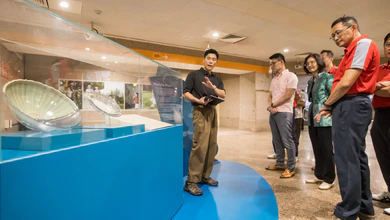
The release describes the Heritage Gallery as telling the history of Singapore’s Indian Muslim community, particularly the Chulias. The Chulias were part of Singapore’s Indian Muslim community, a strand of Chinatown’s story that tends to get lost behind the red lanterns.
Warees CEO Mohamed Azam Abdul Aziz framed the hotel as a way to keep that obligation alive. “As stewards of wakaf assets, we have a responsibility to preserve their legacy while ensuring they continue to serve meaningful purposes for future generations.” That’s a heavier brief than most hotels carry, and it’s the reason this opening deserves more attention than a new pool deck would.
Shophouse Rooms, Annex Next Door
The 90 units are split between the conserved shophouses and the new annex. lyf Chinatown Singapore is the fifth lyf-branded property in Singapore, and Ascott says this partnership with Warees brings its Singapore portfolio to 22 properties.
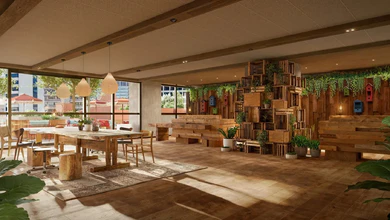
lyf’s whole pitch is social living, which in practice means you spend less time in your room and more time in shared spaces. Here those spaces carry names: BOND is the communal kitchen and COLLAB is the co-working area. Then there are DIP, BURN, and WASH & HANG, and Ascott says each one draws on Chinatown’s history, culture, and community life.
The practical upside is clear for anyone staying more than a night or two. A shared kitchen and a laundry space change a trip when you’d rather cook a simple breakfast than pay hawker-centre-adjacent café prices every morning. A co-working corner earns its keep for anyone squeezing in remote work between makan runs (makan being Malay for “eat”, and the most important verb in Singapore).
The Walk Worth Signing Up For
Here’s where lyf Chinatown separates itself from a hotel that merely occupies an old building.
First, there’s a set of monthly curated activities: guided Chinatown Heritage Walks, traditional kueh-making (kueh are bite-sized local cakes), tea ceremony appreciation workshops with Huaxia Teahouse, Chinese calligraphy, and henna art. Second, there’s a rotating programme curated exclusively for Ascott Star Rewards (ASR) members, Ascott’s loyalty scheme, which runs guided cultural walks across both Chinatown and Kampong Glam, plus traditional games nights and Chinese tea tasting with local partners.
If you only make time for one, pick the ASR walk along the thoroughfare connecting Pagoda Street and Mosque Street. It stops at the Heritage Gallery, where guests learn about Singapore’s Indian Muslim community, particularly the Chulias, and the legacy they built. That’s the one activity on the list that tells the story of this specific plot of land, which is the whole reason to stay here over somewhere else in Chinatown!
The Huaxia Teahouse session is the next pick, since it puts you with an established local partner instead of a generic workshop. Henna sits nicely alongside both, because it’s the clearest sign the programme is reaching beyond the Chinese heritage most visitors already expect from Chinatown. The practical takeaway is to sign up for Ascott Star Rewards before you book, because the Kampong Glam walk and the Heritage Gallery route sit inside the members-only programme.
Whose Chinatown Is It Anyway?
The question underneath this opening is a fair one. When old buildings become hotels, the people telling the neighbourhood’s story start to include a brand’s events team. lyf’s area manager Genevieve Khua described Chinatown as “a place where communities meet, trade and build a life together,” and that’s an honest description of what the Chulias were doing here long before anyone called it heritage.
What makes this setup different is who owns the land. The site is on historical wakaf land, with the development led by a subsidiary of Warees Investments. Visitors who only know Chinatown through Pagoda Street souvenir stalls get pointed towards a part of its past that Singapore’s history lessons often skip. You can sleep in heritage, and the walk downstairs reminds you whose heritage it is.
That’s a different relationship with history than the one most of us grew up with, where heritage meant a school trip and a worksheet. When we covered the Five Footway Festival, the draw was guided tours that brought Chinatown’s past to street level. lyf Chinatown takes that idea a step further by letting you stay the night.
Should You Book It?
If you want a hotel that hands you a key card and leaves you alone, there are easier choices. If you’re the type who reads plaques on walls, cooks in shared kitchens, and actually goes to the walking tour, this is a strong fit. Groups of friends using it as a Chinatown base should get the most out of it, especially if one of you sets up the ASR membership early.
lyf Chinatown Singapore has been open since 3 July 2026, and the surrounding Jamae Chulia Heritage site has been officially open since 24 October 2026. Check room types, rates, and the current activity calendar on the official lyf Chinatown Singapore page, join Ascott Star Rewards before you book so the Heritage Gallery walk is on your itinerary, and give yourself one Chinatown weekend where the shophouse is your bedroom instead of your backdrop!
Photos and Visuals courtesy of lyf Chinatown Singapore.
Read us first on Google: add DANAMIC as a preferred source and our stories show up more in your Top Stories and AI results.