Seniors at Lucky Haven, a senior care centre in Bedok South, have spent four sessions turning building bricks into sunflowers, and some of them are now asking to build aeroplanes and houses. The creative brick-building pilot was announced on 17 November 2026 by Antica Community Development and Services (ACDS), a registered charity, together with Dr Kelvin Tan of the Singapore University of Social Sciences (SUSS).
The timing matters for anyone under 35. The pilot arrives in the same year Singapore officially became a super-aged society, and that milestone shapes how many of us will spend our weekends, our leave days and our savings over the next decade.
Sunflowers First, Aeroplanes Next
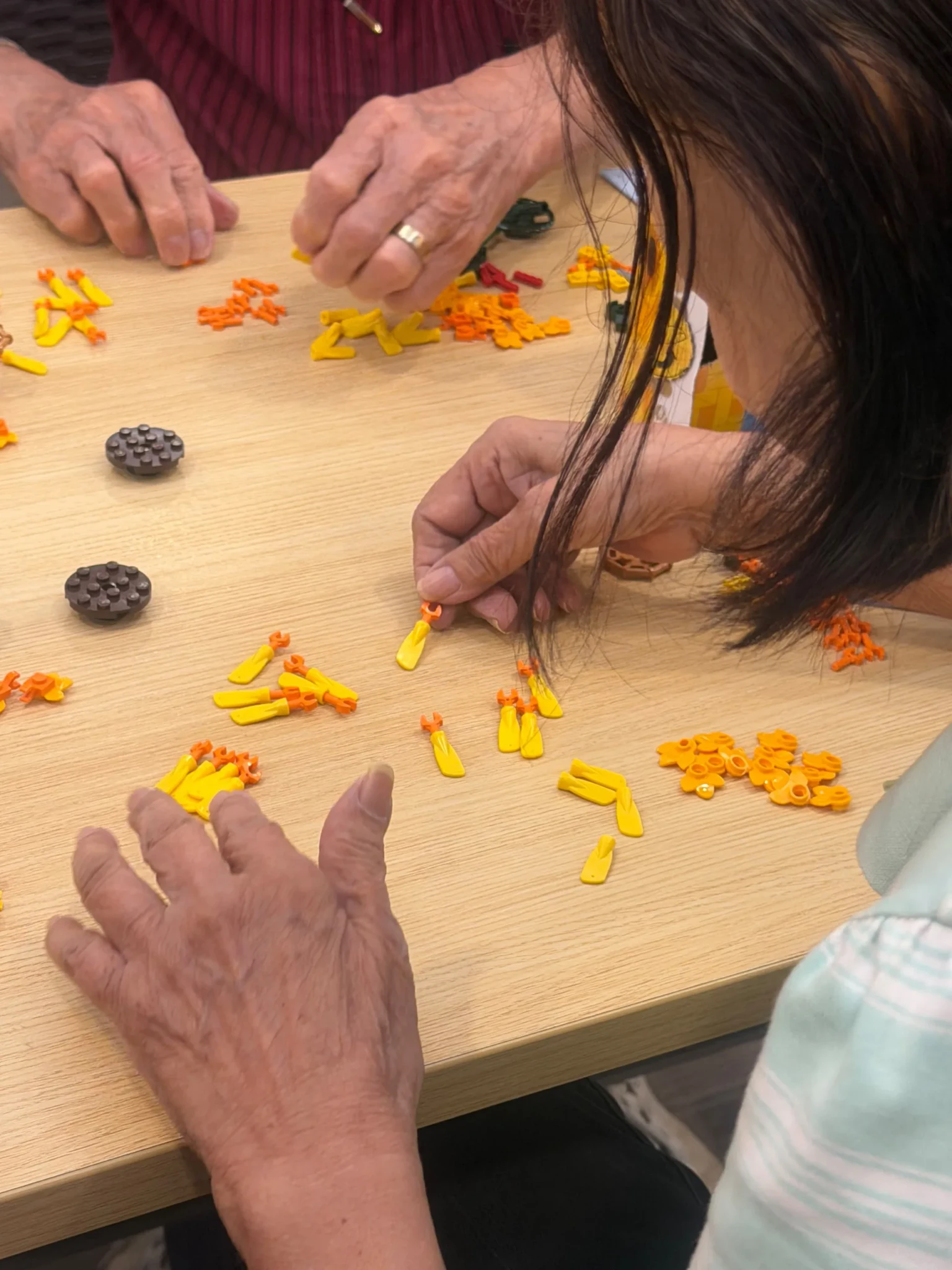
According to ACDS, the pilot ran across four sessions at Lucky Haven and had seniors build sunflower models out of building bricks. Participants could work alone or alongside peers, spouses and caregivers, so a session could be a quiet solo puzzle or a team effort with a husband or wife across the table.
The charity says the aim was to look beyond active-ageing programmes that mostly focus on physical activity, and test whether hands-on creative play could get older adults problem-solving and talking to one another. Brick-building has a reputation as something for kids, but ACDS says that didn’t hold the participants back. They warmed to it quickly, and some asked for harder builds.
“Through this pilot, we saw how an activity initially perceived as child’s play sparked enthusiasm, collaboration and even requests for more complex builds, such as aeroplanes and houses,” said Dixon Lim, Executive Director of ACDS. “It is a reminder that age should never limit one’s curiosity, sense of achievement or willingness to try something new.”
21.4% and Counting
The demographic backdrop is stark. The National Population and Talent Division’s (NPTD) Population in Brief 2026 report puts the share of citizens aged 65 and above at 21.4% as at June 2026, up from 13.7% in June 2016. The report notes that the United Nations calls a country super-aged once that share reaches 21%, so Singapore is now past the line.
The same report shows citizens aged 80 and above rising by 60% over the decade, from 95,000 in 2016 to 152,000 in 2026. It also estimates that by 2035, more than one in four citizens will be 65 or older.
The figure that should make younger readers sit up is the old-age support ratio. In 2016 there were 4.7 citizens aged 20 to 64 for every citizen aged 65 and above; by 2026 that had dropped to 2.8, and the report projects 2.2 by 2035. Put simply, fewer working-age shoulders will carry each senior, and many of those shoulders belong to people reading this on their phones right now. CNA has a rundown of the wider numbers, including births and marriages.
What the Team Saw
The pilot’s findings are early observations from the team running the sessions rather than test scores, and Dr Tan, an Associate Professor in Gerontology Programmes at SUSS, describes them as “preliminary insights” that give “a useful foundation for further research”. That framing is worth keeping in mind. It’s a starting point and an encouraging one, not proof that bricks sharpen memory.
“Our early observations suggest that colourful brick-building activities can encourage problem-solving, social interaction and a sense of accomplishment,” said Dr Tan. “It is particularly encouraging to see participants embrace new challenges and engage with one another through these activities.”
ACDS lists four observations from the sessions. Two stand out as the most telling. The first is that seniors sought more complex tasks and experimented with assembly methods beyond the standard instructions. A sunflower kit comes with a step-by-step guide, so choosing to go off-script shows the kind of curiosity Lim talks about.
The second is what the charity calls organic peer support. Participants swapped ideas, compared techniques and helped one another through the fiddlier assembly steps, without anyone assigning them to. Since connection is the whole point of the pilot, that’s the observation that best matches what it set out to test.
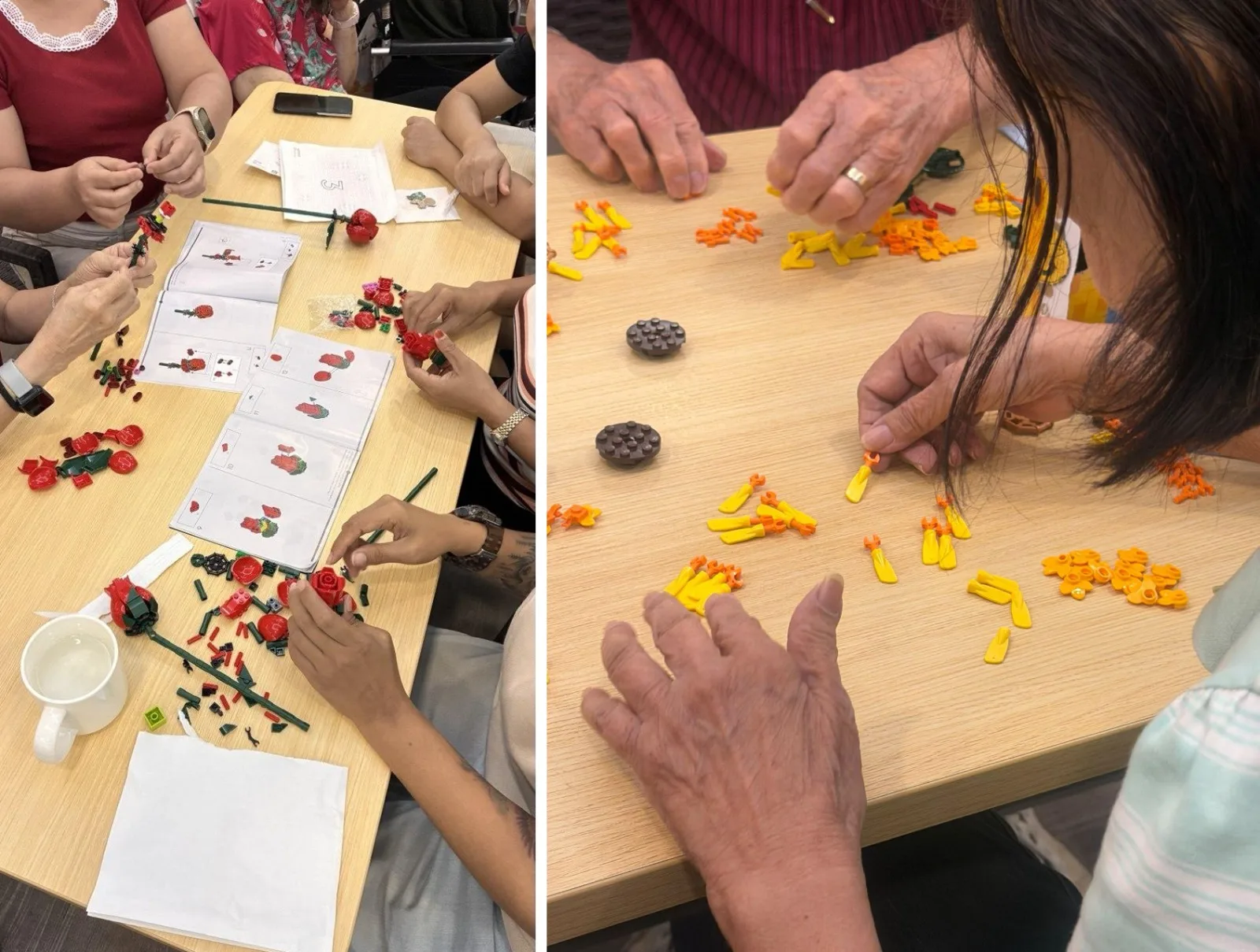
The other two observations round out the picture. Seniors worked at their own pace and decided for themselves when to ask for help. They also showed visible pride when they finished their models, and told the team they wanted more creative sessions.
Ask Before You Assume
ACDS draws one lesson from the pilot. The charity says older adults should get to explore activities based on their own interests, “rather than making assumptions about what they may or may not enjoy at different stages of life.”
That lands close to home for families. It’s easy to decide that Ah Ma (grandma) only wants mahjong or a TV drama, then plan every visit around that. The Lucky Haven sessions suggest it’s worth asking, because someone you’d never picture with a bag of bricks might be the one asking for an aeroplane next.
From Badminton to Bricks
The pilot follows OneSG61 with Antica, a National Day community celebration ACDS organised with Antica earlier this year. Over two days it drew more than 5,000 attendees and paired an international-standard badminton tournament with an inclusive community carnival.
Both projects fit the charity’s wider brief. ACDS runs programmes for seniors, youths, former offenders and adults with intellectual disabilities, using community engagement, inclusive sports, technology and cross-sector partnerships to reach them.
A few dozen brick sunflowers won’t fix a support ratio. Still, the Lucky Haven pilot is a cheerful reminder that ageing well can look like curiosity, a fiddly build and a neighbour leaning over to help. Seniors in Bedok South are already asking for aeroplanes, and that tells you more about ageing than any statistic. To see where the brick-building work goes next, or to learn about ACDS’s other programmes, keep an eye on Antica’s website!
Photos and Visuals courtesy of Antica Community Development and Services.
Read us first on Google: add DANAMIC as a preferred source and our stories show up more in your Top Stories and AI results.