Leica has released two cameras in a grey, pebbled finish it has seldom put on a camera body. The Leica M-A Hammertone costs S$9,850 and the Leica M11-P Hammertone costs S$14,700, and Leica says both go on sale worldwide from 12 November 2026.
For Singapore readers, that means both are available from today at Leica Stores, on the Leica Online Store and from authorised dealers. Before you start eyeing your savings, it helps to know what the finish is and whether you’re paying for a camera or a collectible.
Paint That Shapes Itself
Hammertone isn’t a coating Leica invented for this launch. According to Leica’s release, the finish has been around since the 1930s. Its texture forms as the paint dries, when metal pigments and special additives create small variations in surface tension. The paint, in other words, dents itself.
In German industrial design, Leica says, the look came to stand for functionality and reliability. That explains why you may have seen it on old workshop machines more often than on cameras. Leica used it rarely on its own bodies. The release points to the Leica MD documentation camera built for the Leitz Reprovit system, and to an exceptionally rare Leica MD of which only ten were produced in 1964.
The new pair takes inspiration from a short list of earlier special editions. Leica names the 1964 Leica MD Hammertone, the 2003 MP LHSA, the 2011 Leica M9 Hammertone and the 2016 Leica M-A Vienna Edition. Owners of any of those are probably feeling rather smug this week.
Built by Hand in Wetzlar
Leica says it reworked the hammertone process for these editions. Getting an even result across such an uneven texture requires careful handwork from the specialists on the Leica Manufacture team at its site in Wetzlar, Germany.
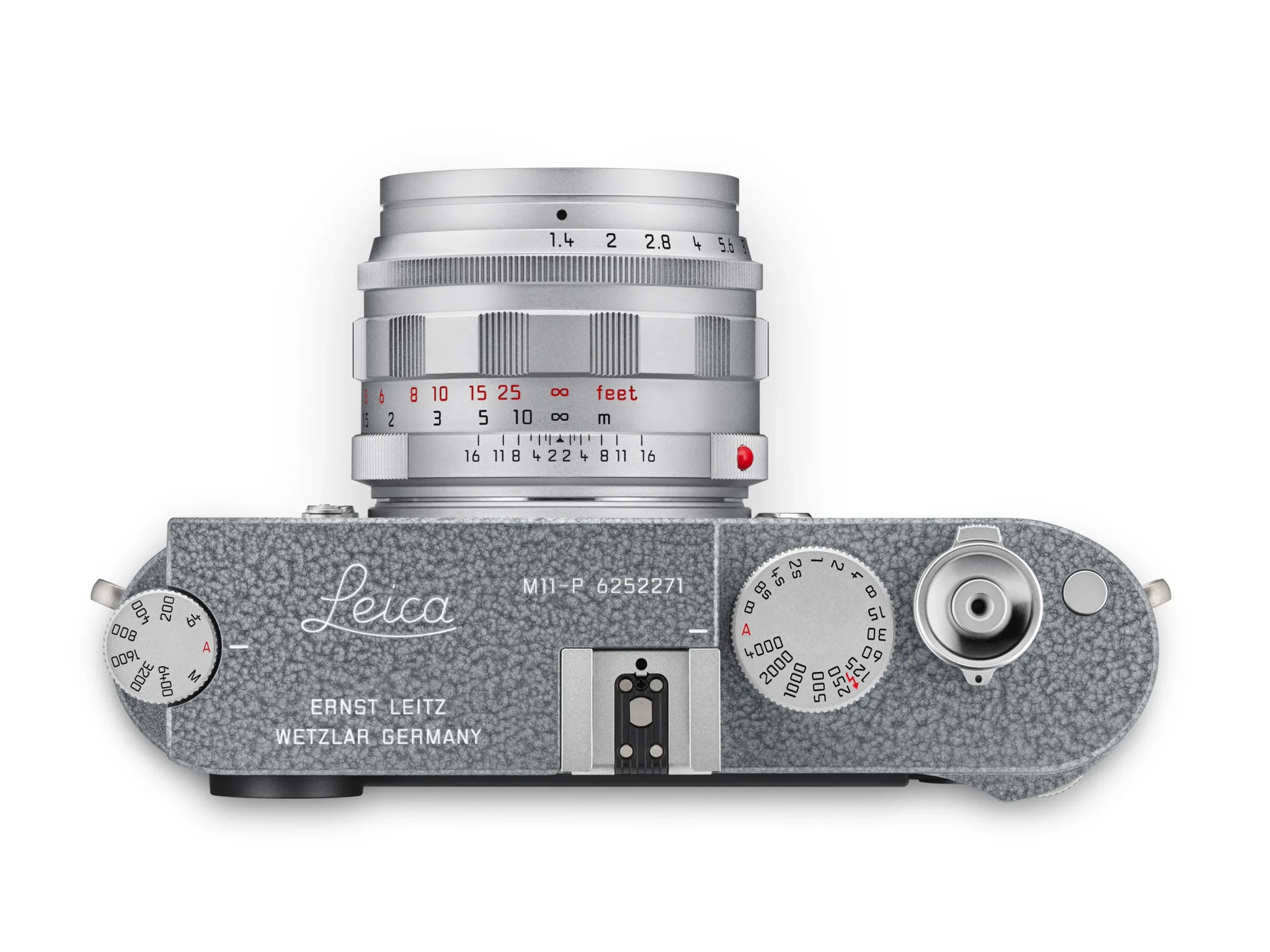
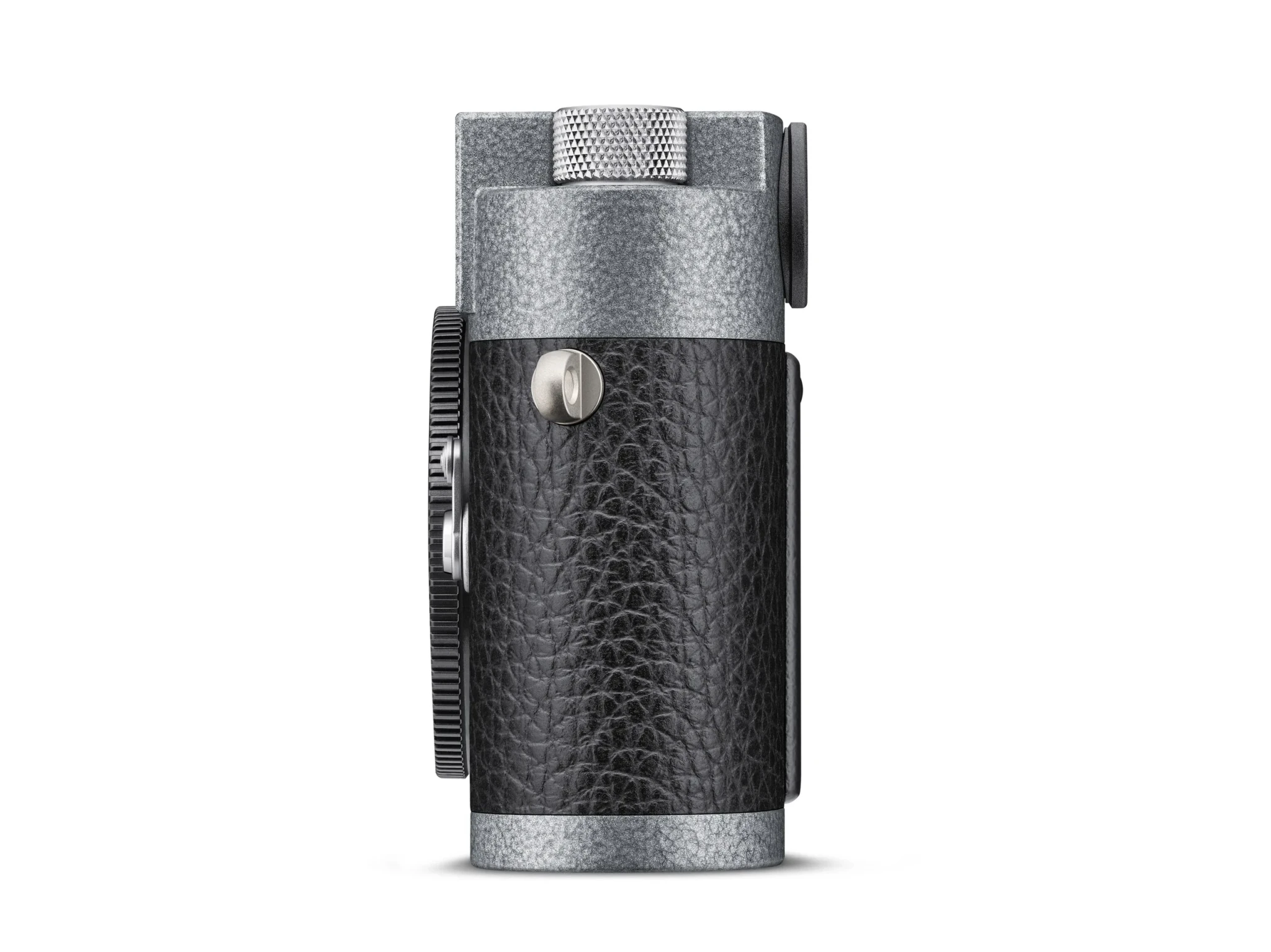
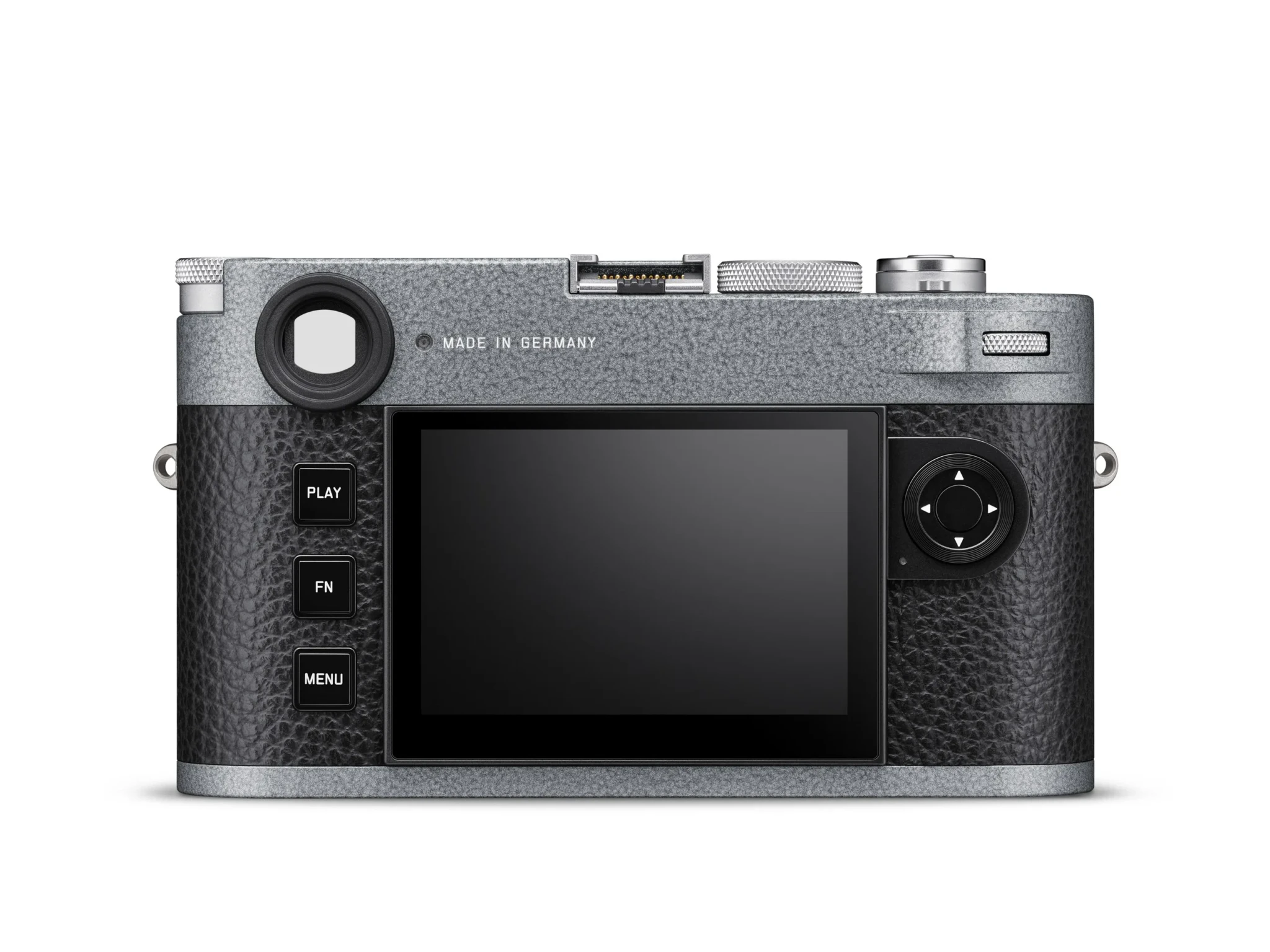
Both cameras carry the finish on the top plate and base plate, which are made of solid brass. The control elements have classic cross knurling, and the shutter-release plate is shiny silver. A black leatherette covering in a vulcanite style, with white engravings, wraps the body. The M11-P also gets newly rounded, classically styled edges on its plates and a new silver-chrome front screw.
Leica’s most interesting claim is that each camera is unique because of how its surface finish forms. Since the texture appears as the paint dries, no two plates should come out identical. That makes your camera a one-off in a fairly literal sense, which is a nicer selling point than a serial number!
The M-A: Film, Fully Manual
The M-A Hammertone follows the standard M-A’s specifications. Leica describes it as a camera for people who want analogue photography “in its purest form”, and that’s a fair summary of a completely mechanical body.
You set the aperture, the shutter speed and the ISO (the film’s light-sensitivity rating) by hand, so every exposure is your decision. Readers who picked up film because they wanted to slow down and stop chimping at a screen get the most extreme version of that idea here.
The M-A is priced at S$9,850. A fully mechanical film camera in a finish rooted in Leica’s industrial past makes sense, while the price stays steep for anyone who shoots a roll a month.
The M11-P: Proof You Took It
The M11-P Hammertone matches the standard M11-P on specifications. The feature that matters most in 2026 is Leica Content Credentials. According to Leica, it attaches verifiable proof of authorship, image attributes and editing steps to each photo.
That’s a practical tool at a time when AI-generated images make it harder to trust what you see online. If you sell your work, shoot news or want people to know a photo is real, this does more for you than the paint does.
The rest of the spec sheet will be familiar to Leica fans. There’s 256GB of internal memory and a scratch-resistant, anti-reflective sapphire-crystal screen. The full-frame BSI CMOS (backside-illuminated complementary metal-oxide-semiconductor) sensor uses Triple Resolution Technology, so you can shoot at 60, 36 or 18 megapixels. It connects to the Leica FOTOS app via Bluetooth, Wi-Fi or cable, and the box includes a BP-SCL7 battery in a matching hammertone finish.
When DANAMIC reviewed the Leica SL3 in 2024, the brand’s mirrorless line was the focus. The M11-P Hammertone is a different proposition: a rangefinder whose biggest upgrade over the standard M11-P is how it looks.
Which One Should You Buy?
The two cameras suit very different people. If you shoot film and want the most hands-on Leica experience, the M-A Hammertone is the more coherent buy, since Leica built the whole package around manual control.
If you shoot digital and care about proving your images are yours, the M11-P Hammertone gives you Content Credentials in a body that stands out. Keep in mind that Leica says it matches the standard M11-P technically, so you’re paying for the finish and its history, not for better photos.
💰 Leica M-A Hammertone: S$9,850 (recommended retail price, including GST)
💰 Leica M11-P Hammertone: S$14,700 (recommended retail price, including GST)
🗓️ Availability: From 12 November 2026, according to Leica
📍 Where to buy: Leica Stores, the Leica Online Store and authorised dealers
A paint finish that forms itself, on a camera Leica says no one else will have an exact copy of, is a lovely reason to slow down and shoot with intent. If that sounds like you, you can find the cameras at Leica Stores, on the Leica Online Store or from authorised dealers, and pick the one that fits how you shoot!
Photos and Visuals courtesy of Leica Camera.
Read us first on Google: add DANAMIC as a preferred source and our stories show up more in your Top Stories and AI results.