If a “government officer” ever phones and asks you to move money, call 1799, the ScamShield Helpline, which picks up 24 hours a day, seven days a week. According to a media factsheet from the National Crime Prevention Council (NCPC), it has taken over 310,000 calls since it launched in September 2024.
The NCPC says it currently gets around 500 calls daily, and more than 80% of them come from people checking whether something is a scam. The Helpline is part of the ScamShield Suite. It runs from Certis’ Bedok facility under NCPC oversight, with support from the Singapore Police Force (SPF).
The Turning Point on a Call
Jevin Chan Kai Wen, a ScamShield Helpline agent, listens for the moment a caller begins to doubt the person who contacted them. He describes callers asking things like “Why would they need me to transfer money?” or “Why would a government agency ask me to do this?” To him, that “is often the turning point when they begin connecting the dots”. It’s a question worth asking yourself in the middle of a call, before anyone on the line has the chance to answer it for you. The official ScamShield website settles it plainly: “Government officials will never ask you to transfer money over a phone call.”
The Call Back That Mattered
Chan remembers one woman who rang back to thank him. On her first call, he had advised her to contact her bank immediately to check whether her transfer to the suspected scammer had gone through. She did, and the bank stopped the transfer before the money was lost.
On the follow-up call she shared the rest of her story, and Chan identified it as a government official impersonation scam. The scammers had posed as the Monetary Authority of Singapore (MAS). They told her to move a large sum into a so-called “safe deposit account” because of suspected money laundering.
This kind of scam is common. The NCPC factsheet cites the Mid-Year Scam and Cybercrime Brief 2026, which lists government official impersonation among the top five scam types by case numbers in the first half of 2026. The other four are e-commerce, phishing, investment and job scams.
What to Do Right Now
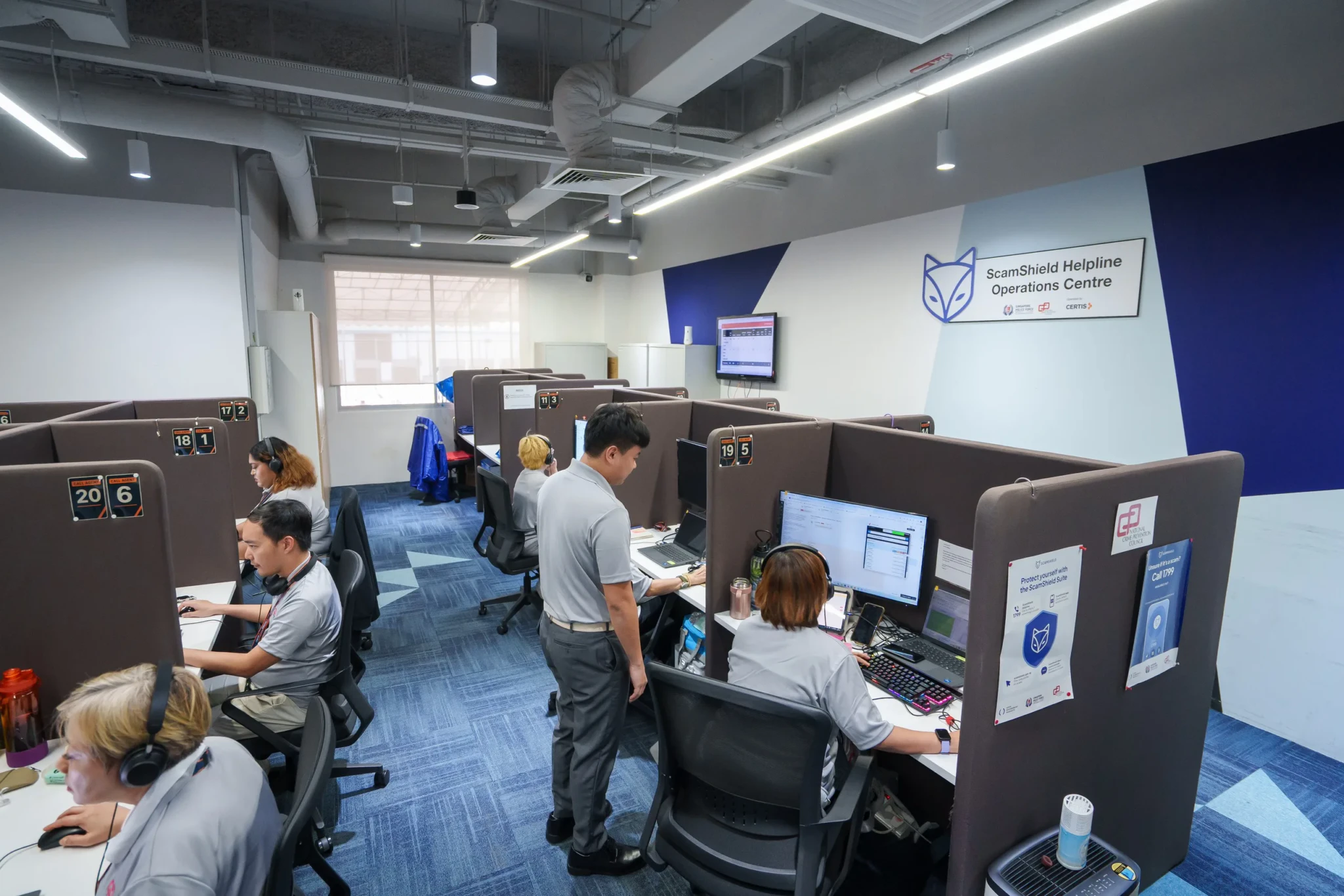
If a call like this is happening to you, stop and don’t transfer anything. If money has already left your account, call your bank at once, because acting quickly may have saved the woman’s money. Singapore’s banks have been recognised for their work stopping customers getting scammed, so let them do that job for you.
Then call 1799 at any hour. According to the NCPC, the agents there help you check whether a call or message may be a scam and understand the tactics and warning signs. They also give you practical next steps and connect you with your bank promptly if you think your account has been compromised.
You don’t need to be sure something is a scam before you call. Most people ringing 1799 are only checking, and that habit of asking “why would they need me to do this?” is the turning point Chan listens for. You can read up on how it works on the ScamShield Helpline page.
Photos and Visuals courtesy of National Crime Prevention Council.
Read us first on Google: add DANAMIC as a preferred source and our stories show up more in your Top Stories and AI results.