Every week another headline tells us which tasks software can now do faster than we can. I read those stories as a programmer and as an investor, and I find most of them genuinely exciting. Yet one quiet question kept following me home. If AI and robots take over more and more of what we used to call work, where will our sense of meaning come from? Will it simply arrive one day, or can a person build it on purpose?
I decided to stop guessing and test it on myself.
How it began
The push came from an unlikely place: a conversation with a doctor. He was a highly qualified man, someone most of us would assume had his future well secured, and he told me plainly that he does not see his life as safe. He was afraid of what robotics and AI will bring. That fear, spoken so honestly, is what started my sixty days. Walking away from that conversation, I realised I had spent years studying how great investors think, yet I had never run a careful experiment on how I live my own ordinary days.
The rules
I kept the rules small on purpose, because a plan you skip is worth nothing. Every day for sixty days:
- In the morning, I wrote down a few things I was grateful for and answered one question: “What should I do today to feel good?”
- At midday, I did one kindness that nobody had asked me for.
- In the evening, I reviewed the day honestly: what worked, what did not, and what I would change tomorrow.
Weeks one and two: resistance
The first days felt strange. Gratitude written on command can sound like a greeting card, and I caught myself performing for a notebook nobody else would read. At the same time, something odd happened. I suddenly wanted to record everything, every small observation and every conversation, and I worried that I would never manage to fit it all into the book I was planning.
Weeks three to five: attention shifts
Around the third week I began noticing people and small tasks differently.
The real turning point was a trick I had borrowed from my research on investors: inversion, which means solving a problem by asking what would guarantee failure. Instead of asking how to make a day meaningful, I asked the opposite question. What would guarantee that today feels empty? The answers came quickly and they were uncomfortable. Scrolling before breakfast. Saying yes to everything. Leaving a promise half kept. Once I could see the list, avoiding it was far easier than chasing some grand idea of purpose.
Weeks six to eight: small virtues on autopilot
By the second month, care, judgement and keeping small promises had started to run on their own. It reminded me of boxing training. Nobody thinks about footwork in a real round; you trust the hours of drills behind you. The ancient Greeks understood this well, which is why their schools exercised the body and the intellect side by side. Repetition turns effort into character, and character carries you on the days when motivation is missing.
Something else surprised me in these weeks. The midday kindness, which had felt forced at the start, became the part of the day I looked forward to most. It was rarely anything large. Yet each one pulled my attention away from my own worries and toward another person, and that shift alone made the afternoon lighter. I began to suspect that meaning is not hidden somewhere deep inside us, waiting to be found. It sits much closer, in the small exchanges we usually rush past on the way to something we think matters more.
The final stretch: what changed in my working day
By day sixty, the biggest change came from something very plain: a morning routine done the same way every single day. That routine quietly reshaped my whole working day. I was not doing more. I was seeing differently.
The best comparison I have found is a pair of sunglasses. Optimism works like swapping your old pair for new ones. Suddenly the view is clearer, and the world around you looks safe, calm and pleasant. But notice where the new prescription sits: in the lens, not in the eye. Nobody handed me a new eye. I was given a tool I could put on each morning.
There is a duality here that I find encouraging. The glasses are external, something you choose to wear. Inside, meanwhile, you are building habits. Each small daily habit is a brick, and many bricks, laid patiently, make a future. You do not wake up as a different person, yet you slowly become different, because the routines themselves transform you.
I knew the change had stuck on one particular Wednesday. I was up before sunrise, and on the walk to the office the street was still dark and quiet. I noticed that I was filled with that same calm and optimism, without trying, without any notebook in my hand. That walk was my proof.
Where AI fits in
Yes, AI played a role, and not where you might expect. I used it to think through my friendships and to clarify which of them I wanted to build on for the long term. There is a well-known saying, often credited to the American speaker Jim Rohn, that we become the average of the five people we spend the most time with. If that is even partly true, choosing those people carefully is one of the most important decisions a person makes, and an AI assistant turned out to be a patient partner for sorting my thoughts on it.
My connection to all this is simple. Whenever hard times came, I changed my mindset, which is why I have read so many books and tried so many practices, and this experiment grew out of that habit. AI and robotics will challenge every one of us. Because I work in automation, AI and digitalisation, close to robotics, I see that challenge arriving early, so I can prepare something useful for others. This method works for me, and I want to pass it on.
Why this matters now
Automation is real, and for many people losing a familiar role is a genuine loss, not a slogan. I do not believe meaning can be handed out like a benefit package. But I do believe it can be practised, the way a language or a sport is practised, and that the practice is open to anyone, whatever their job title.
If you want to try a small version of my experiment, here are three things you can start tomorrow morning:
1. Ask one question before you open your inbox. “What should I do today to feel good?” Write the answer down, even if it is just one line.
2. Do one unrequested kindness before lunch. Hold the door, send the thank-you note, help the new colleague with the system nobody explained.
3. Spend three minutes on an honest evening review. What went well, what went badly, and what one thing you will change tomorrow. Then close the notebook and rest.
None of this competes with the machines. It is precisely the part of life they cannot do for us. Sixty mornings did not turn me into a different person, but they taught me that meaning is less a discovery than a daily craft. And like any craft, it gets better every time you show up.
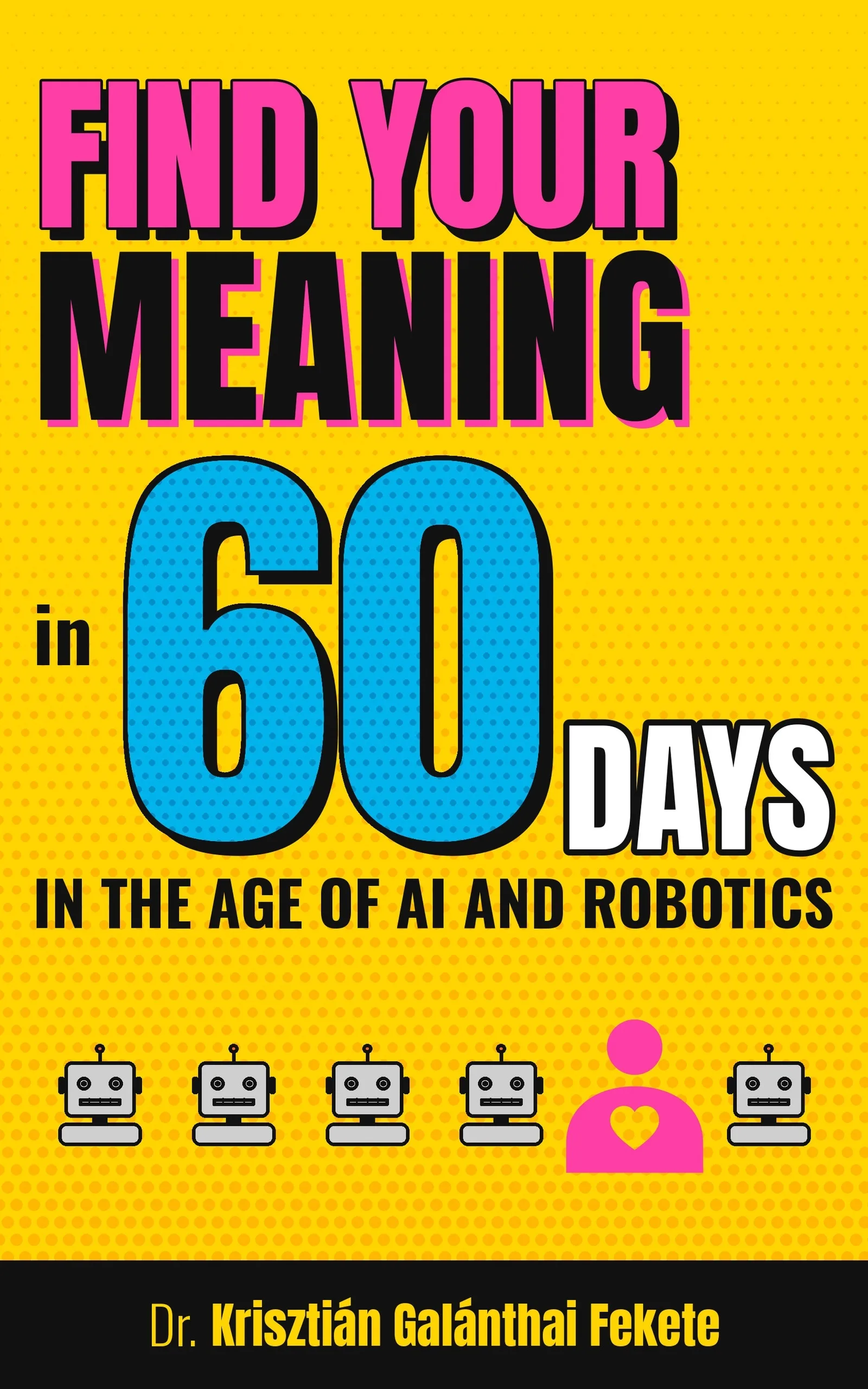
Dr. Krisztián Galánthai Fekete is the author of Find Your Meaning in 60 Days, In the Age of AI and Robotics.
Read us first on Google: add DANAMIC as a preferred source and our stories show up more in your Top Stories and AI results.