Somewhere between a 14th-century port and your neighbourhood kopitiam (coffee shop) sits the answer to a question plenty of young Singaporeans end up asking late at night. The revamped Singapore History Gallery at the National Museum of Singapore opened on 10 October 2026, and entry to the galleries is free for everyone from 10 to 12 October. From 13 October, Singapore citizens and PRs still get in free, while tourists and foreign residents pay standard admission (rates are on the museum’s website).
Plan Your Visit
🗓️ Date: From 10 October 2026 (Stories of Everyday festival runs until 18 October 2026)
⏰ Time: 10am to 7pm (last ticket sales 6pm, last admission 6.30pm)
📍 Location: Level 1, National Museum of Singapore, 93 Stamford Road, Singapore 178897
🎟️ Admission: Free for all from 10 to 12 October 2026; from 13 October free for Singapore citizens and PRs, standard admission for tourists and foreign residents
👶 Children: Free for children aged six and below
🪨 Stoney Engraving: S$5 add-on to any Stoney purchase, Sunday 11 October, Saturday 17 and Sunday 18 October, 10am to 7pm, The Canyon, Basement Level
📸 Say Cheese with Stoney: Same three days, 10.30am to 3.30pm, the Rotunda, Level 1
🎤 HistoriaSG Talk: Friday 16 October, 7.30pm to 8.30pm, The Salon, Level 1
🛋️ National Living Room: The Platform, Level 2, until 10 November
This is the gallery’s first full revamp since it opened in 2006, and the museum has rebuilt it around three words: “Who are we?” If your memory of the place is a school excursion with a worksheet and rows of glass cases, the new version deserves a second visit. It has a rickshaw you can pull, a Morse code station you can tap, and a scowling pink mascot named Stoney waiting on the lawn.
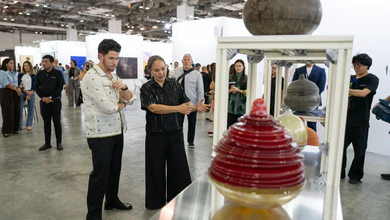
President Tharman Shanmugaratnam officially unveiled the gallery at its opening ceremony, following an address by museum director Chung May Khuen. Before the ceremony he met Stoney and unveiled a plaque marking the end of the museum’s three-year restoration works. He then toured the gallery and Singapore Odyssea: A Journey Through Time, which are now presented as one experience, with the curators and partners who built them.
Built Around One Big Question
The gallery tells a people-centred story across seven zones. It starts with Singapore as a 14th-century kingdom of the Malay World, then moves through British colonisation in 1819 and the Japanese Occupation from 1942 to 1945. From there it covers independence in 1965 and runs right up to the present. According to the museum, the revamp drew on new research and consultations with more than 160 people, and a panel of 12 Singapore academics advised on it. The museum says focus-group participants asked for clearer links between the past and life today, and you can see that request answered all over the gallery.
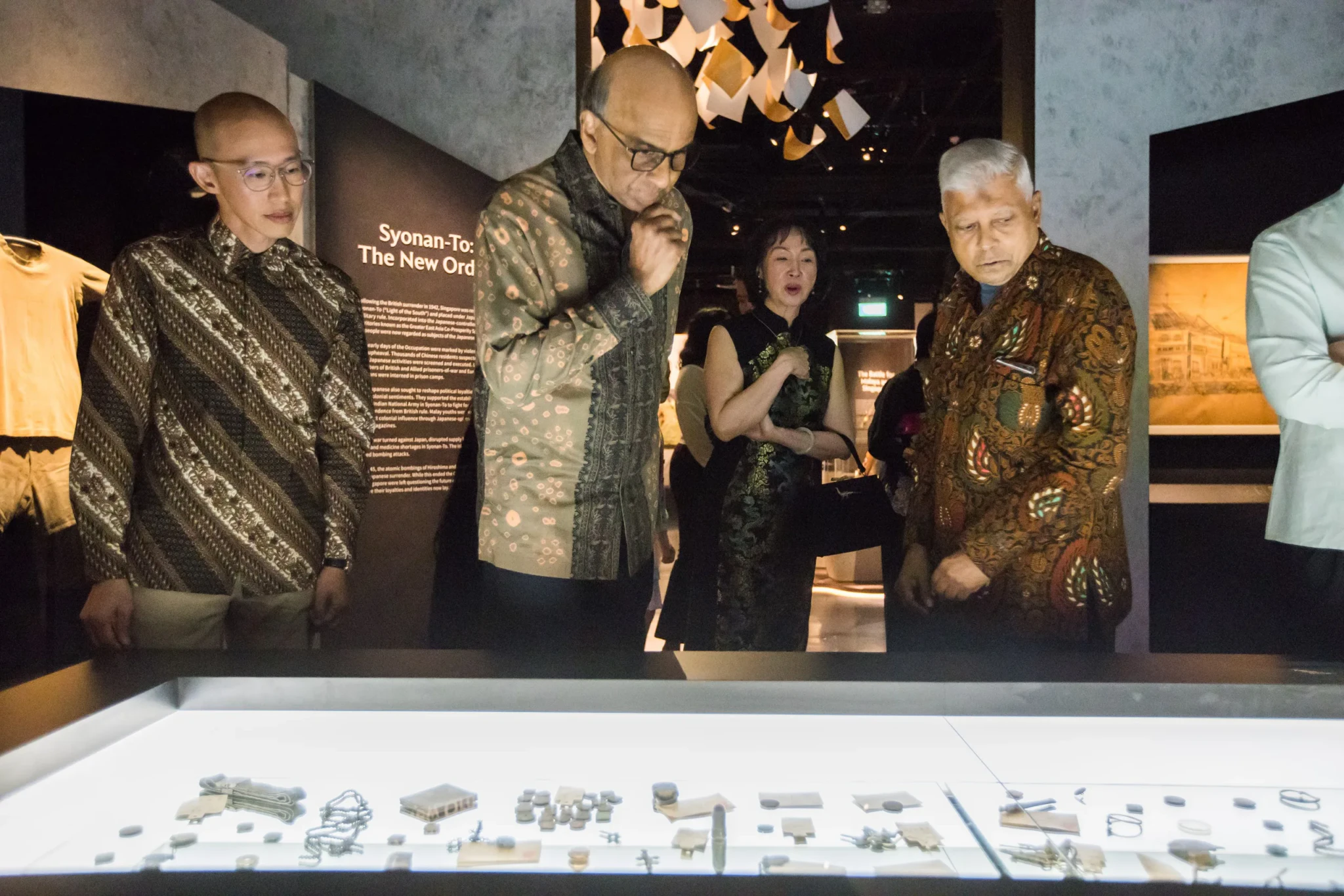
The visit opens with Singapore Odyssea, an immersive prelude through the island’s key milestones and myths. Inside the gallery, voice input stations ask you to record your thoughts on questions such as what it means to belong to a city that never stands still. Those answers feed the finale. There, a projected river carries visitors’ voices across the floor, and together they build a skyline of a future Singapore, paired with a reflection written from visitors’ own words. The thing you said at a station three zones earlier ends up floating past your feet, which turns a history lesson into a group project where your answer counts.
The Stone Behind Stoney
Stoney’s origin story begins with the Singapore Stone, a National Treasure in the gallery’s first zone. A large boulder once stood at the mouth of the Singapore River until the British blew it up in 1843, and the fragment on display is part of what was left. It dates from somewhere between the 10th and 14th centuries and carries writing in Kawi, a script used across the Malay world, and nobody has managed to decipher it.
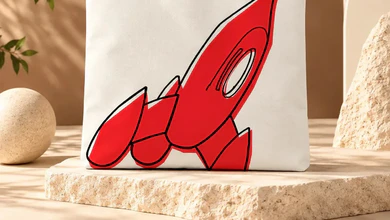
The museum has surrounded the stone with projections that trace its journey from the river, 3D renderings you can turn to any angle, and a textured replica of the engravings you can touch. Stoney turns that ancient puzzle into a plush with a permanent frown. A mascot that looks like it has had a rough few centuries makes a nice change from another smiling lion.
On Sunday 11 October, Saturday 17 October and Sunday 18 October, you can have any Stoney purchase from Museum Market by Abry laser-engraved with your name and an icon for S$5. The engraving station is at The Canyon on the Basement Level. On those same days, Stoney also poses for photos at Say Cheese with Stoney in the Rotunda on Level 1 between 10.30am and 3.30pm. Smaller Stoneys are hidden around the building too, so anyone who likes a scavenger hunt has an extra reason to wander.
Pull a Rickshaw, Send Bad News
Rickshaws arrived in Singapore in 1880 and pushed horse-drawn carriages off the roads. Next to an original early-20th-century rickshaw, an interactive installation lets you lift the poles and haul virtual passengers through the streets, and each rider reacts to how fast you go. The museum says the installation uses a load of around 30kg, while a real single-seater weighed upwards of 50kg. That gap is a humbling reminder of what the pullers carried every working day.
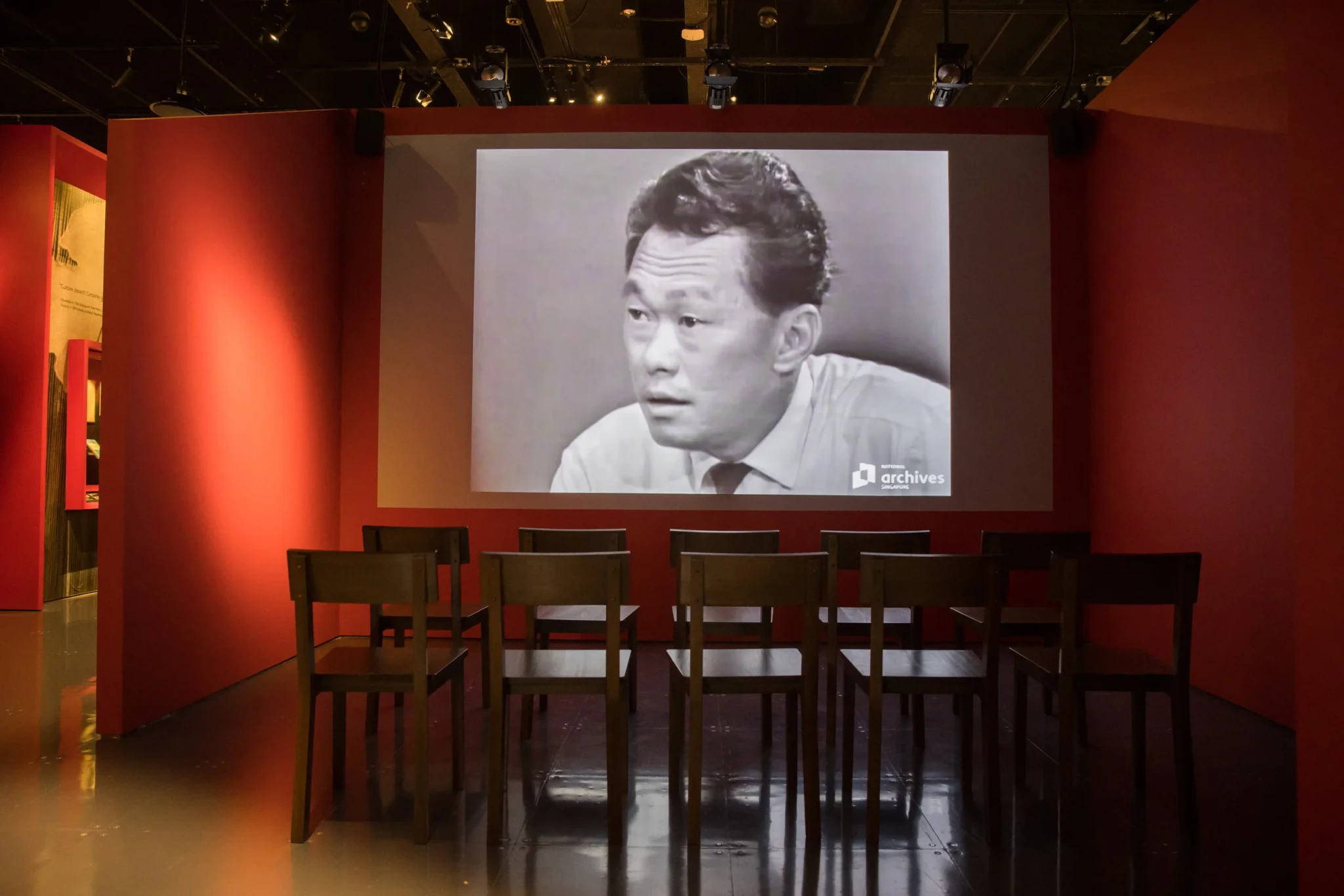
The one to queue for is the British Surrender Morse Code Station. It puts you in a besieged Singapore on 15 February 1942 as a British signal operator and teaches you the basics. Then it times you as you send the message SINGAPORE HAS FALLEN, before playing Winston Churchill’s broadcast announcing the surrender. Few museum interactives make the weight of a moment land this hard.
A few zones later, a multimedia room called Divergent Paths: Merger with Malaysia and Separation traces how the 1963 merger came apart by 9 August 1965. It ends on a principle that became central to independent Singapore: every citizen, regardless of race, should have an equal place in the nation.
Nearby sits Zubir Said’s piano, the Strohmenger grand he used to compose Majulah Singapura, which became the state anthem in November 1959. It’s new to this gallery, and standing beside the keys where the song you’ve sung at every school assembly was first worked out is quietly moving.
Your Parents’ Jobs Are Exhibits Now
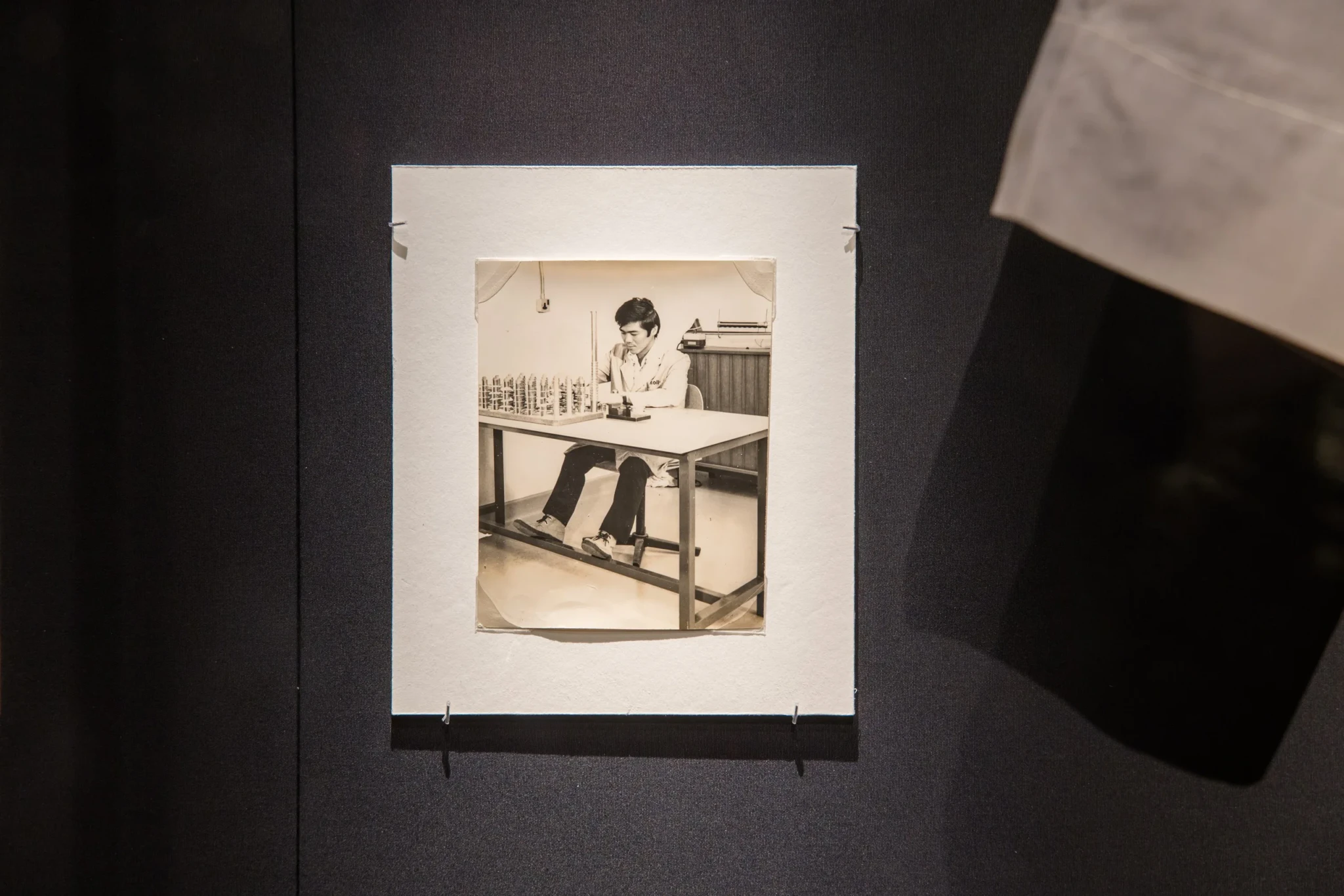
Section Five is where the story starts to look like your family photo album. Chong Nam Soy worked as a supervisor at German camera maker Rollei’s Singapore factory from 1971 to 1977, assembling camera shutters. He even bought a Singapore-made A26 camera at staff price to bring to family occasions, and his company-issued coat is on display alongside his cameras.
Anyone raised in an HDB (Housing and Development Board) flat will stop at the lift. It’s a real town centre lift from Ang Mo Kio, built in the late 1970s, which served every floor at a time when many block lifts stopped only at every fourth or fifth. It stayed largely unchanged for over 40 years until it was taken out of service in 2024, and it now sits beside a 1976 poem called “The Lift”.
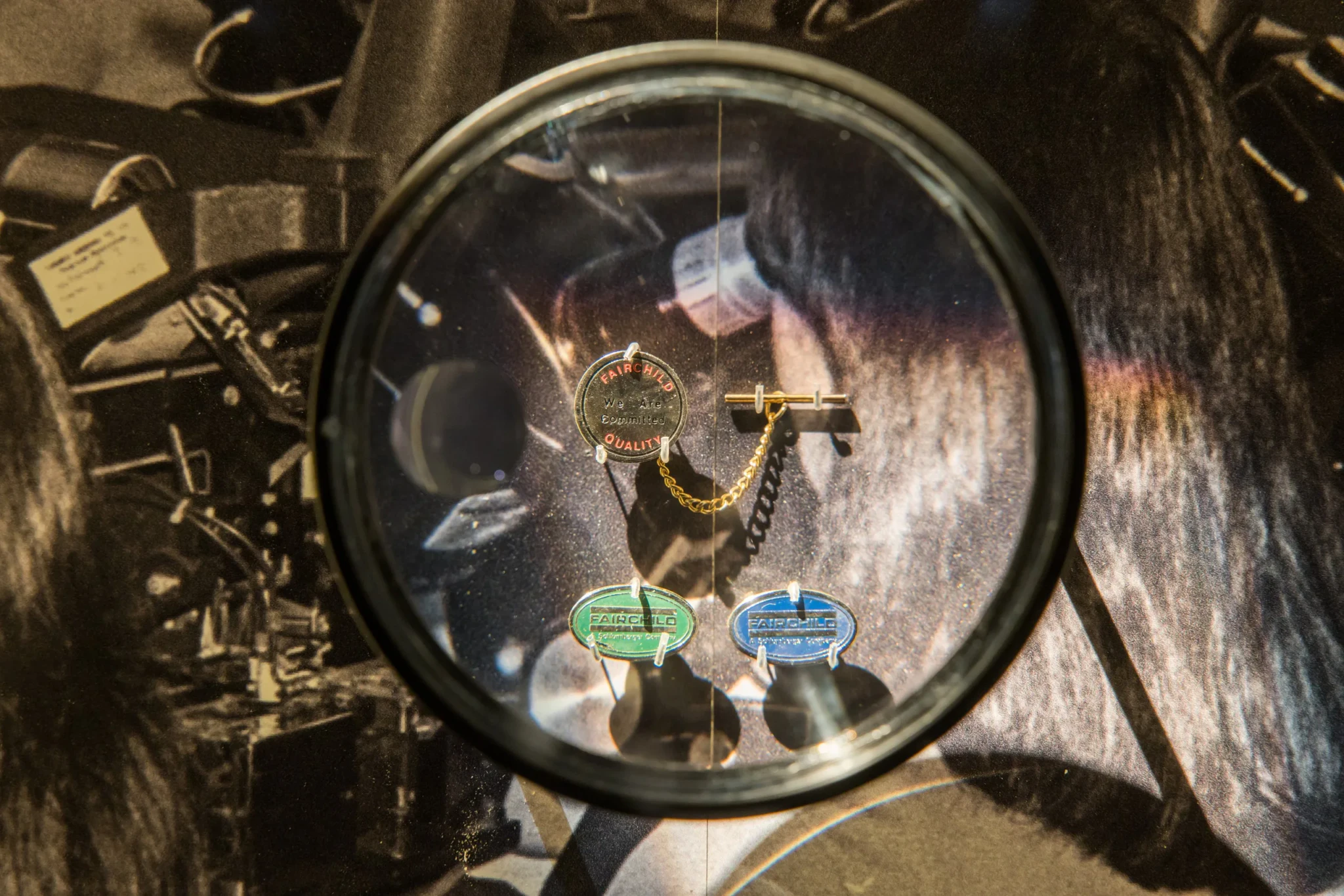
Loh Yoke Foo’s story carries the same quiet weight. She worked at Fairchild Semiconductor in the 1980s and took the night shift, which paid more and left her days free to care for her family. According to the museum, Fairchild was one of the first multinational corporations to open a factory in Singapore, back in 1969, and her employee handbook and collar pins are now part of the collection.
From Zouk to a ThumbDrive
The gallery’s look at the 1980s and 1990s runs through food, fashion, sport and nightlife. An interactive hawker table reveals where familiar dishes came from. You can also follow along to a video of the Great Singapore Workout, the mass exercise routine that then Prime Minister Goh Chok Tong led at the Padang in 1993 with, the museum says, over 26,000 participants.
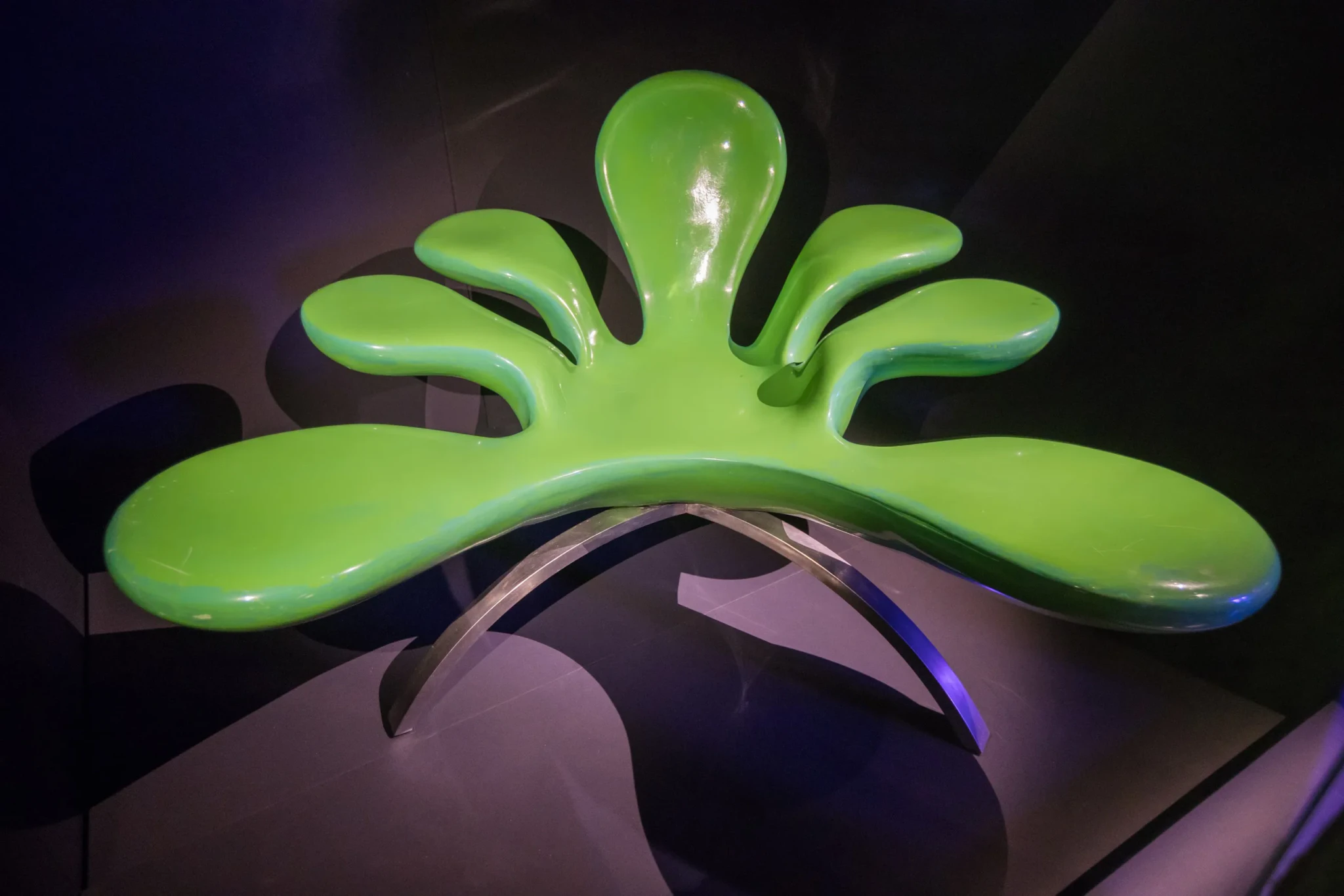
Then there’s Zouk, which Lincoln Cheng founded in 1991. The club’s original Jiak Kim Street signage is new to the gallery. Next to it is the 1996 “Septagon” chair, which designer Phillips Connor made for the club’s Phuture room. It seats up to seven people and has never been on display before, so expect older siblings to point at it and start telling stories.
The final zone carries the story into the present. Edwin Koo’s Transit photographs capture MRT commuters avoiding eye contact in packed carriages. There’s also a cPass COVID-19 antibody test kit, which the museum says was developed in Singapore in 70 days.
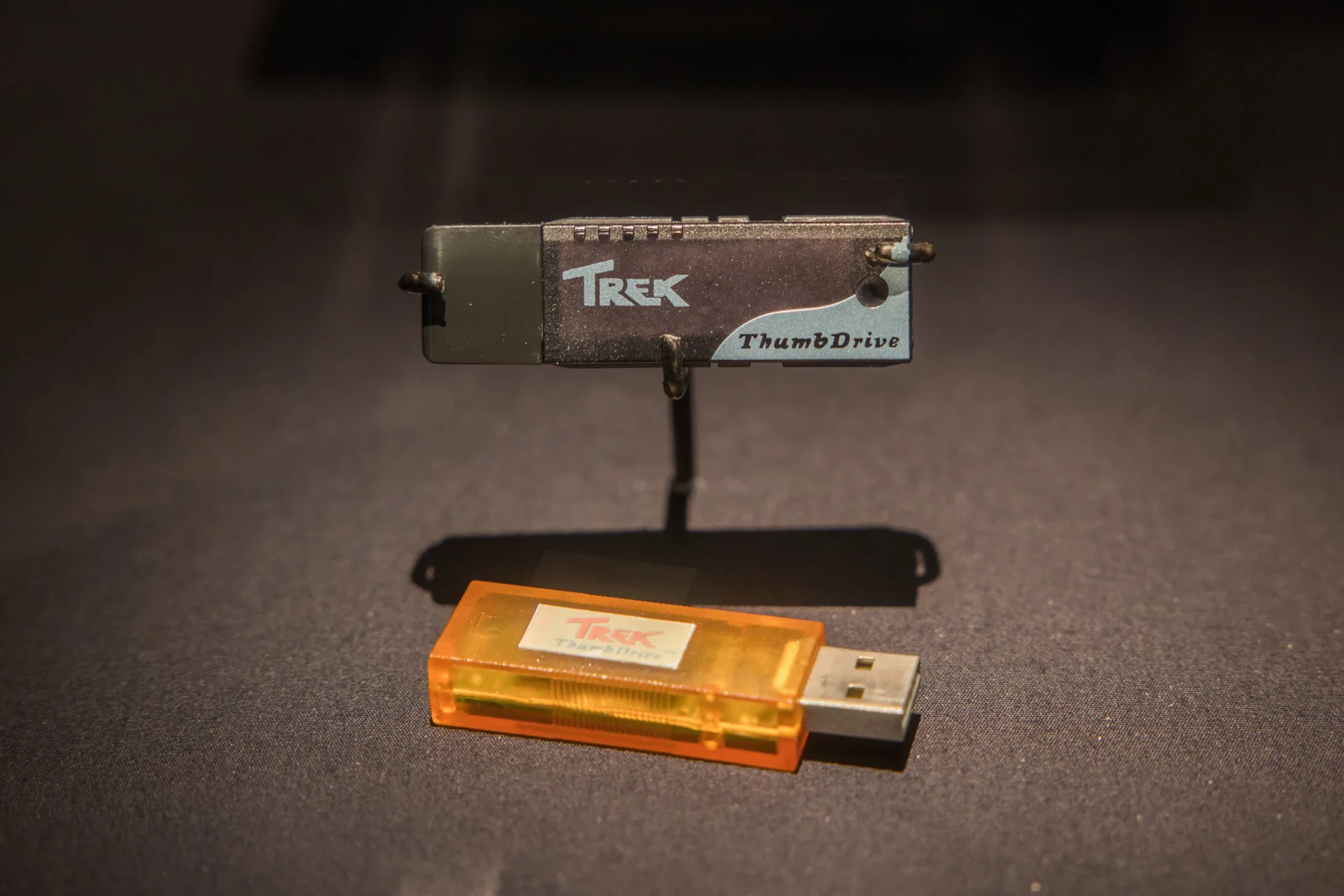
In 2000, when portable files lived on 1.44MB floppy disks, Singapore company Trek 2000 International launched the ThumbDrive. The museum describes it as the first USB storage device the world had seen, and says the company’s representatives proved its durability at a trade fair by throwing it on the floor before playing a music video from it.
The Festival Runs Till 18 October
The reopening kicks off Stories of Everyday, the museum’s 139th anniversary celebrations, which run until 18 October 2026 and are free to enter. The Living Archive: A Living & Design Market by Of Wonder Wander runs daily on The Concourse. The National Living Room, a recreated vintage living room at The Platform on Level 2, stays open until 10 November.
The pick of the remaining programmes is the HistoriaSG talk on Friday, 16 October, from 7.30pm to 8.30pm at The Salon on Level 1. Dr Grace Lim will look at how HDB’s Our Home magazine presented women as models for 1970s new-town living. It pairs perfectly with that Ang Mo Kio lift. The museum’s other permanent galleries are being revamped in phases, with completion planned for early 2027.
Few people get the chance to see the island’s story told through a pulled rickshaw, a stubborn stone and a night-shift worker’s collar pins, and this weekend is the easiest time to go. Plan your route with our zone-by-zone guide, 700 Years in 7 Zones, then check the National Museum of Singapore’s website for tickets and the full Stories of Everyday schedule before you head to Stamford Road. Go find out who you are!
Photos and Visuals courtesy of National Museum of Singapore.
Read us first on Google: add DANAMIC as a preferred source and our stories show up more in your Top Stories and AI results.