Árō, the debut restaurant from Chef Johanne Siy, has been open since Friday, 25 September 2026 at 15 Mohamed Sultan Road. Its single 12-serving tasting menu costs S$268++ per person, with the “++” meaning service charge and GST (Goods and Services Tax) are added to the bill. If you’ve been saving a payday splurge for the right tasting menu, this one makes an unusual case: the stingless bee farmer, the salt-maker and the potter who made your honey pot get as much attention as the caviar.
Árō is the first restaurant Siy has opened as chef-owner. She founded it with her husband and a close circle of friends after five years heading Lolla, and the route that got her here began a long way from a professional kitchen.
From Accountant to Chef-Owner
Siy grew up in Pangasinan, a coastal province in the Philippines, and by twelve she was cooking the family’s Christmas and New Year’s Eve feasts. Her family steered her into accountancy instead, which brought her to Singapore in 2003 as a brand-builder at Procter & Gamble. At 28 she swapped that corporate track for the Culinary Institute of America in New York, a leap plenty of Singaporeans have daydreamed about over a late night at the office.
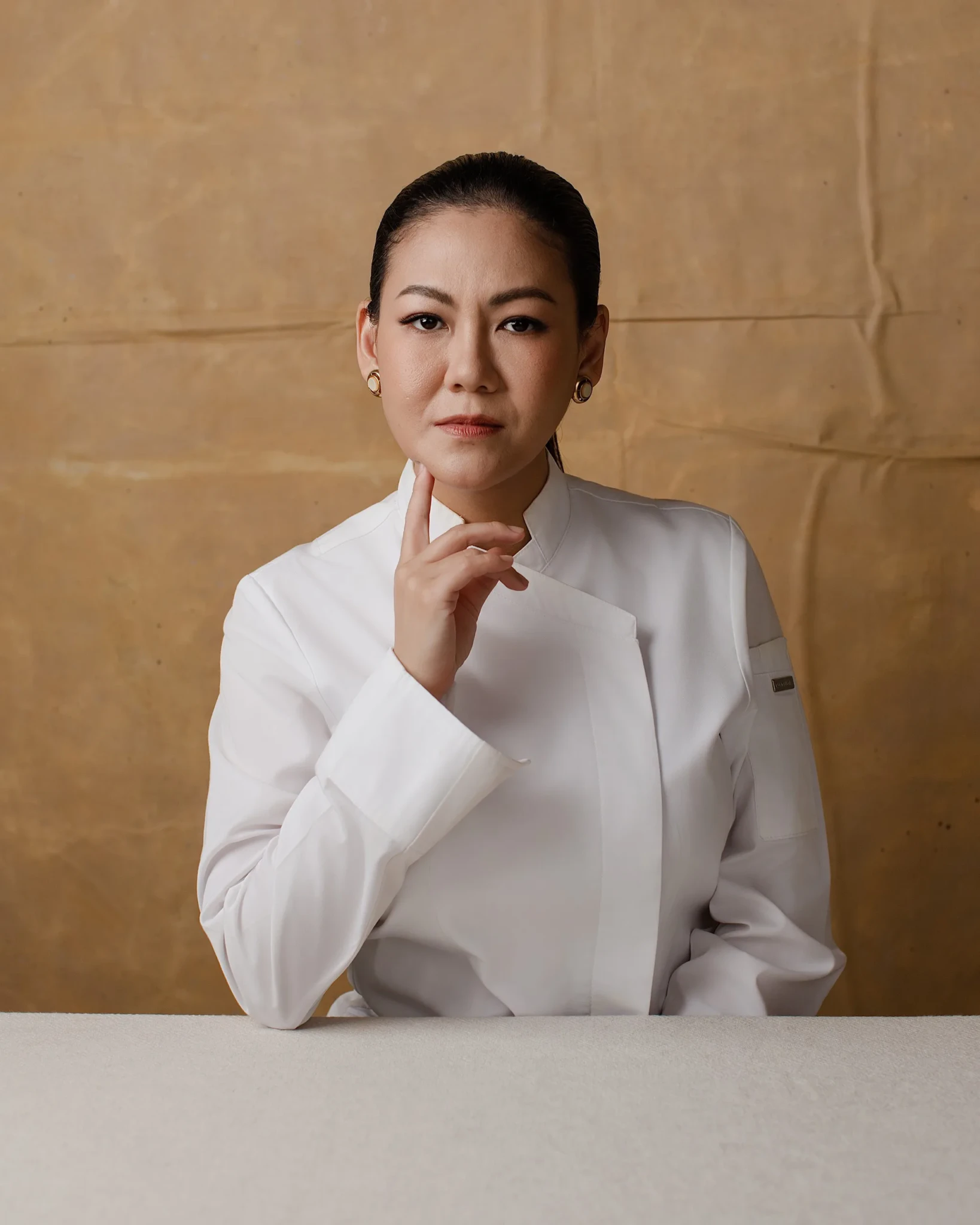
What followed reads like a fine-dining bucket list. She cooked at Le Bernardin and Café Boulud in New York and spent four years at two-Michelin-starred Restaurant André here, then staged (the industry term for a working apprenticeship) at Noma, Relæ and Fäviken in Scandinavia, where foraging and terroir became central to her cooking.
Back in Singapore from 2020, she led Lolla onto Asia’s 50 Best Restaurants list, and The World’s 50 Best Restaurants named her Asia’s Best Female Chef 2023. A slow trip through Europe, Japan and the Philippines came next, which she calls “getting closer to the product and the people behind it.” Much of Árō’s opening menu traces straight back to that journey.
A Name With Two Roots
Árō is pronounced Ah-roh, and the name is a neat bit of wordplay. In Latin, arō means to plough, till or cultivate, while in the dialect of Siy’s hometown, áro means love. In her words, “When you put these together, you get labour of love. Which is what this whole endeavor is.”
She calls the food “Creator’s Cuisine”, which sounds like a marketing label until you look at the menu. Each course starts from one ingredient and the people who grow, harvest or make it, rather than from Filipino, Nordic or French cooking. Siy describes her role as less a chef in the traditional mode and more “an agent who tells the stories of the communities behind the produce we use.”
The Producers Get Top Billing
This is where Árō earns its pitch, since several dishes arrive with cards explaining where the ingredient comes from and who made it. Siy’s sourcing trips took her to oyster farmers in Cancale and Mont-Saint-Michel, a third-generation cheese affineur in Roanne and producers across the Basque region. In the Philippines she spent time with ube farmers, salt-makers and stingless bee farmers.

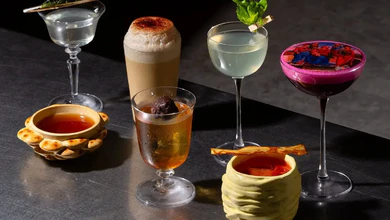
The meal opens with stingless bee honey, known locally as kelulut, where each hive yields a fraction of what conventional honeybees produce. Fresh, it sits on an edible flower over crisp cheese cracker. A two-year-aged version, tart and fruity with deeper pollen notes, then arrives tableside with bee pollen, basil, blue cheese and lime gel in a handmade pot by Zambales ceramicist Mia Casal, so a farmer and a craftsperson share one course.
Then there’s the aligue tart, with spanner crab enriched by a treasured Filipino crab fat. A single jar of aligue takes an entire sack of tiny river crabs, harvested and prepared by hand. Knowing that turns a two-bite snack into an afternoon of somebody’s labour, which is exactly the point Siy wants the cards to make.
3 Courses Worth Booking For
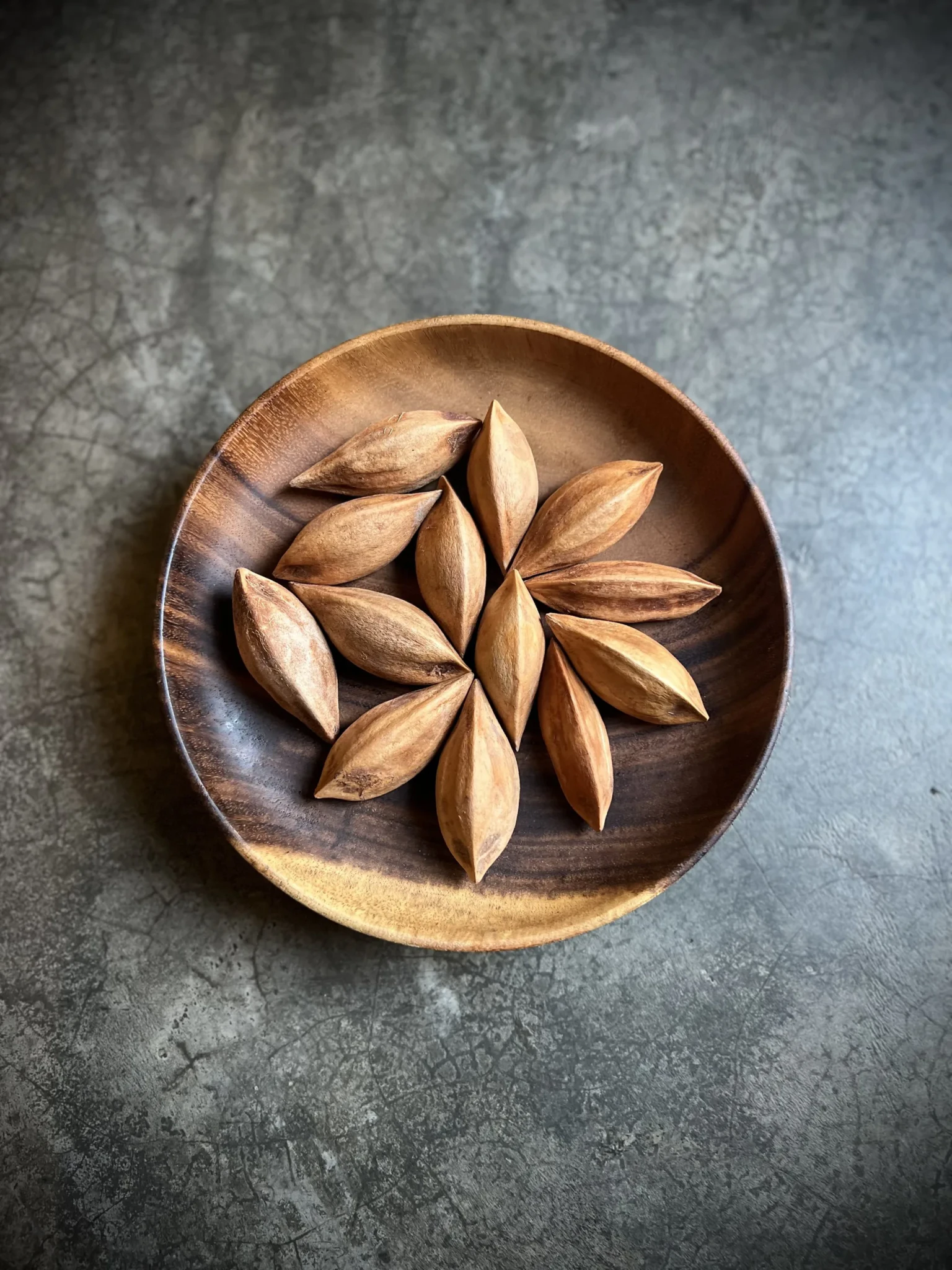
Pili is the one to get excited about. A custard of pili nut milk comes layered with raw pili, slivers of jamón, crispy fried capers and an egg yolk sauce seasoned with kombu salt, finished with Kaviari Ossetra caviar. The nut is native to the Philippines, foraged from wild trees in volcanic soil and cracked by hand. Siy believes such ingredients are “as worthy to be on a pedestal, and on the world stage, as truffles and caviar”, and plating pili next to caviar puts that belief on the table. It might change how you see the nut your titas (aunties) brought home as a snack from Bicol.
The seaweed course is the boldest idea on the menu. Wakame, ayunori, sea lettuce, hijiki and gamet, a rare purple seaweed harvested along the rocky coastline of her mother’s hometown in Ilocos, are dressed in a deeply savoury kombu sauce. A Gillardeau oyster from France with kombu beurre blanc sits on the side, and while that protein may change with the seasons, the seaweed stays. Building a whole course around something most diners leave on the side of the plate shows Siy’s philosophy more plainly than any of the others.
Third, watch for Asín Tibuok, a rare artisanal sea salt made by a dwindling line of generational salt-makers using a process passed down for more than 500 years. It’s inscribed on UNESCO’s List of Intangible Cultural Heritage in Need of Safeguarding, and Árō uses it as a finishing salt across the calamansi and pomelo pre-dessert and the toasted rice dessert. That’s five centuries of craft in a pinch.
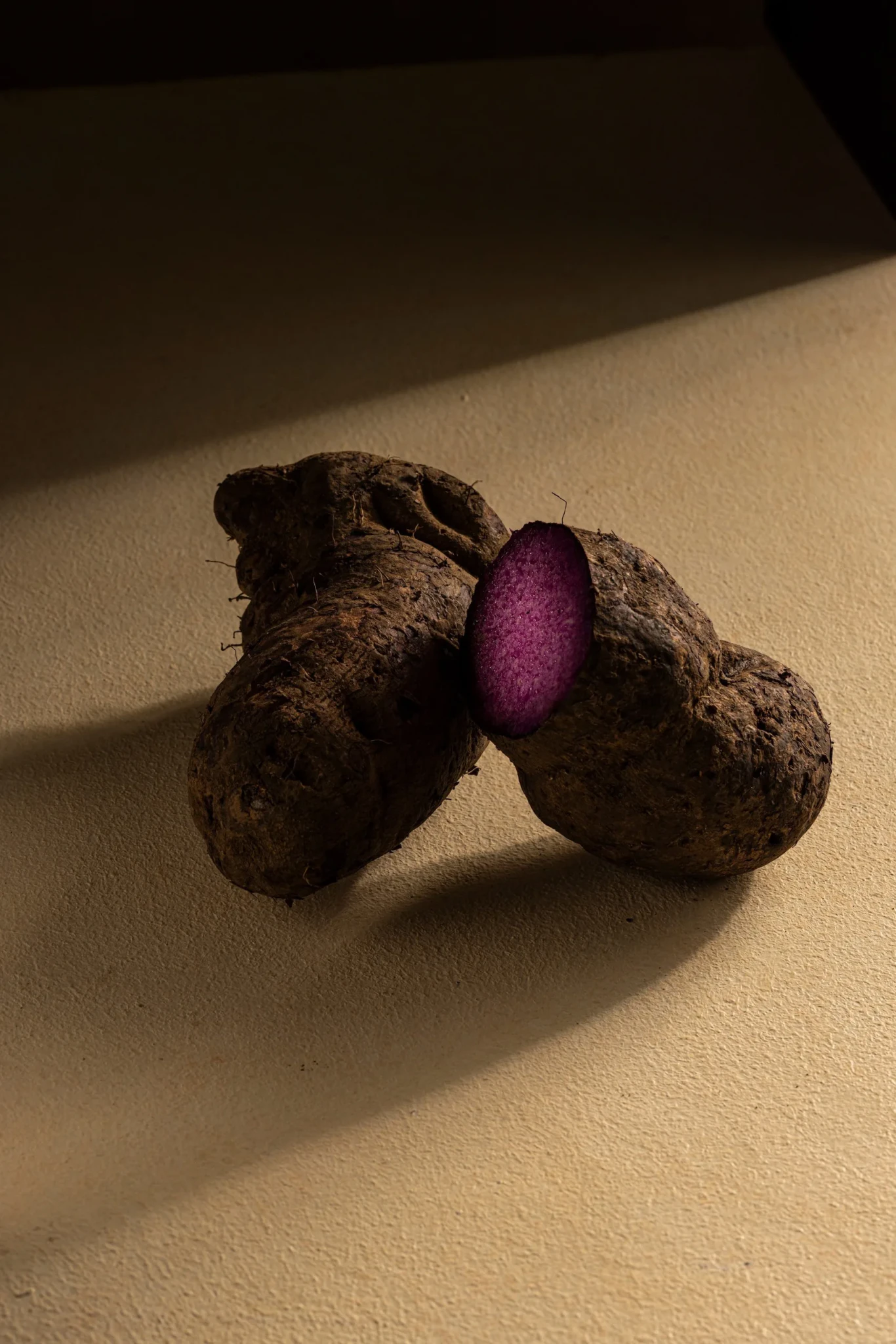
Elsewhere, a whole carabinero prawn arrives in two expressions inspired by Siy’s relationships with Basque seafood producers, with the body gently cooked and the head grilled alongside housemade potato bread. The meal closes with ube, shaped into a wagashi (a traditional Japanese sweet) of glutinous rice flour and white bean paste, filled with Thai yam and Filipino ube and finished with edible gold.
These dishes come from the opening menu as described by the restaurant, and they won’t stay fixed. An ingredient may come back roasted on one menu and cured or fermented on the next, while suppliers change as Siy meets new producers.
A Room Built Like a Home
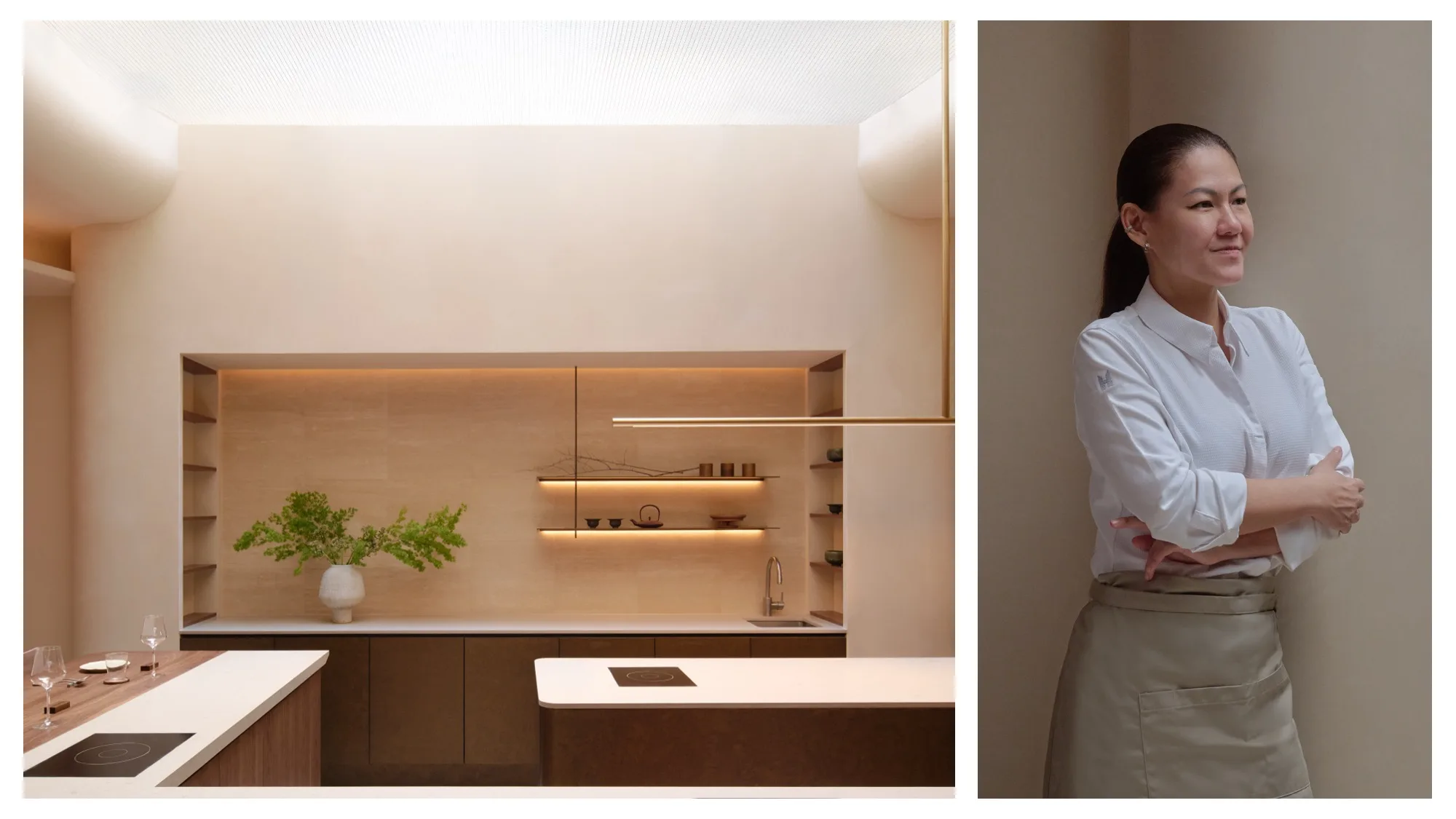
Siy wanted Árō to feel like being invited into her home, and as she puts it, “I want guests to feel like they are dining in my home.” Keiji Ashizawa Design created the space, with every piece of furniture made by Japanese maker Karimoku Case. Artwork and objects from Siy’s own collection fill the room.
Our favourite detail is the colour palette, which is drawn from the pili nut: the deep russet of its shell and the pale ivory of the kernel. That’s carried through walnut, rattan and travertine, and the rattan partitions and cabinetry give the room a sense of its Southeast Asian setting.
The restaurant occupies the former Esora space, and the designers kept two of its features. Fluted columns now have seats for waiting guests, and the oval skylight is softened by a woven metal mesh that diffuses daylight through the day. Even the reception desk echoes the skylight’s oval, and its finish was applied entirely by hand.
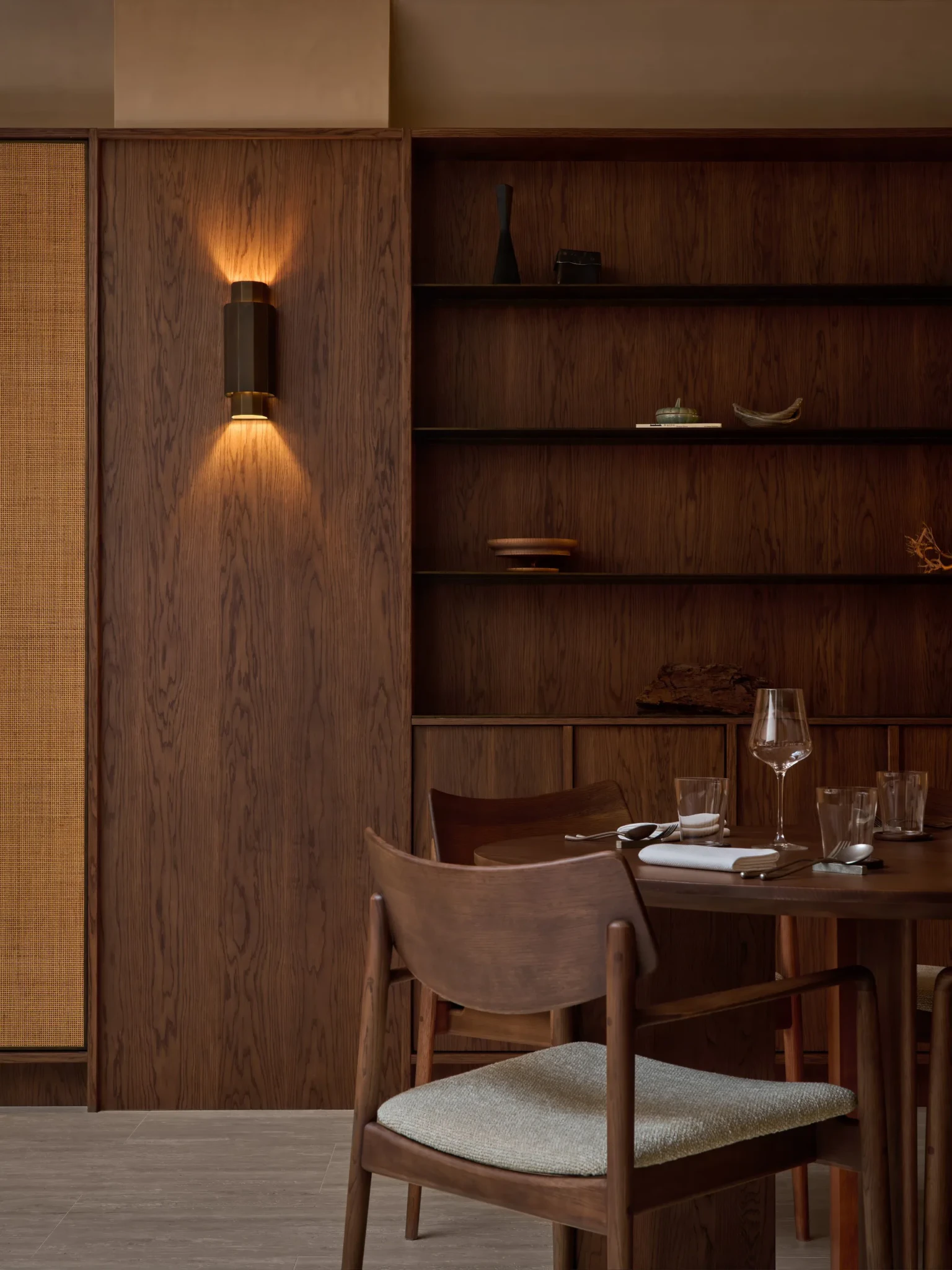
There are 26 seats: 10 at the chef’s counter, two tables of four and a private dining room with four tables of two. Book the counter if you can, because it sits at the open kitchen. A restaurant built on talking to the people behind your food is best enjoyed right next to the people cooking it.
Is S$268++ Worth It?
This isn’t a casual weeknight dinner. Siy argues that value lies in “the experience, the story, and the personal enrichment diners walk away with,” and the menu cards plus the counter seats make that a fair claim.
Fans of chef-driven dinners might also enjoy our look at the two one-star chefs who shared a kitchen at Summer Pavilion. If a S$268++ dinner is a stretch this month, our guide to things to do in Singapore has plenty that won’t touch your savings. Árō lists the following details for diners.
🗓️ Date: Open since Friday, 25 September 2026
⏰ Time: Dinner 6pm to 10pm (Thursday to Monday); lunch 12pm to 3pm (Friday to Monday); closed Tuesday and Wednesday
📍 Location: Árō, 15 Mohamed Sultan Road, Singapore 238964
🍽️ Tasting Menu: 12 servings, S$268++ per person
🪑 Seats: 26 in total, including a 10-seat chef’s counter and a private dining room for up to eight
📞 Reservations: Online at arosingapore.com; enquiries +65 6290 6195 or info@arosingapore.com
Grab a friend who loves a good food story, check open slots on Árō’s website, and follow @aro.singapore on Instagram to see which producer gets the spotlight on the next menu!
Photos and Visuals courtesy of Árō.
Read us first on Google: add DANAMIC as a preferred source and our stories show up more in your Top Stories and AI results.