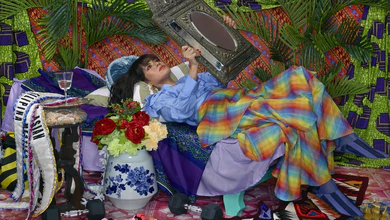
Most of us spend our days begging our tech to work properly, so it’s refreshing to meet an artist who scans Balinese sacred forms and then makes the computer mess them up on purpose. That’s the idea behind Source Code, the second solo exhibition by Balinese artist Jemana Murti, opening at Gajah Gallery Singapore this Thursday, 1 October 2026.
If you’ve ever wondered what goes missing when culture gets fed into a machine, this exhibition answers with objects you can walk around.
Meet the Artist Behind the Glitch
Jemana was born in Bali in 1997 and raised in a family of artists, surrounded by the Balinese Hindu traditions that still run through everything he makes. He lives and works on the island, and his practice keeps returning to one question: what happens to inherited forms when they meet the tools of the present?
Singapore has seen his name before, too. His work went into the National Gallery Singapore Benefit Auction in 2022 and 2023, and he won the bronze prize at the 2023 UOB (United Overseas Bank) Painting of the Year. His pieces sit in private and public collections across Europe, Asia, and Australia, with placements at the Tentrem Hotel, the Louis Vuitton flagship store in Jakarta, and Morgan Stanley Singapore.
He also has a history with Gajah Gallery, which was founded in 1996, focuses on Southeast Asian contemporary art, and operates in Singapore, Jakarta, Yogyakarta, and Manila. The gallery’s Critically Bali exhibition featured X3M9K4P_ARTIFICIAL_DIVINITY (2025), a 3D-printed work that hinted at the sacred-meets-software direction he’s taking even further this October.
Scan, Prompt, Print, Break
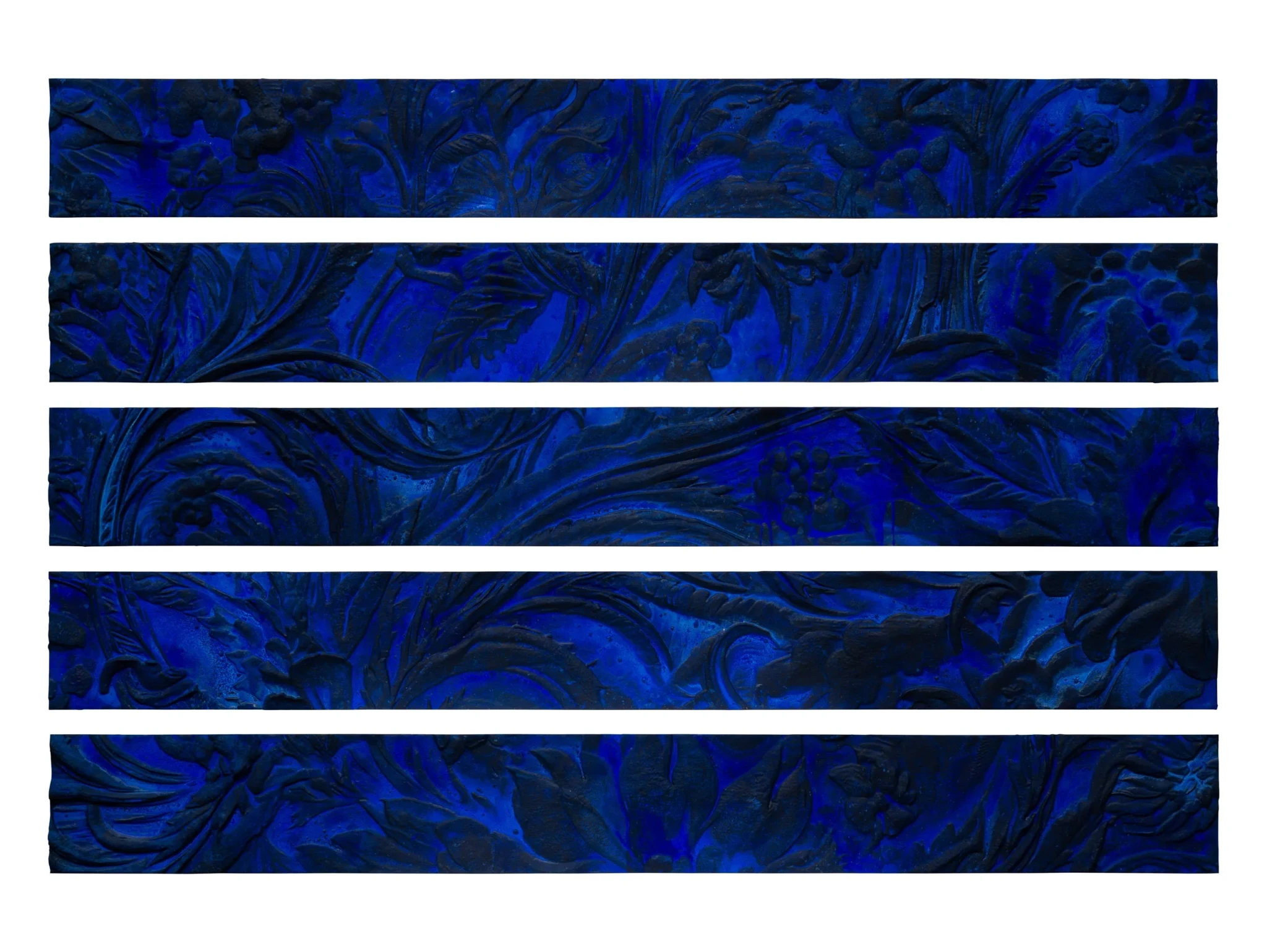
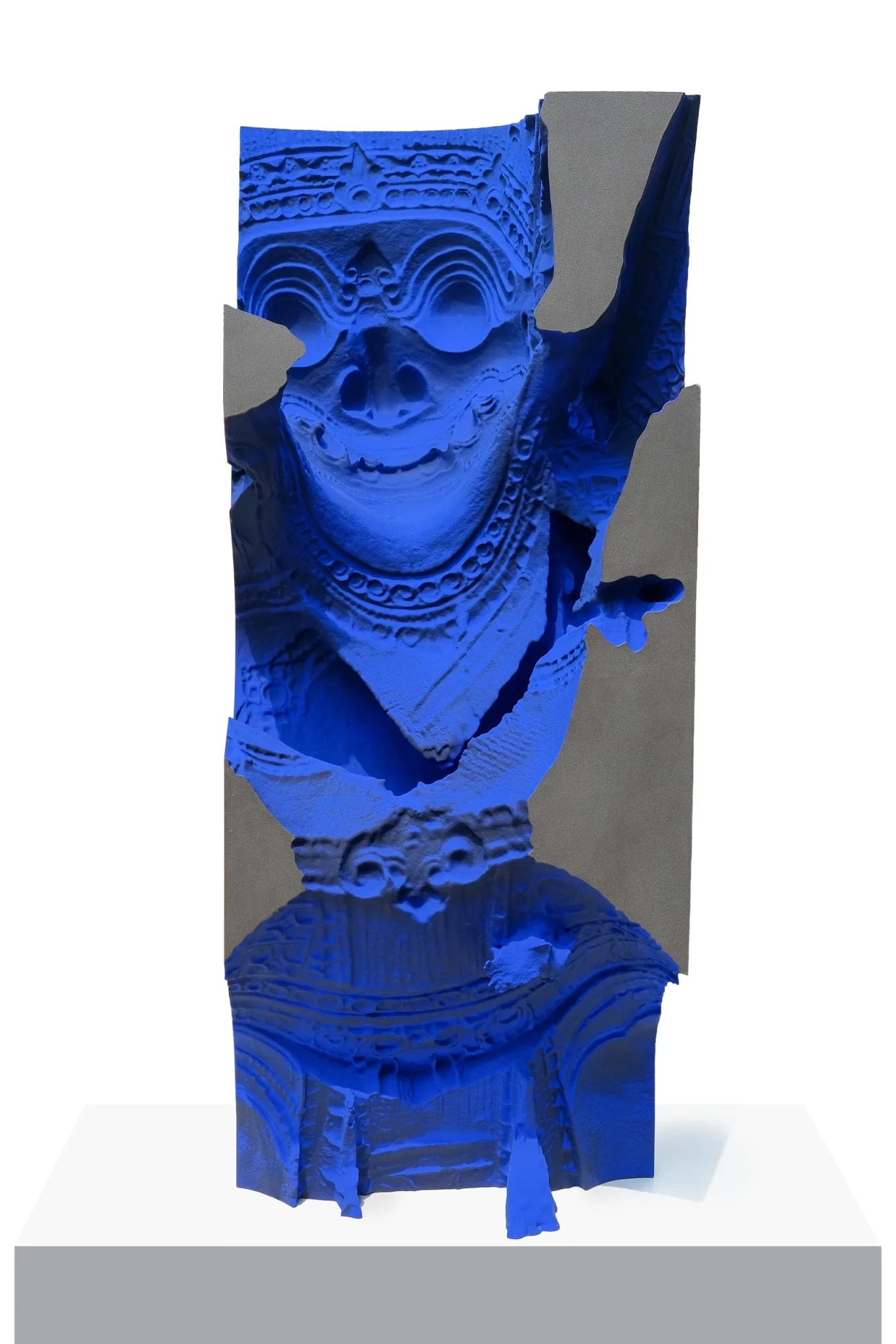
In plain terms, Jemana takes forms from Balinese art and architecture and puts them through 3D scanning and artificial intelligence (AI) before 3D printing the results. Along the way he deliberately lets distortions creep in, so the finished sculptures come out warped, fragmented, or pixel-blurred in places, like a file that didn’t quite load.
Underneath the tech sits an older fascination. His work draws on ethnomathematics, the study of the maths already built into a culture’s crafts, and in Bali that means the proportion, repetition, and spatial relationships found in carvings and temple architecture. Put simply, these forms had their own source code long before any laptop got involved, which makes the exhibition title a clever little pun!
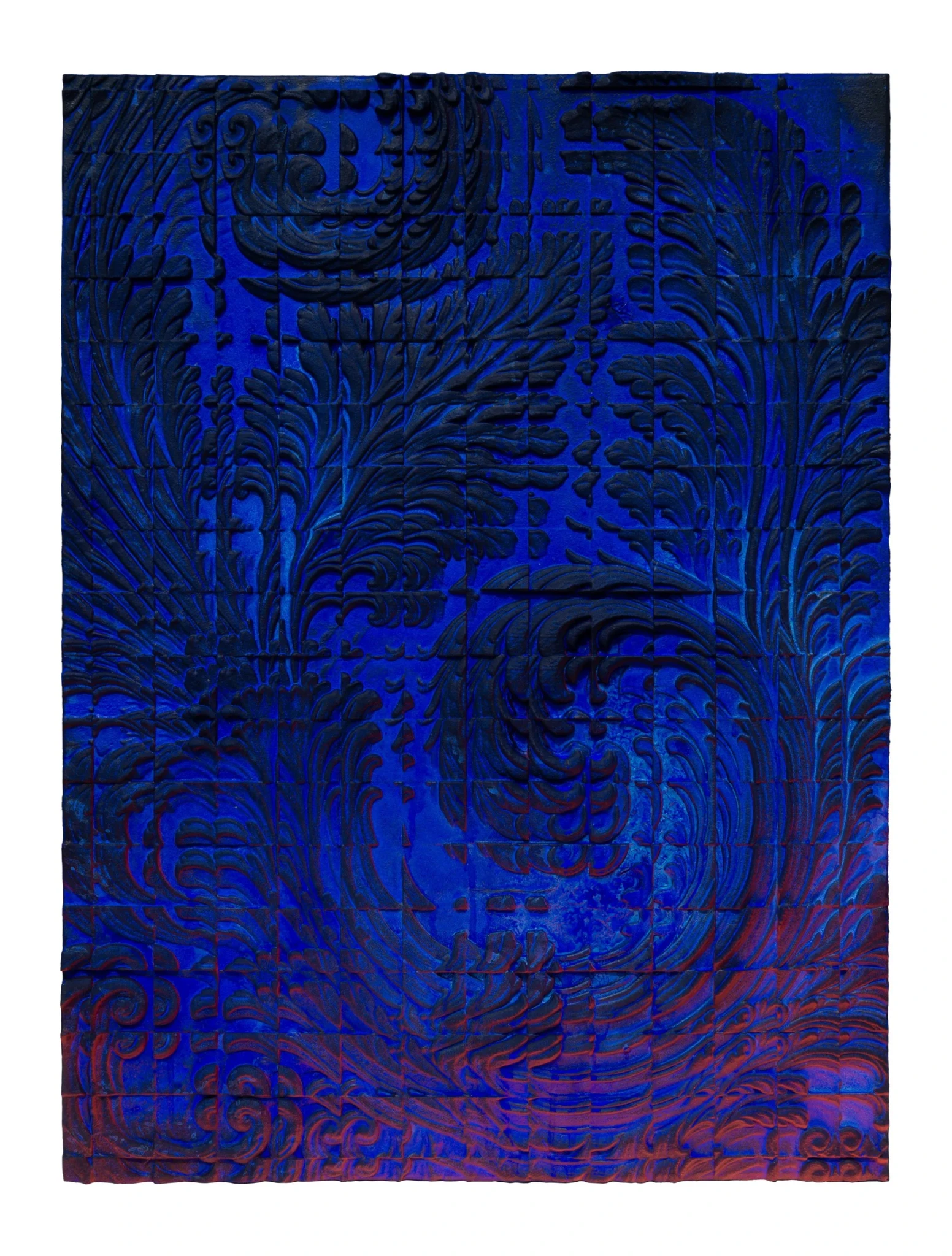
The glitches carry the message. A scanner can capture every curve of a carving, yet it has no way of recording the cultural and spiritual significance that gives that carving its meaning, and the broken patches make that gap impossible to miss.
Most of the pieces are made from ABS (acrylonitrile butadiene styrene, a sturdy plastic common in 3D printing) paired with acrylic. A few mix in iron or other particles, which gives the digital forms a grainier, earthier finish that feels closer to stone than to a gadget.
When Tech Becomes the Oracle
There’s a second idea in Source Code that lands close to home for anyone who asks a chatbot before asking a friend. Jemana draws a parallel between the reverence once given to divine figures and the growing authority we hand to technologies seen as “all-knowing”. It’s a bold comparison, and a hard one to dismiss once you count how often an AI answer gets treated as gospel.
So the broken sculptures work in two directions at once. They remind you that sacred forms hold meaning a machine can’t carry, and they poke at the brand-new altar people have built around the machine itself.
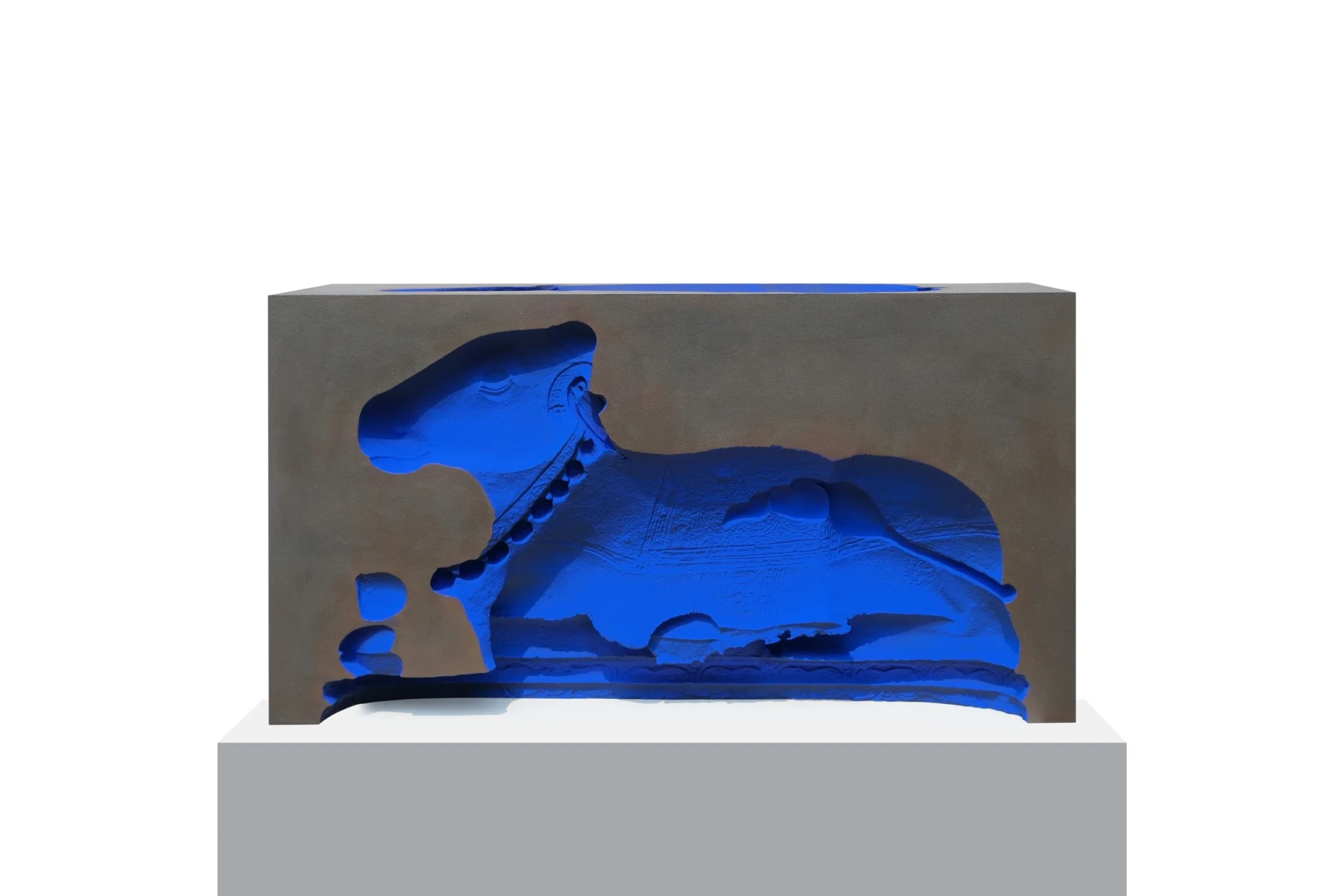
That raises an honest question for anyone who holds these forms sacred: is glitching them respectful? Read through the work, the distortion reads as protective rather than mocking, because it marks exactly where the copy falls short of the original.
For young Balinese, and for any Singaporean who grew up balancing heritage with a phone in hand, that tension will feel familiar. Tradition changes shape when it’s digitised, and Source Code makes that change something you can see up close.
Pixels Cast in Bronze
The newest chapter in Jemana’s practice is a heavier one, literally. He’s made a series of bronze sculptures with Yogya Art Lab, a foundry and production house co-founded by Gajah Gallery director Jasdeep Sandhu and Indonesian artist Yunizar, now led by foundry director James Page.
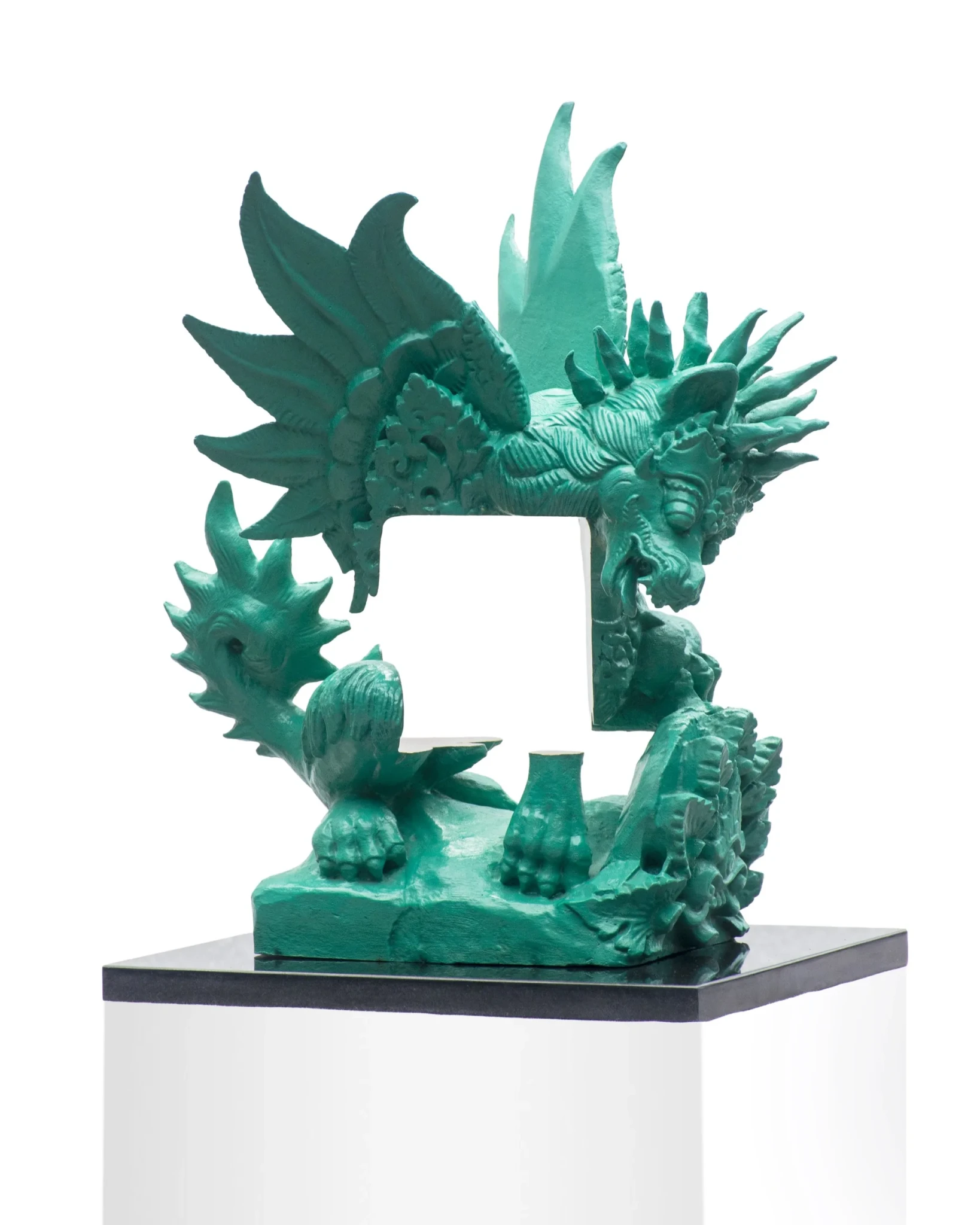
These pieces begin as digitally reconstructed, warped forms and are then cast in bronze, a metal long associated with durability. A glitch that once lived only on a screen becomes something solid enough to outlast its maker, which is a delicious irony: the most fleeting thing in the room ends up in the most permanent material!
The FUTURE RELIC titles suit these works perfectly, since they look like artefacts dug up from a timeline where the temple and the internet merged. Editions are small, with CHIDRA listed as edition two of six.
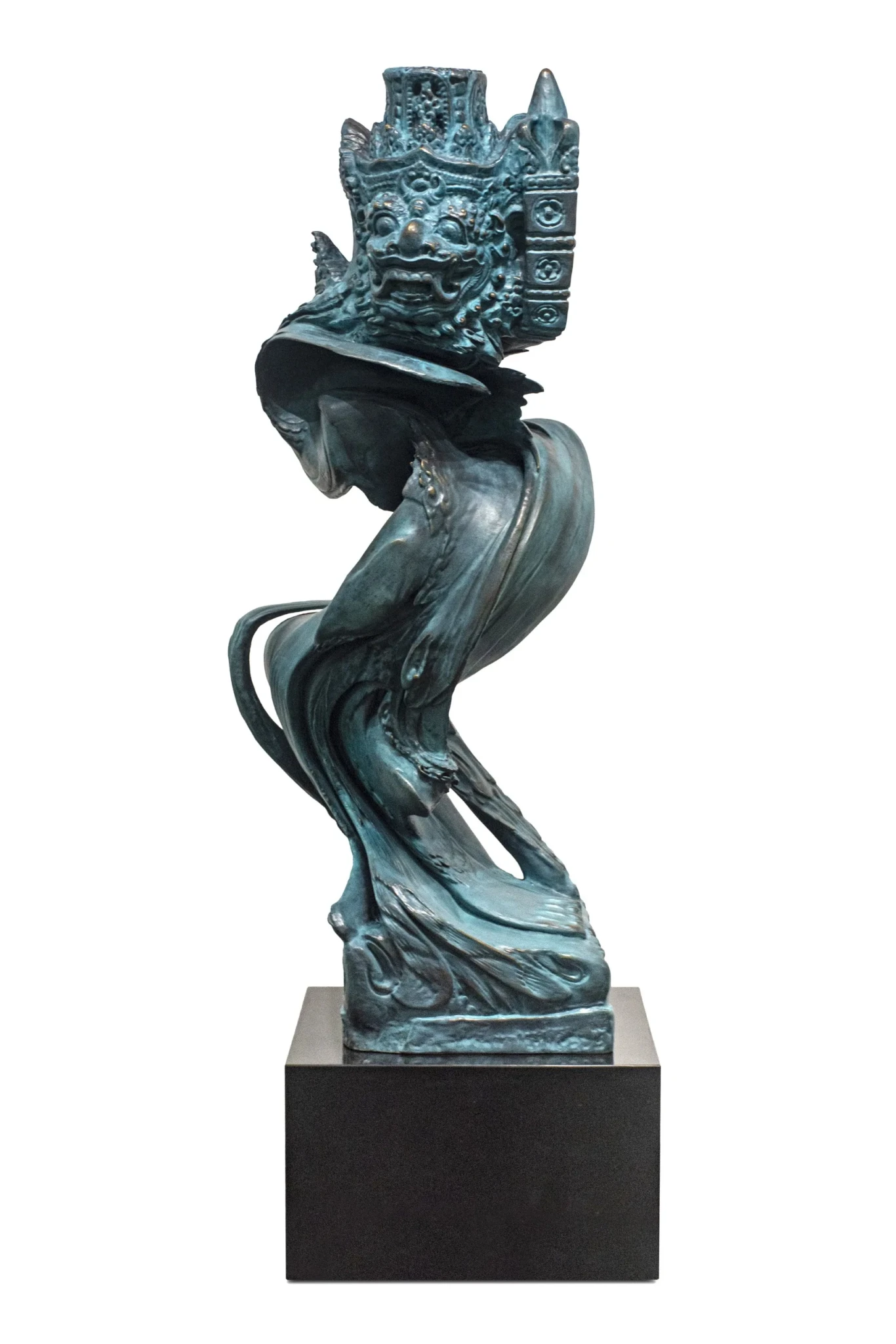
VAKRASANA goes further, fusing a traditional Balinese mask with a distorted, organic body, and its edition is tighter still, listed as two of three.
Three Pieces Worth Your Time
If you only have a lunch break, start with VIMANA, because its shattered blue sections explain the whole glitch concept in a single glance. It’s the quickest way into the show’s thinking before you slow down for the rest.
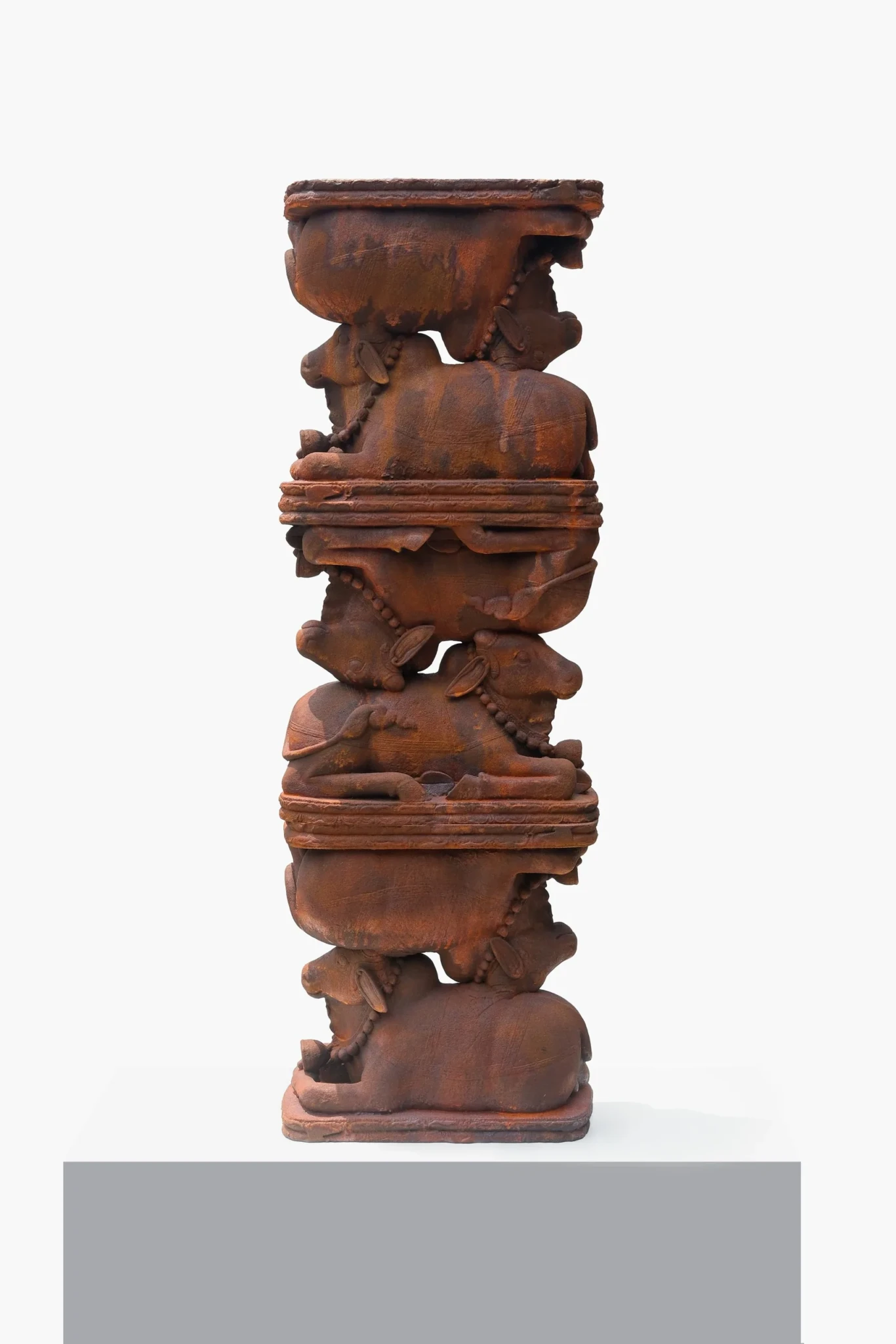
Next, seek out FUTURE RELIC: VAKRASANA, since the bronzes are the freshest direction in Jemana’s work and a mask dissolving into a body is the image most likely to follow you home. Finish with NANDIDNAN, a stack of animal figures and temple-inspired ornament that shows how much detail survives the digital process, which makes the broken bits elsewhere hit harder.
If you’re mapping out the whole month, our guide to things to do in Singapore this October 2026 has plenty more to pair with it.
🗓️ Date: 1 to 25 October 2026
📍 Location: Gajah Gallery Singapore
🔗 Details: Gajah Gallery
In a year when AI is busy generating everything from homework to wedding speeches, it’s rare to find art that uses the technology to show where it stops. Check opening hours on Gajah Gallery’s website and catch Jemana Murti’s glitched gods before Source Code closes on 25 October!
Photos and Visuals courtesy of Gajah Gallery.
Read us first on Google: add DANAMIC as a preferred source and our stories show up more in your Top Stories and AI results.