Anyone who has worked in design knows the brief that stings: can you make it look nicer? It treats the craft like a final coat of paint before launch. Over 9 and 10 September 2026, the chamber behind the Singapore Good Design (SG Mark) Awards spent two days arguing the opposite, and this time it came with receipts.
The programme was Leading Design Transitions, run by Design Business Chamber Singapore (DBCS). Thirteen designers founded it in 1985 as the Designers Association Singapore, and it took its current name in 2012. A forum, the SG Mark Awards, and a closing gala at JW Marriott South Beach filled the two days, and the count came to 105 SG Mark winners, with two Platinum Awards in the same year for the first time in the awards’ history.
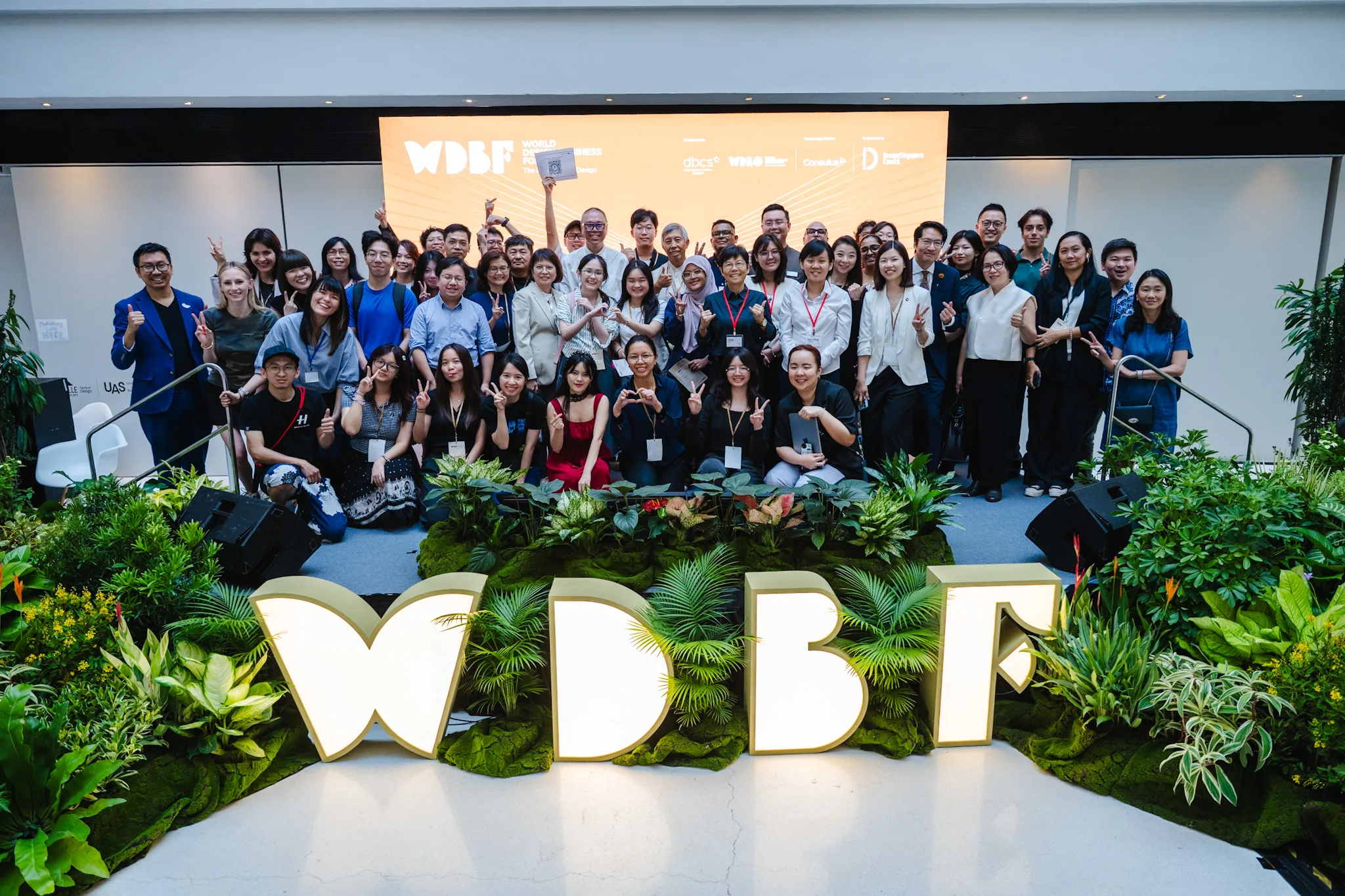
For anyone eyeing a job in UX (user experience), product, or branding, though, the bigger news was elsewhere. Some of Singapore’s largest organisations had to prove that design moves their numbers, and those are the same companies doing the hiring. If your picture of local design comes from festival outings like Singapore Design Week 2024 or the DESIGN NATION exhibition at Milan Design Week, this was the business end of the same industry.
Design Got a Report Card
That scoring system is the Design Power Index (DPI), run by the World Design Business Organisation (WDBO). DBCS set up WDBO as its global arm with the Singapore-founded impact-investment firm Consulus, launching it at the chamber’s 40th anniversary gala on 25 November 2025. The DPI measures how much economic value organisations get from design and design intellectual property. In plain terms, it checks whether all that design work paid off, both commercially and socially.
This was the year the Index got strict. Every organisation in the 2026 Singapore cohort had to meet a minimum market value and then show evidence of how design shapes its business and social results, a test the 2025 cohort never faced. Anyone who wouldn’t hand over that evidence was withdrawn from the Index entirely. An international panel then reviewed the strongest submissions: Franco Lodato, Fadi Daou, Prof. Ankush Samant, Sebastian Tolegang, and Melanie Song, drawn from the US, Switzerland, and Singapore.
The results came out at the gala on 10 September, which Foo Cexiang, Minister of State for Manpower and for Trade and Industry, attended. The Government Technology Agency (GovTech) was named Best across Pillars. Mandai Wildlife Group, CPG Consultants, OCBC Bank, and Carousell took the Business, Market, Technology, and Social Impact of Design pillars, in that order. Commune and the Singapore University of Technology & Design (SUTD) received Special Mentions, and that SUTD nod is useful if you’re still choosing where to study.
GovTech and Carousell deserve a young designer’s closest attention. GovTech builds the digital services Singaporeans use to deal with the government, and Carousell is the resale app half the MRT (Mass Rapid Transit) seems to scroll through on the morning commute. A UX graduate could realistically send a CV to either, and both now have a published design score to live up to!
A Forum About the Bottom Line
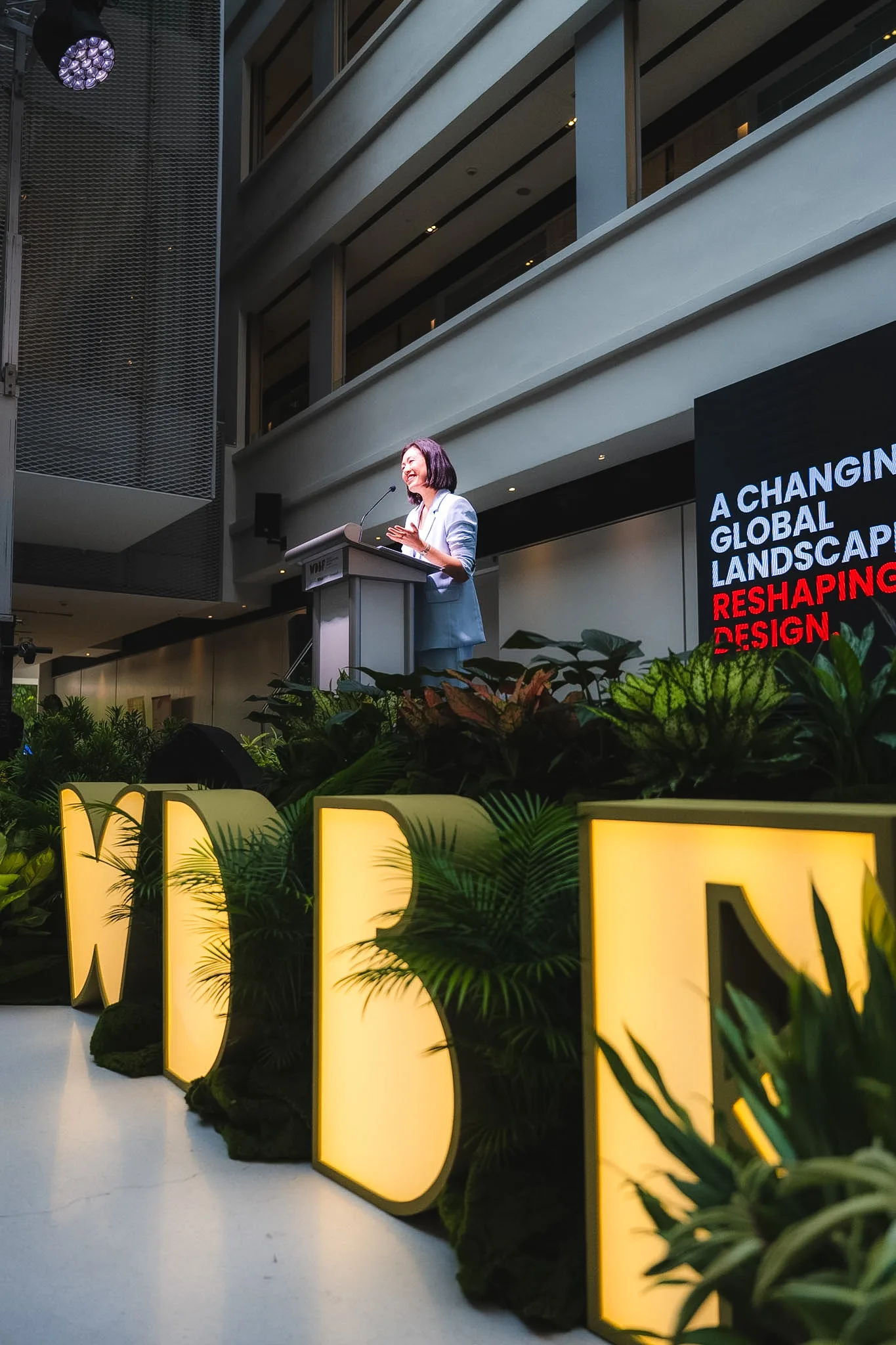
It all started on 9 September, when the second World Design Business Forum opened at the National Design Centre. Global and local leaders dug into how design-led strategies help businesses grow, open up new markets, and push technology forward. The DPI framework anchored the discussion, so the talk stayed on numbers rather than vibes.
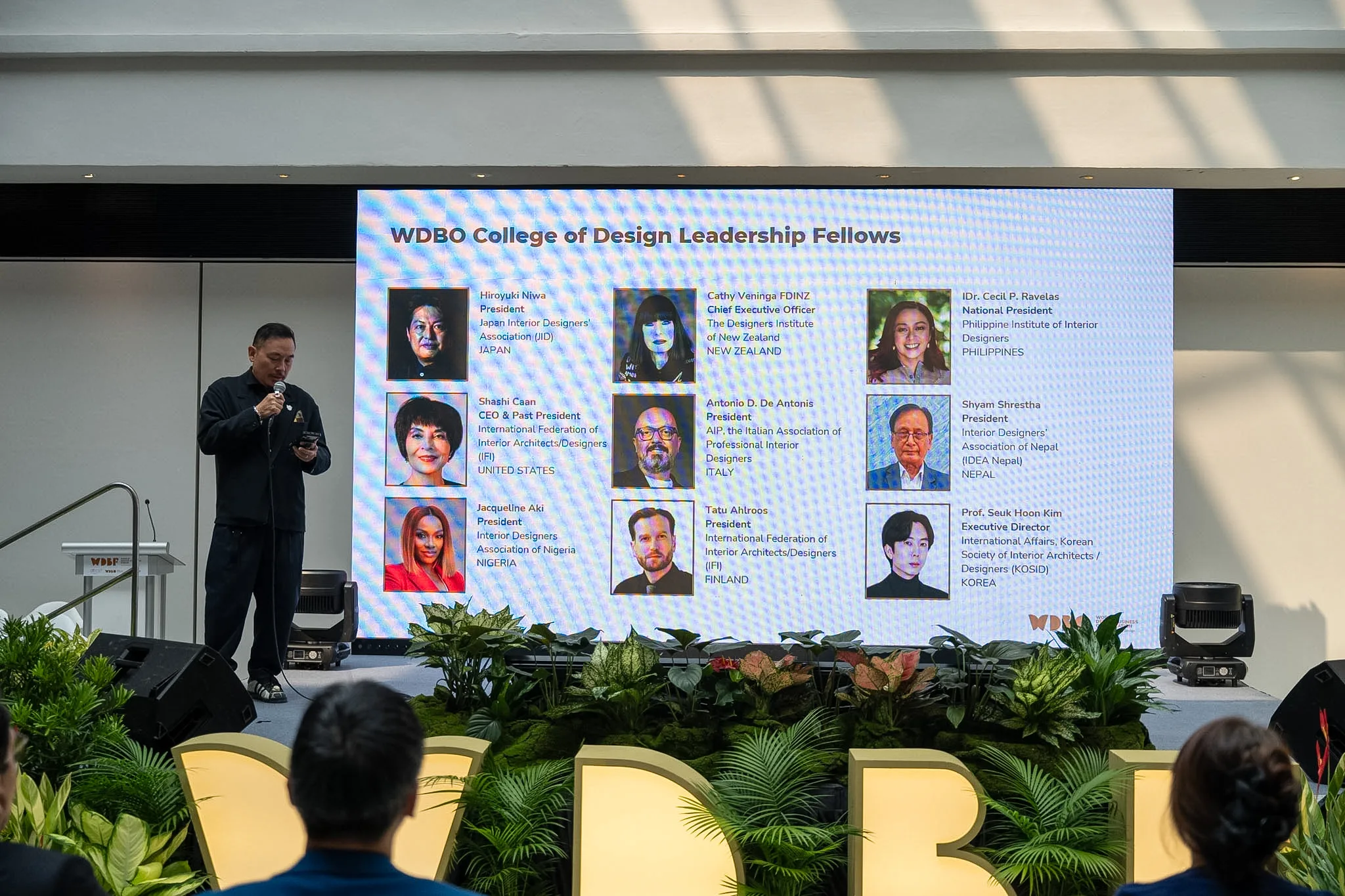
The forum also came with an international roll call. The WDBO College of Design Leadership Fellows went up on screen: Hiroyuki Niwa of the Japan Interior Designers’ Association, Cathy Veninga of The Designers Institute of New Zealand, Cecil P. Ravelas of the Philippine Institute of Interior Designers, Shashi Caan and Tatu Ahlroos of the International Federation of Interior Architects/Designers, Antonio D. De Antonis of Italy’s AIP, Shyam Shrestha of IDEA Nepal, Jacqueline Aki of the Interior Designers Association of Nigeria, and Prof. Seuk Hoon Kim of Korea’s KOSID. Nine leaders from eight bodies across five continents make it plain that Singapore’s design chamber is being read well beyond Singapore.
Hong Khai Seng, President of DBCS and Vice-Chair of WDBO, summed up the idea behind the two days. “Good design is good business, and it has a vital role in shaping economic and social progress,” he said, which is about as plain a mission statement as a design chamber can give.
Prof. Pradyumna Vyas, Honorary President of WDBO, praised SG Mark in stronger terms. He called it “rigorous, business-minded, and unafraid to prove design’s economic value”, a quote that could be this article’s headline.
Where Your Career Comes In
The afternoon of 9 September was the most practical part of the programme. The World Design Business Workshops walked participants through the DPI’s methods and through changing careers within design. A Design Launchpad workshop turned the Forum’s big ideas into hands-on learning, run with the DesignSG Community, ECI Coaching, the Intellectual Property Office of Singapore, and the Employment and Employability Institute.
That partner list is worth a second look. When an intellectual property office teams up with an employment institute, the message is clear: protect what you make, and plan your next move before the market plans it for you.
Students got their own moment at the gala, which included the Top Seed Awards and a Future Leaders Fellowship showcase. DBCS also launched the Singapore Design Awards 2026/2027 that evening, together with the National Council of Social Service (NCSS) and the Singapore Government Partnerships Office (SGPO). That’s the next call for entries worth watching.
The lesson for anyone building a portfolio is simple. If the organisations in the DPI now have to show what design earned them, expect the people they hire to be asked the same thing. A case study that shows the before, the after, and the number that moved will get you further than a polished mood board.
Two Platinums, an SG Mark First
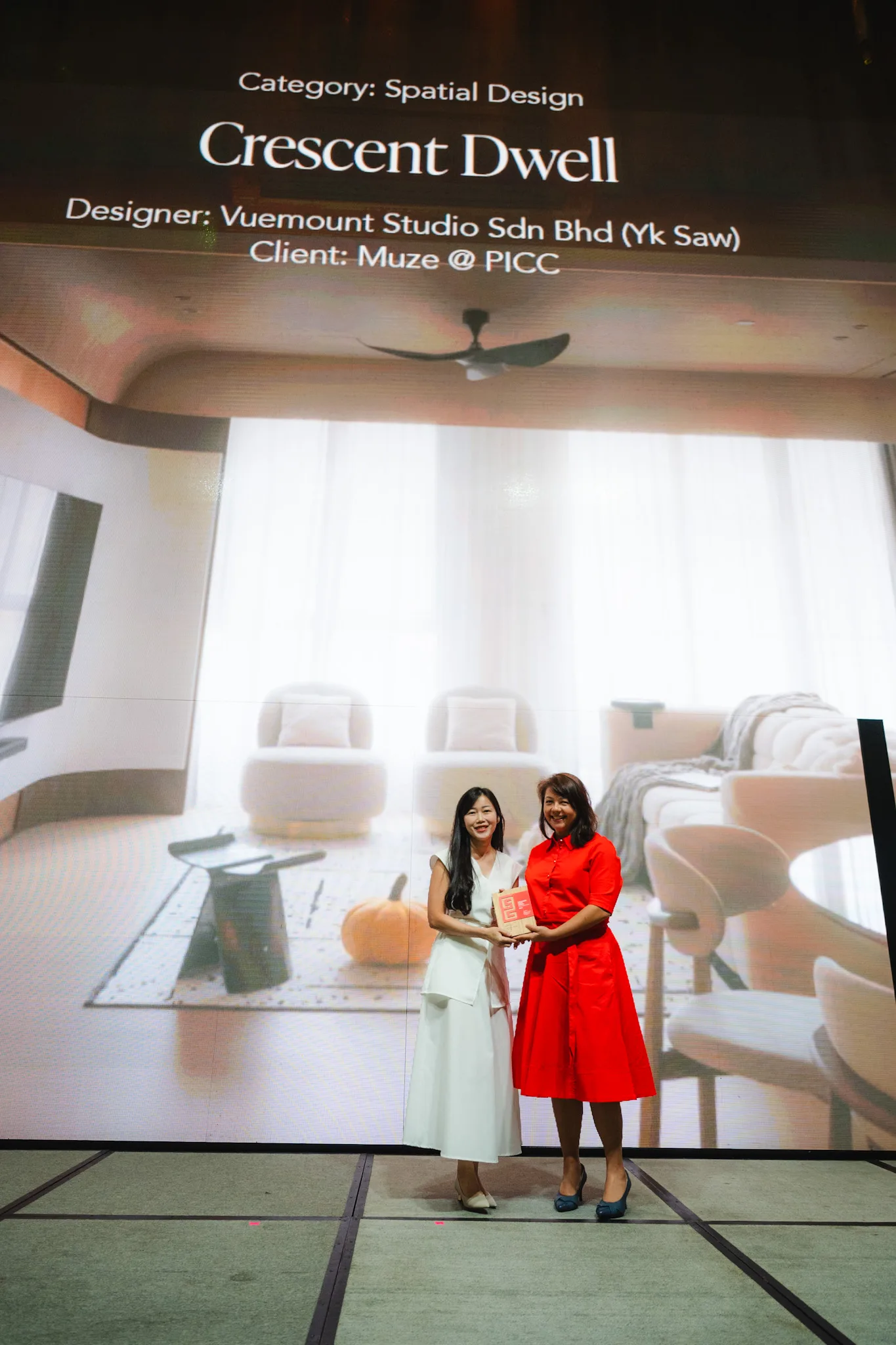
The SG Mark Awards, which DBCS has run since 2013, took over on 10 September. Submissions hit a record high, with more entries coming in from Australia, Hong Kong, and beyond. The 105 winners were spread across seven categories (Architecture, Sustainable Design, Experience Design, Spatial Design, Digital Design, Product Design, and Food Unbound), and nine of them took Top Awards.
For the first time, two projects shared the highest honour. Jurong Lake Gardens (Central & East) won the Architecture Platinum, and as a public park it’s the obvious crowd-pleaser. Our sleeper pick is SENSE 600®, A World-Leading Sustainable Reinforcing Steel, which took Platinum in Sustainable Design. Reinforcing steel is the hidden skeleton inside concrete buildings, so a lower-carbon version ends up in far more places than any single park can.
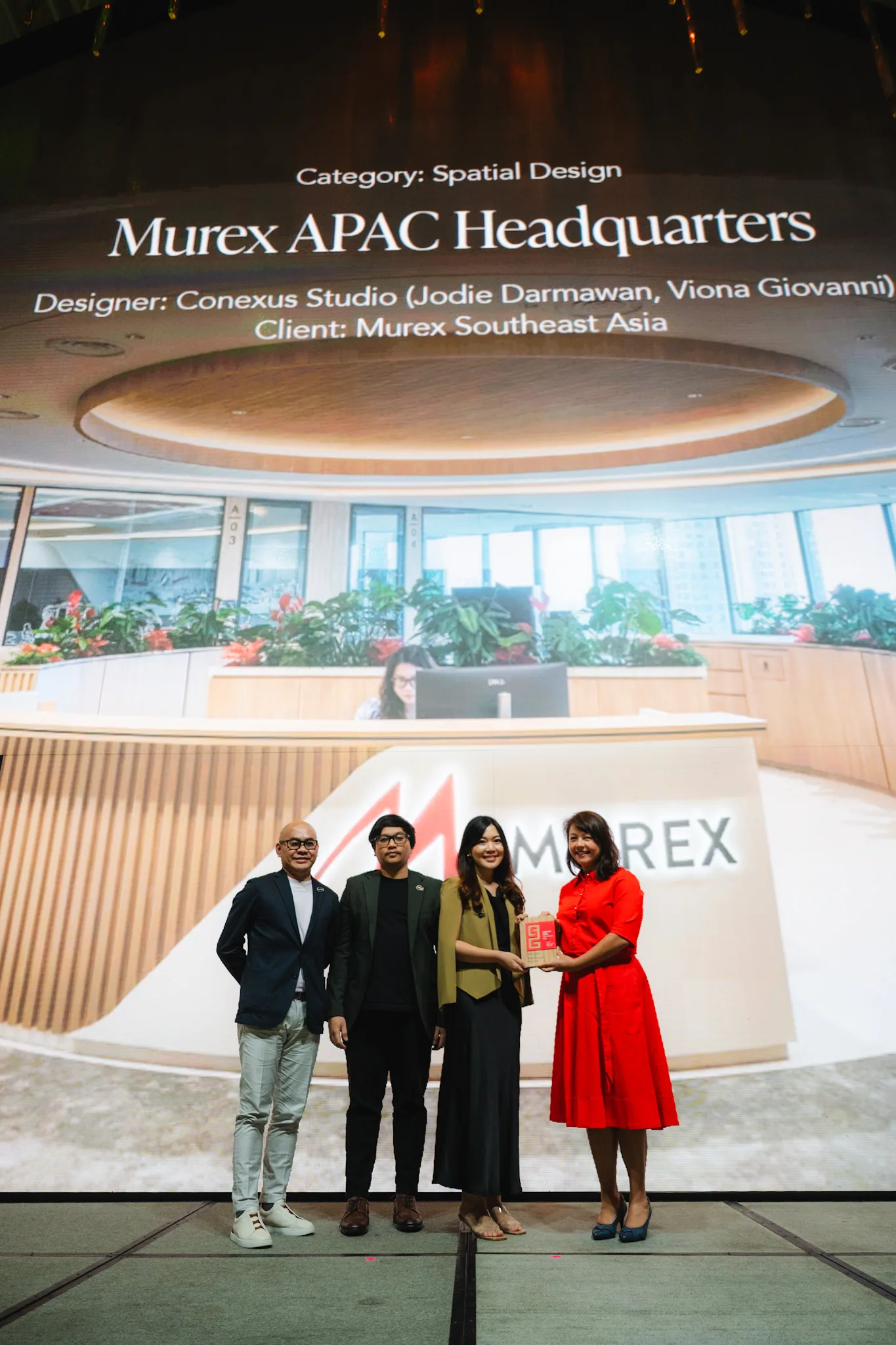
The four Gold Awards went to the Singapore Pavilion at Expo 2025 Osaka (The Dream Repository), MELD @ Twin Vew, ABEL Microsampler, and Neural Palate Kueh. Special Mentions went to Sentosa Sensory, PEEK, Project House @1QRW, the Hullbot Autonomous Ship Hull Cleaning System, and One Placement, a GovTech project with the Ministry of Education that fits neatly with GovTech’s DPI win.
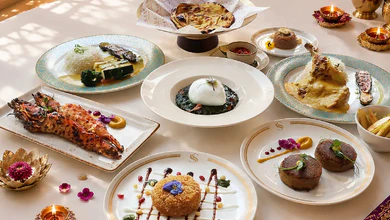
Neural Palate Kueh is the Gold we’d follow up on first. It took kueh, the colourful bite-sized snacks sold at markets across Singapore, onto a design podium, with DesignSingapore Council and the Urban Redevelopment Authority as clients.
Food Unbound Comes to the Table
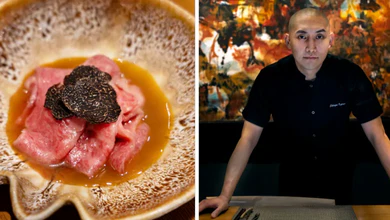
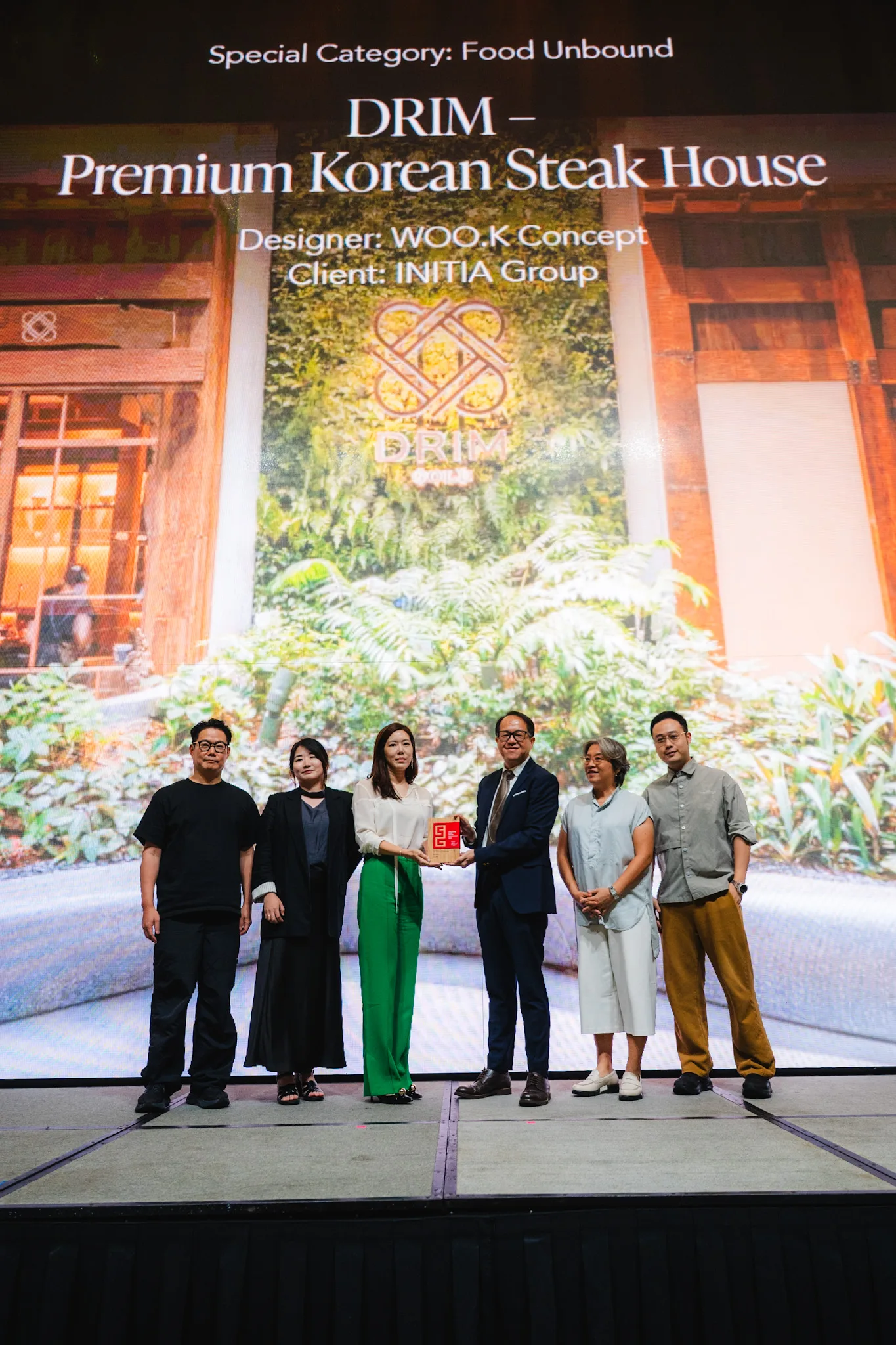
Food Unbound, SG Mark’s special category for 2026, is where you can literally taste the design. Along with Neural Palate Kueh’s Gold, it brought two Korean restaurants by WOO.K Concept on stage: DRIM, a premium Korean steakhouse, and MODU, a specialist in samgyetang (ginseng chicken soup).
This is the category to watch if you care about how a restaurant feels as much as what’s on the plate. A well-designed dining room can decide whether you stay for dessert or leave after the mains, and that’s value that shows up on the bill.
WOO.K Concept’s team went up with its DRIM client to collect the award. That’s a good sign that a Korean steakhouse is now judged on its room as well as its grill.
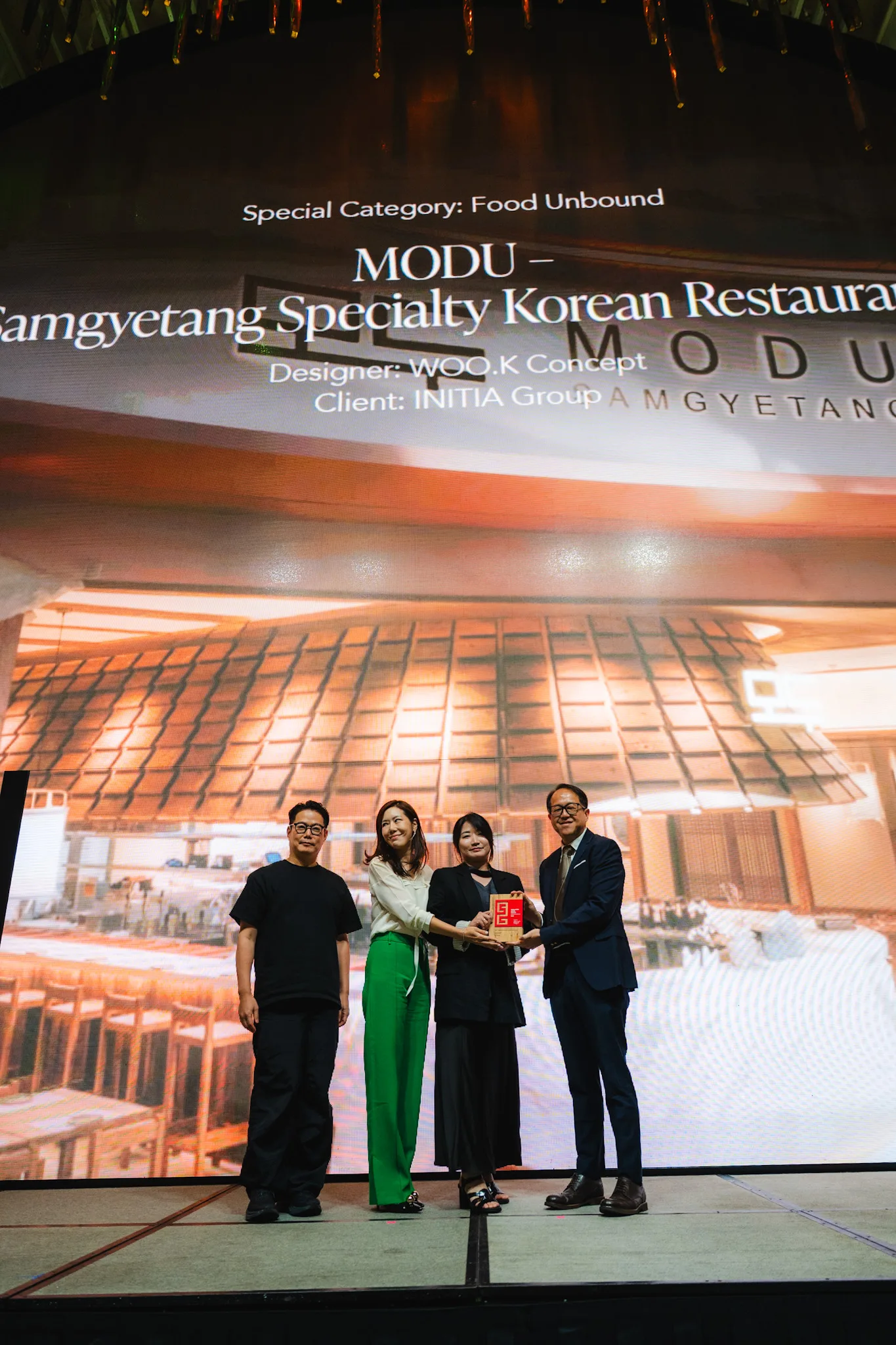
MODU is the one we’d book, though. Its name means “everyone” in Korean, its broth simmers for 12 hours, and the room is a modern take on the hanok, the traditional Korean house, with corners designed for photos while you wait. According to its menu, a bowl of samgyetang starts at S$38, before the 10% service charge and GST.
The SG Mark 2026 Winners Exhibition ran at Funan‘s Level 1 Atrium from 7 to 13 September, which put the winners in front of shoppers between errands. It has now closed, but every winning project is listed in the Winners 2026 section of the SG Mark website, where the public has also been able to vote for a People’s Choice Award.
The Details at a Glance
🗓️ Date: 9 and 10 September 2026 (Winners Exhibition: 7 to 13 September 2026)
⏰ Time: 10am to 10pm (Winners Exhibition)
📍 Location: National Design Centre (Forum); JW Marriott South Beach (Gala); Funan, Level 1 Atrium, 107 North Bridge Road (Winners Exhibition)
🏆 SG Mark 2026: 105 winners, including two Platinum Awards, four Gold Awards, and five Special Mentions
🖥️ See the Winners: Winners 2026 section of the SG Mark website
📊 Design Power Index: India and China phases run until the end of 2026, with full results at year-end
🔜 Coming Up: Singapore Design Awards 2026/2027, launched with NCSS and SGPO
Leading Design Transitions is over and the Funan exhibition has closed, but the people keeping score on design have a busy few months ahead. Follow Design Business Chamber Singapore for the full Design Power Index results at year-end, the Singapore Design Awards 2026/2027 call for entries, and the next round of SG Mark. In the meantime, start that case study with a real number in it, because design has been asked to prove it pays and the next wave of designers gets to supply the proof!
Photos and Visuals courtesy of Design Business Chamber Singapore.
Read us first on Google: add DANAMIC as a preferred source and our stories show up more in your Top Stories and AI results.