If your nightly wind-down is doom-scrolling until 2am, a forest in Osaka had a better idea. For six months, its soundtrack shifted with the weather, and nobody had to press a button. That music is now making its way to your headphones, and Singapore’s year-end downpours can bring the rain.
The composer behind that trick is Japanese vibraphonist Masayoshi Fujita. His new single Portal to the Universe dropped on 15 September 2026 as the first taste of Forest of Tranquility. The album lands on Friday, 13 November 2026 via London label Erased Tapes, and you can hear Masayoshi Fujita on YouTube today. Prefer your ambient music outdoors? He’s also on the bill at Wonderfruit in Pattaya, Thailand, which runs from 3 to 7 December 2026. A 5-Day Full Pass bought between 1 and 7 October costs THB 11,900, about S$460. More Asia dates are still to be announced.
1,500 Trees and a Weather Report
Quick refresher first. Expo 2025 Osaka was a six-month World Expo, a kind of Olympics for innovation where countries bring pavilions instead of athletes. It drew millions of visitors before closing on 13 October 2025. At its heart sat the Forest of Tranquility, an open-air sanctuary built around a central pond and 1,500 real trees. Each one was rescued and repurposed from the old 1970 Expo site or from parks around the city.
The sanctuary was designed to help visitors tune out the noise and recharge. Rirkrit Tiravanija’s Bamboo Maze ran on the same slow-down instinct as a mindful break that came with tea. Osaka simply built it at the scale of a forest.
Fujita’s job was the soundtrack, and he wanted music that deepened people’s connection to nature’s ebbs and flows. So he let the sky have a say. Weather sensors in the installation fed the score, and he wrote three versions of each roughly two-hour piece: sunny, cloudy and rainy. Do the maths and that’s six hours of music per composition, all so a passing drizzle could get a mood of its own. Your weather app pings you when rain is coming. This forest changed its soundtrack to match.
Japan has a name for this kind of thinking. Kankyō ongaku, or environmental music, is the genre Japanese composer Hiroshi Yoshimura helped define in 1982 with Music for Nine Post Cards, written to play inside Tokyo’s Hara Museum. Fujita took the idea outdoors and let living trees and real-time weather data shape part of the arrangement. That’s the right upgrade for a generation whose favourite online comeback is “touch grass”.
The trees are sticking around, too. In June 2025, Osaka Prefecture and Osaka City released a draft master plan that commits to keeping the forest’s plantings after the Expo. That means the rescued trees are set to outlast the fair that brought them together.
From Berlin to a Mountain Village
Fujita’s road to that forest ran through Berlin. He built his career there, released two albums under the alias El Fog, and became a regular collaborator of German electronic musician Jan Jelinek. Together they made the 2010 record Bird, Lake, Objects.
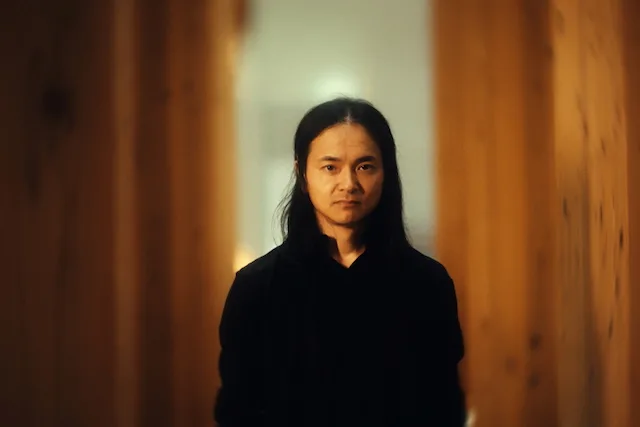
His instrument of choice is the vibraphone, the metal-barred cousin of the xylophone with that shimmering, floating ring. On Erased Tapes albums such as Bird Ambience (2021) and Migratory, he steered it into nature-inspired ambient territory, and he’s clear about why he keeps digging. The vibraphone can make “more interesting and beautiful sounds that haven’t been heard before,” he has said, and “there is a lot more to explore with this exciting instrument.”
These days, his surroundings are far greener than Berlin. “I live in a small village on a mountain in rural Japan and create music in nature,” Fujita said in 2025. “Dream has come true.” For a composer whose Expo commission was a literal forest, it’s hard to picture a more fitting home.
Rain Mode Sold Separately
So how does weather-reactive music survive on a record that plays the same way every time? Forest of Tranquility grows out of the Expo soundtrack and turns it into a studio album of fixed tracks, so the sensors stay behind in Osaka. Track titles include Portal to the Universe, Departure, Light, Wind and Water, Komorebi Dance and Time To Go, plus a title track named after the forest itself.
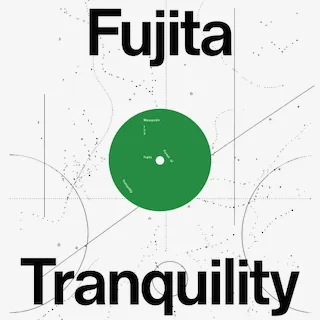
Komorebi is the Japanese word for sunlight filtering through leaves. That one word sums up the forest Fujita wrote for, and it makes Komorebi Dance a serious contender for the prettiest song title of 2026.
Without the sensors, you get to be the weather station. Queue Portal to the Universe on a grey afternoon, and Singapore’s year-end downpours can do the job Osaka’s weather monitors once did.
Music as a mood reset is a familiar idea here. Back in 2022, homegrown jazz band Evolution Quartet had an album billed as a cure for pandemic blues. Fujita’s version of the remedy has 1,500 trees in its backstory.
Catch Him Live at Wonderfruit
For the open-air version, Fujita heads to Wonderfruit, the five-day festival at The Fields at Siam Country Club in Pattaya, Thailand. His concerts come with a big endorsement. Erased Tapes founder Robert Raths has called Fujita’s Migratory show “one of the most impressive multi-instrument live shows since Nils Frahm’s All Melody“. Raths’ label released All Melody, so he knows exactly how high that bar is.
Wonderfruit sells tickets in dated price windows, and the 1 to 7 September round has closed. The next one runs from 1 to 7 October. In that window, the 5-Day Full Pass costs THB 11,900 (Thai baht, about S$460) and the Weekend Pass costs THB 10,500 (around S$410). Prices go up again in the 3 to 9 November window, to THB 12,900 and THB 11,500. If you buy at the door, you’ll pay THB 20,000 for the Full Pass or THB 15,000 for the Weekend Pass.
For a Fujita fan, October’s Full Pass is the one to grab. It costs THB 1,400 (under S$60) more than the Weekend Pass, covers all five days and saves THB 8,100 compared with paying at the gate. First-timers aged 20 and above can test the waters with a THB 4,500 Intro Pass that lasts 24 hours. Kids 12 and under get in free with a parent or guardian.
🗓️ Date: Thursday, 3 December to Monday, 7 December 2026
📍 Location: The Fields at Siam Country Club, Pattaya, Chonburi, Thailand
🎟️ 5-Day Full Pass: THB 11,900, about S$460 (1 to 7 October), THB 12,900 (3 to 9 November), THB 20,000 at the door
🎫 Weekend Pass: THB 10,500, around S$410 (1 to 7 October), THB 11,500 (3 to 9 November), THB 15,000 at the door
🌱 Intro Pass: THB 4,500 for 24 hours, first-timers aged 20 and above
👶 Kids: 12 and under enter free with a parent or guardian
💿 Album: Forest of Tranquility, out Friday, 13 November 2026 via Erased Tapes
The forest is set to stay rooted in Osaka, but its music is on the move. Mark 13 November for the full Forest of Tranquility and set a reminder for 1 October if a December escape to Wonderfruit sounds like a better reset than another night glued to your phone.
Photos and Visuals courtesy of Masayoshi Fujita, Erased Tapes, and Ryo Noda.
Read us first on Google: add DANAMIC as a preferred source and our stories show up more in your Top Stories and AI results.