A sodomite’s execution, a mutineer’s betrayal, and a debtor’s whipping — how much more suffering must be dealt before we arrive? That was the very question I imagine ran through Ferdinand Magellan’s mind as he sailed from Seville to Cebu, since, much like the explorer’s expedition, I was also at the mercy of this movie while waiting for it to end.
As the first of over 45 films for Painting with Light 2025, Lav Diaz’s Magellan makes a headstrong start into the sixth edition of the National Gallery’s signature film festival dedicated to international films on art, with its intimate portrayal of the 16th-century Portuguese explorer, his famed expedition to the Spice Islands, and the events leading up to his death.
Specifically, it does so with a series of long takes that stretch across 164 minutes, and as you might expect, the runtime tested the patience of its audience — my seatmates included. From the girl on my left who couldn’t sit still to the guy on my right who frequently checked his phone, it was shocking to see the auditorium struggle with the Filipino filmmaker’s shortest work yet.
After all, none of his films has ever run under an hour, and his longest (Evolution of a Filipino Family) goes on for slightly less than eleven. Diaz originally didn’t intend to hold back with Magellan, too — the movie’s original cut was supposed to be around nine hours long, but when he submitted it to the 78th Cannes Film Festival, he trimmed it down to three, only for the organisers to shorten it further.


Hence, in borrowing his own words, the Magellan I saw was its “acid trip” version. Yet, despite those promising pre-movie claims, what followed felt less like a high and more like taking a shipload of Adderall. Simply put, beneath its surface of supposed boredom, this movie forced me to focus like no other, and that’s probably thanks to all the sea shots.
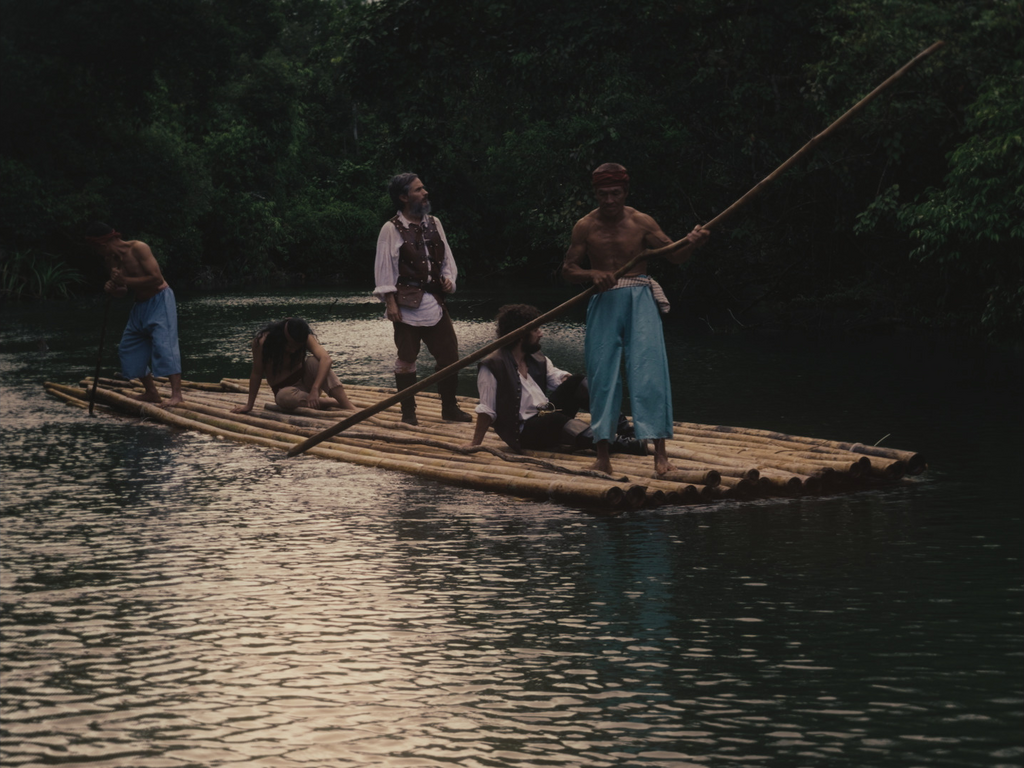
Seriously, beyond the beach scenes, one-third of the film takes place on a carrack in an ocean that could just as easily be the Pacific as the Atlantic, depending on the location card. And while that sounds like plenty of time to explore the real expedition’s ups and downs, Magellan’s slow-cinema style and rough cut mean only a select few events got their screentime.
That isn’t to say the second act was boring, though. Even if the aforementioned brutality was far from entertaining, it — alongside the voyage’s general ebb and flow — elicited another emotion within me. A discomfort that seemed to take forever and an instant to rise up as the work continued to make it clear that nothing good came from this trip.
It’s a startling claim about the first circumnavigation of Earth for sure, but since the film never shows its actual completion or any recognisable landscapes, we in the audience are left none the wiser. Instead, what we do see steadily strips the trip of any romanticism it might’ve held, along with any doubt of where this movie stands on Ferdinand’s legacy.
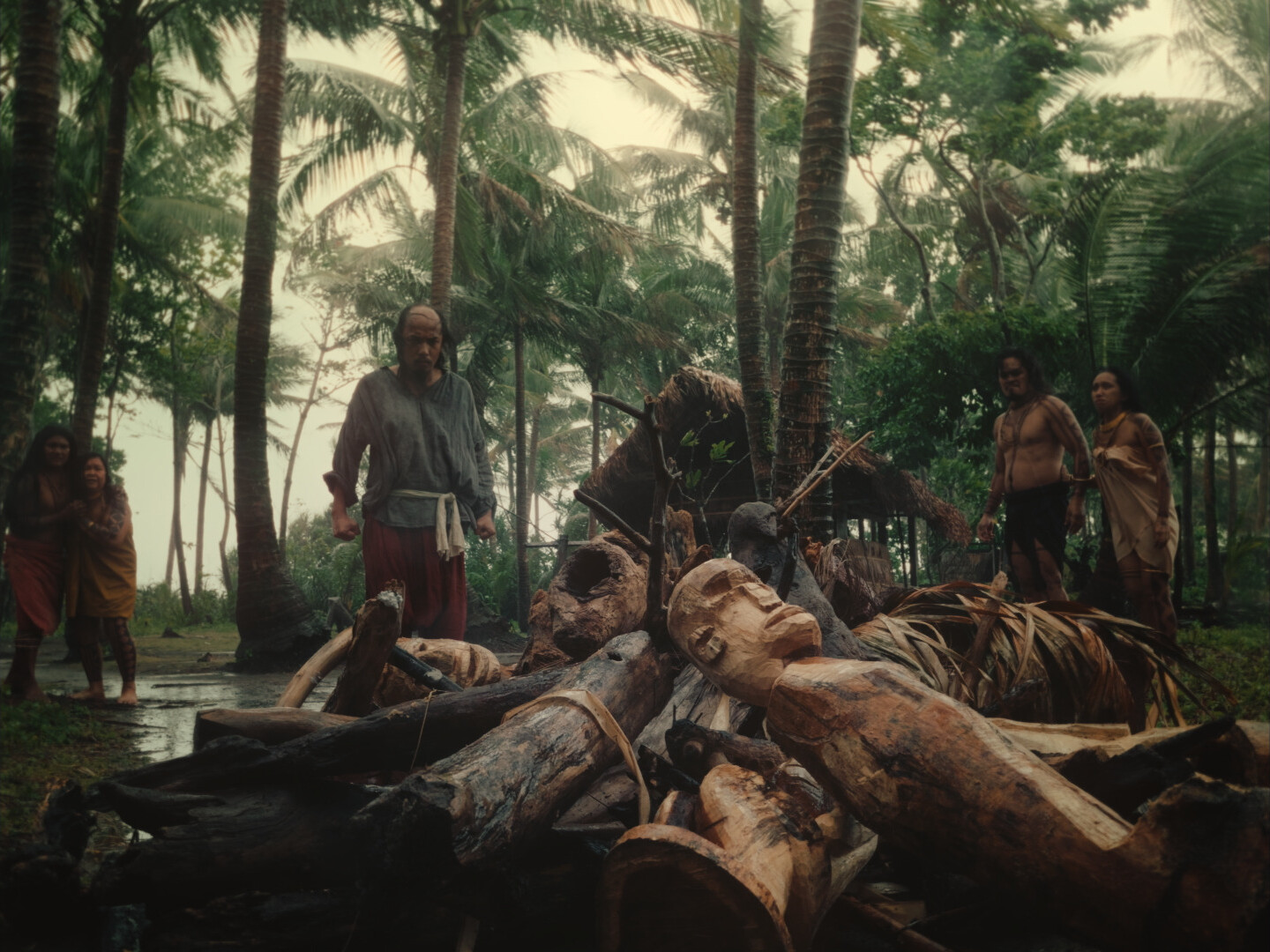
More interestingly, what we don’t see adds more fuel to the fire, as Diaz repeatedly chooses to avoid showing violence, though other R21-related depictions like rape and nudity are fair game. This habit appears not only during portions of the expedition, but also in the first and third acts, which I’ve saved for last due to their similarities.

To be clear, Magellan doesn’t shy away from depicting death and its processes, such as when its namesake succumbs in the same situation we first saw him awake, surrounded by corpses on a beach. But when it comes to the infliction of violence between characters, its omission suggests that Diaz preferred not to depict the physicality of conflict.
In fact, the only two moments I can recall where a weapon makes contact occur, once again, before and after the expedition: when Ferdinand punches his friend for disparaging his plan and the Portuguese king, and when King Humabon throws his kris into the ground after conspiring with his aide on how to kill the explorer.
It’s too neat a coincidence that both leaders’ gestures symbolically affirm their resolve to pursue goals that’ll profoundly affect the other. Even more telling is that, right after these moments, both become disarmingly cordial with the very man they threatened — Ferdinand solemnly bids his friend goodbye, while King Humabon eagerly shares tea with the explorer.
Thus, it’s in seemingly separate scenes like these where the film’s strangest similarities, and, in turn, Diaz’s most difficult questions can be found. As a monarch himself, is King Humabon any more righteous in halting Ferdinand’s colonial ambitions? And if so, how complicit is Enrique the translator in perpetuating these dreams, even as a slave?

There’s a lot packed inside this 164-minute masterpiece that I could wax poetic about, like why Diaz’s choice to take liberties with Lapulapu, the real-world murderer of Ferdinand, was well worth almost getting sued by a professor for. But ultimately, beyond leaving the film’s finer details for you to discover, I wish to focus on the wider context of Magellan as an opener for Painting with Light.
To no one’s surprise, I think the movie that encourages thought to piece its message together fits well into a festival that pieces messages together to encourage thought. I also strongly support its position as the opener despite not being the fastest of films, since its slow cinema style effectively emphasises the notion that art can only react as much as one reacts to it. That is, if one even bothers to try.
As much as I’d like to assume good faith, it was disheartening to see many moviegoers leave midway, only to never return. Honestly, I was somewhat irritated to see a packed auditorium, which had thunderously applauded Lav Diaz’s interview, reduced to one with pockets of empty seats by the time his name rolled with the credits — is this why The Projector closed?
No matter, because for every distinguished guest who had to take an important business call, there were ten who exited only after the work had ended with enthusiastic discussions. And when viewed like that, I have to applaud Diaz for — among other things — writing, directing, and producing this challenging but rewarding watch.
If Magellan has to be the movie that’ll get Singaporeans to start swimming or sinking amidst the ever-changing tides of the indie film industry again, then so be it. A national awakening (slash rebirth?) waits for no one, but the least we snobs can do is to give the blockbuster crowd time to acclimate, which Magellan has a lot of. If only it were the nine-hour version…
Painting with Light 2025
🗓️Date: 4 – 14 September 2025
Even if Magellan isn’t screening anymore, there’s still a full lineup to catch. Secure your tickets now at the National Gallery’s official website, and check out their Instagram for more info about the current and future offerings.
Visuals Courtesy of Lav Diaz.
-

-

-

-